
3D Printed Figurines from Children’s Drawings
CrayonCreatures
A service to turn wonderful drawings into awesome figurines; nice looking designer objects to decorate the home and office with a colorful touch of wild creativity.
CrayonCreatures.com / (discontinued)
Turning children’s drawings into 3DPrinted figurines.
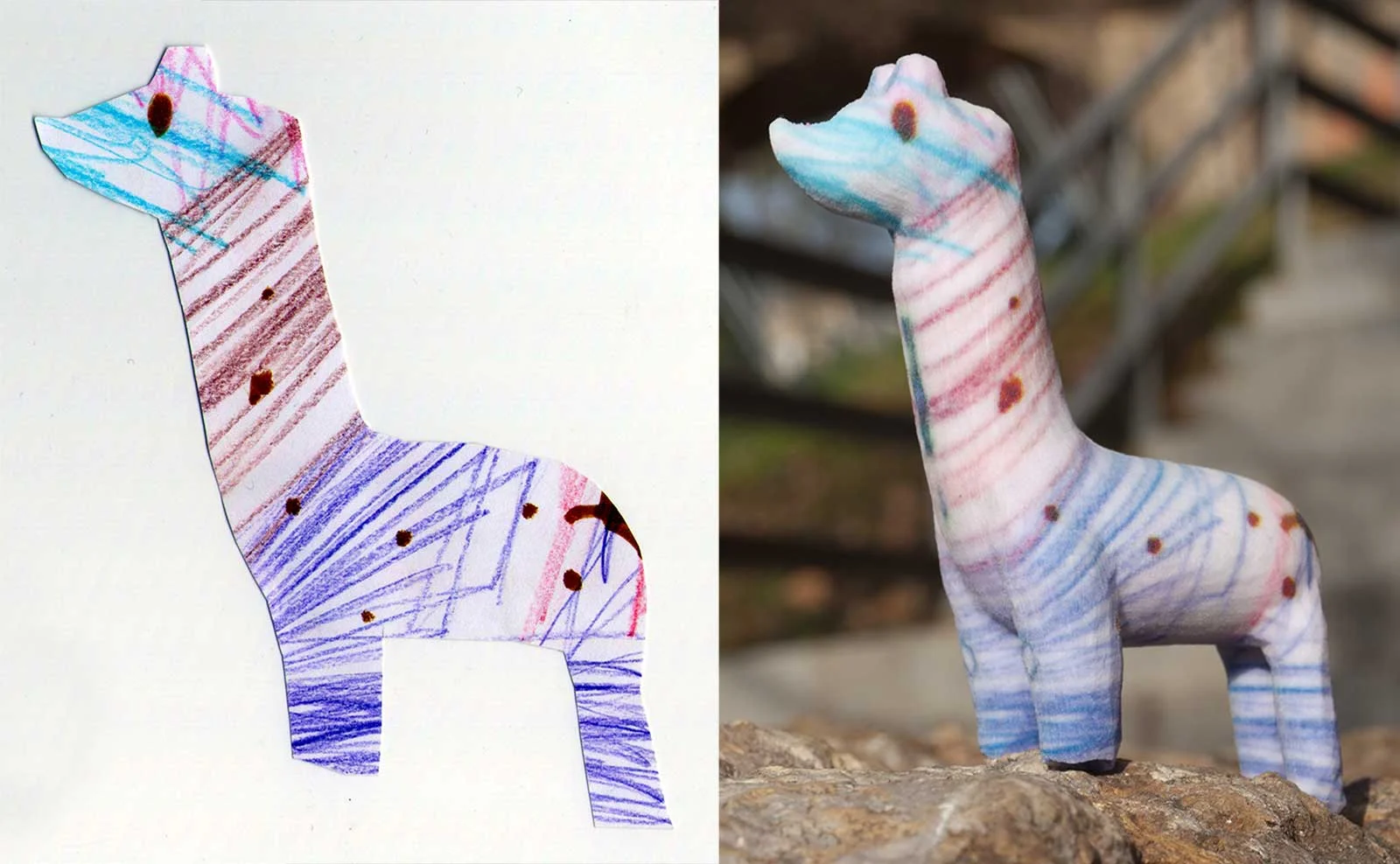
Children drawings are weird and beautiful.Kids produce an immense amount of drawings that populate fridges, living rooms and workspaces of parents, family & friends.Those drawings are amazing.

Now you can turn those drawings into volumetric figurines; nice looking objects that will decorate your home and office with a colorful touch of wild creativity.


http://CrayonCreatures.com will bring to life the kid’s artwork by 3D modeling a digital sculpture and turn it into a real object using 3D Printing technology.

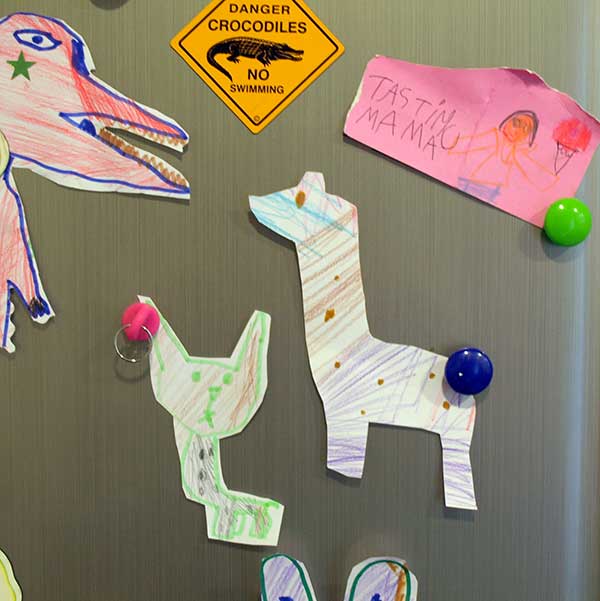


The figurines are custom designed and digitally crafted one by one.
Material: full color sandstone | Size: about 100mm tall.
End of Life / 2013-2023

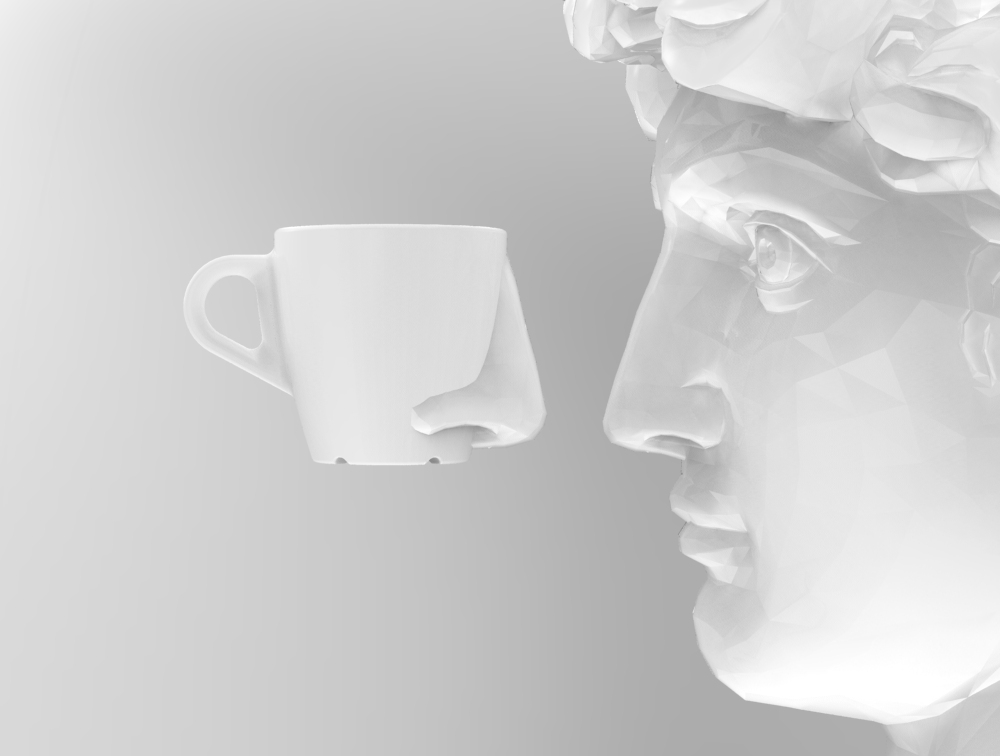
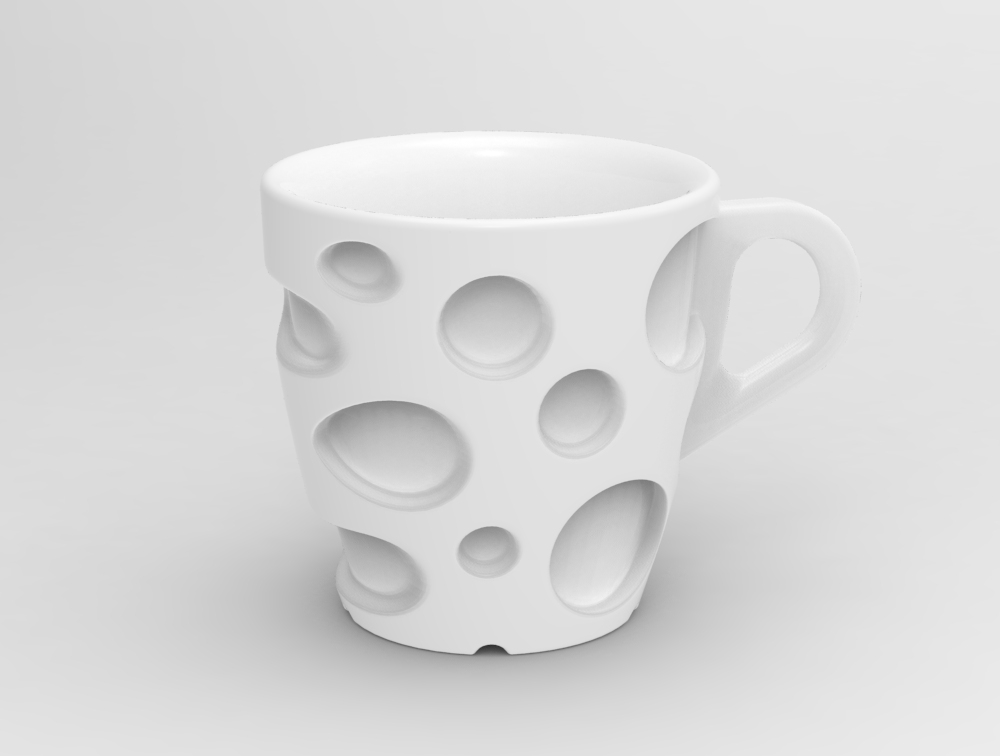
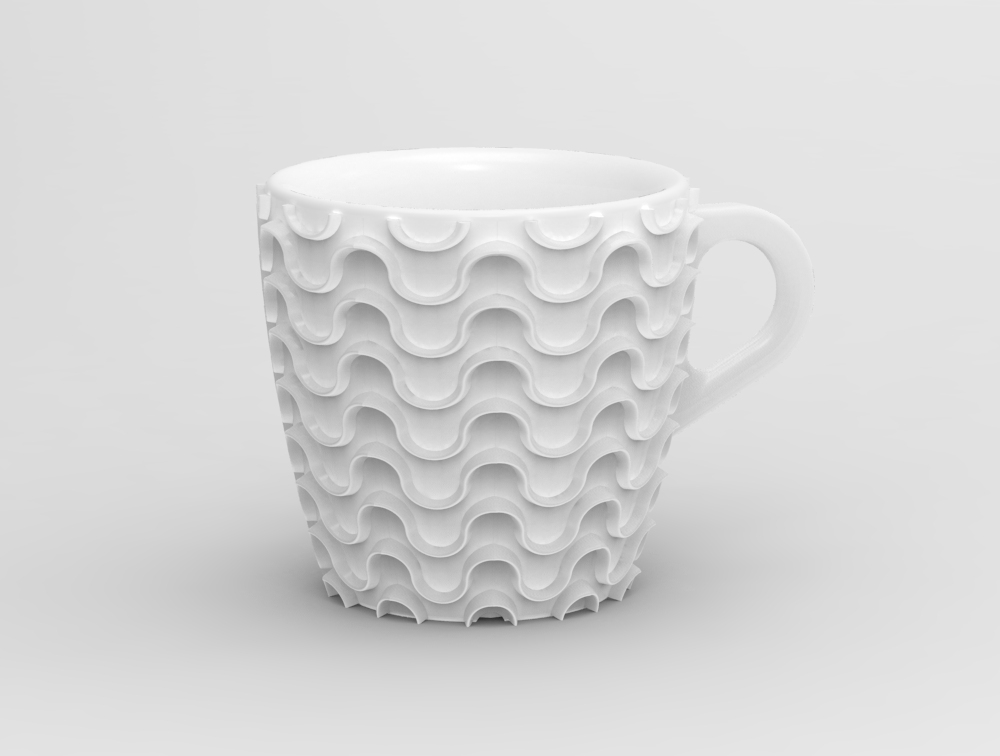
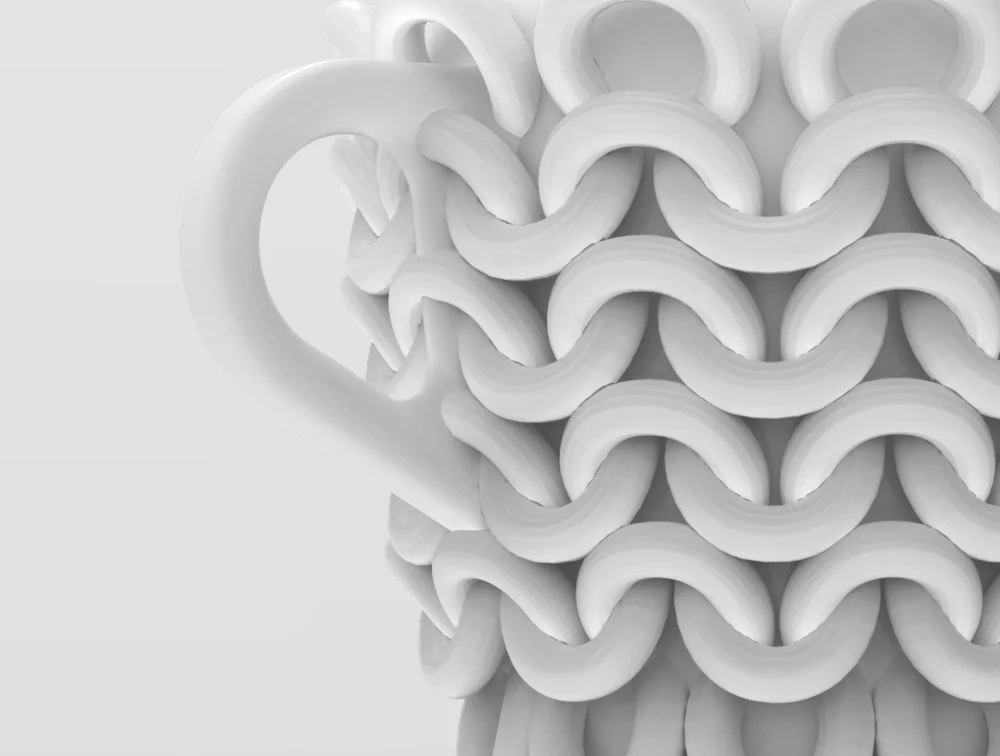
One Coffee Cup a Day | 30 days, 30 cups
One Cup a Day project is an experiment on creativity and rapid manufacturing, by ideating, designing, modeling and making available for production and purchase a coffee cup within 24 hours, everyday during one month.
One Cup a Day project is an experiment on creativity and rapid manufacturing,
by ideating, designing, modeling and making available for production and purchase a coffee cup within 24 hours, everyday during one month.
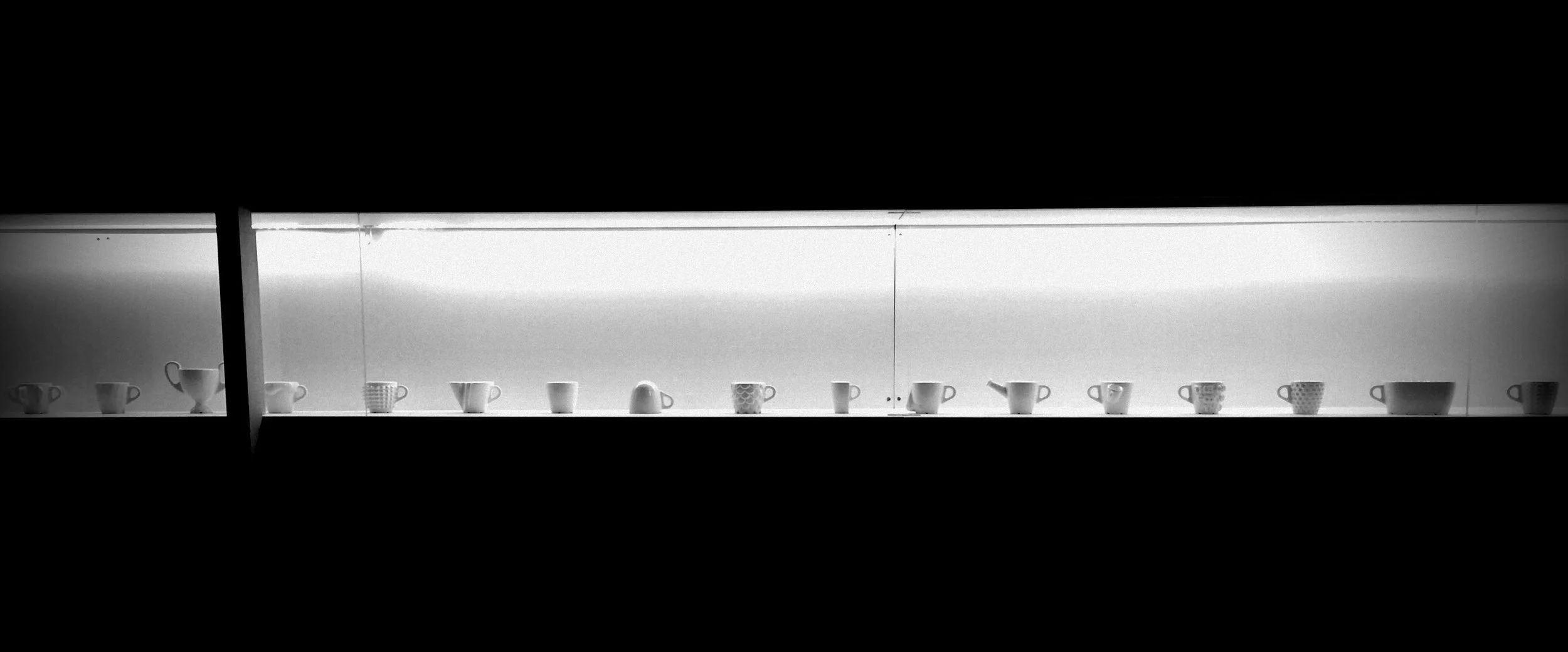
The project was exhibited at the Ceramic Event VII in Brussels.
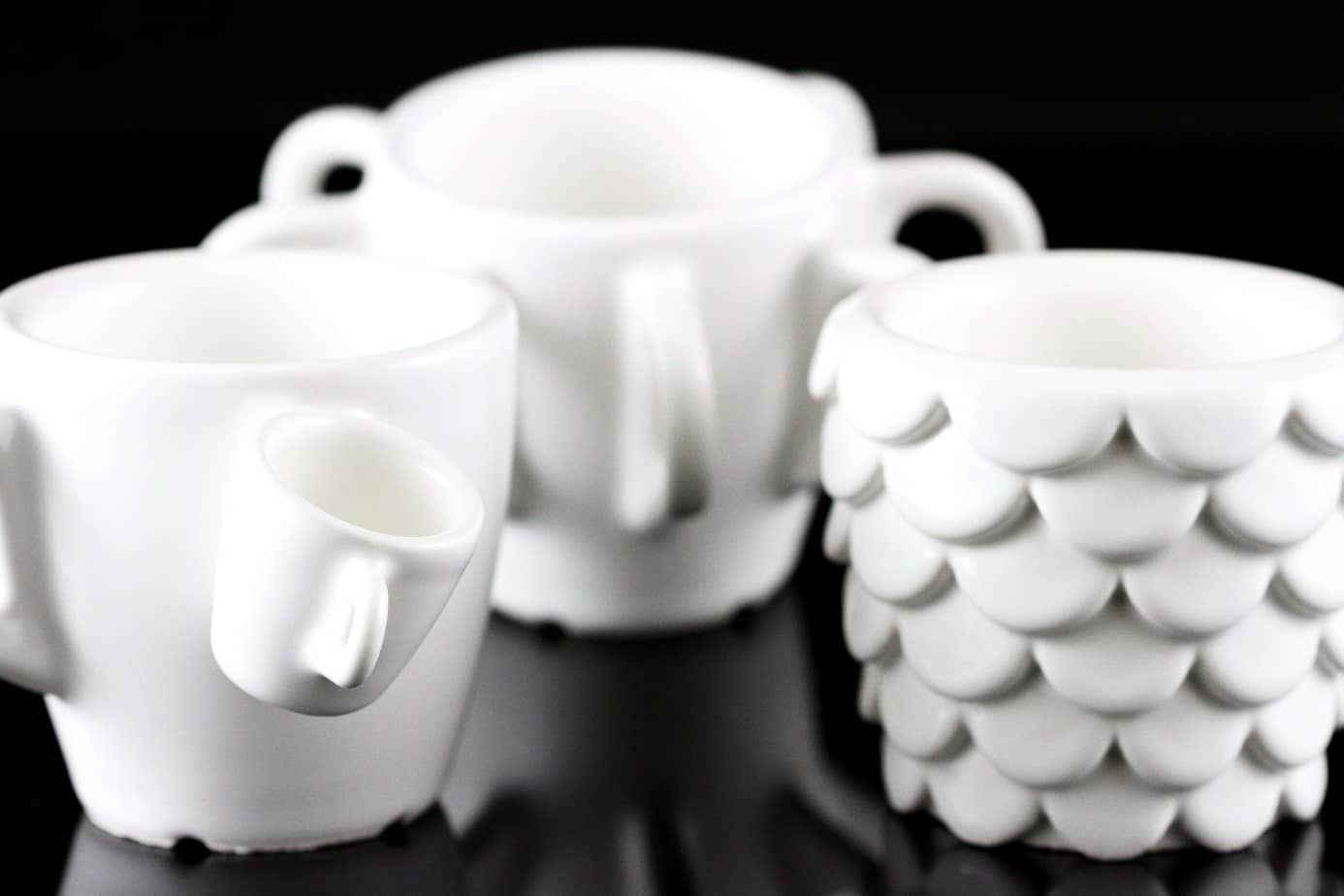
By the end of each day, a new espresso coffee cup was made be available for sale here.
The cups are printed in Glazed Ceramics by Shapeways & i.Materialsie.


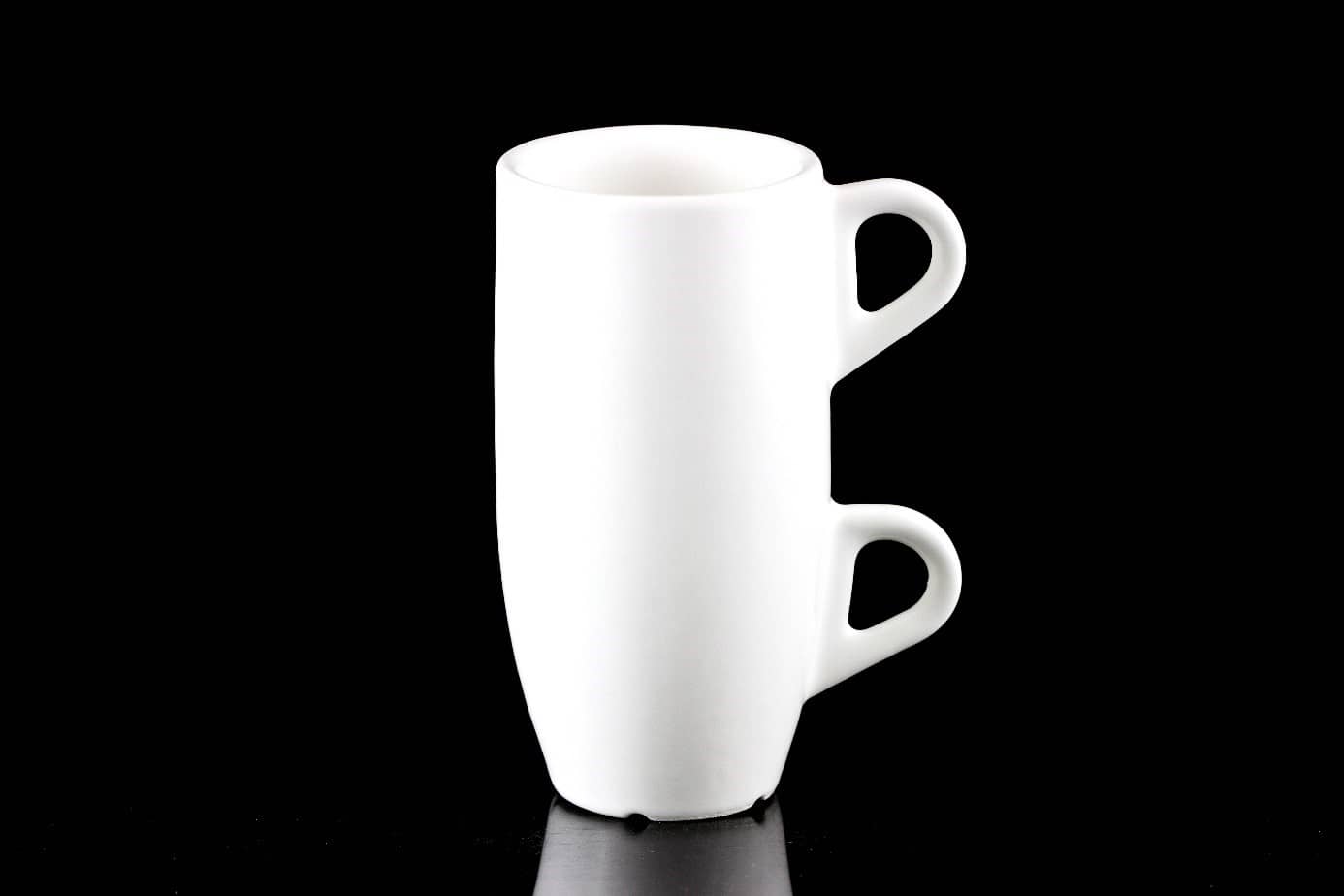


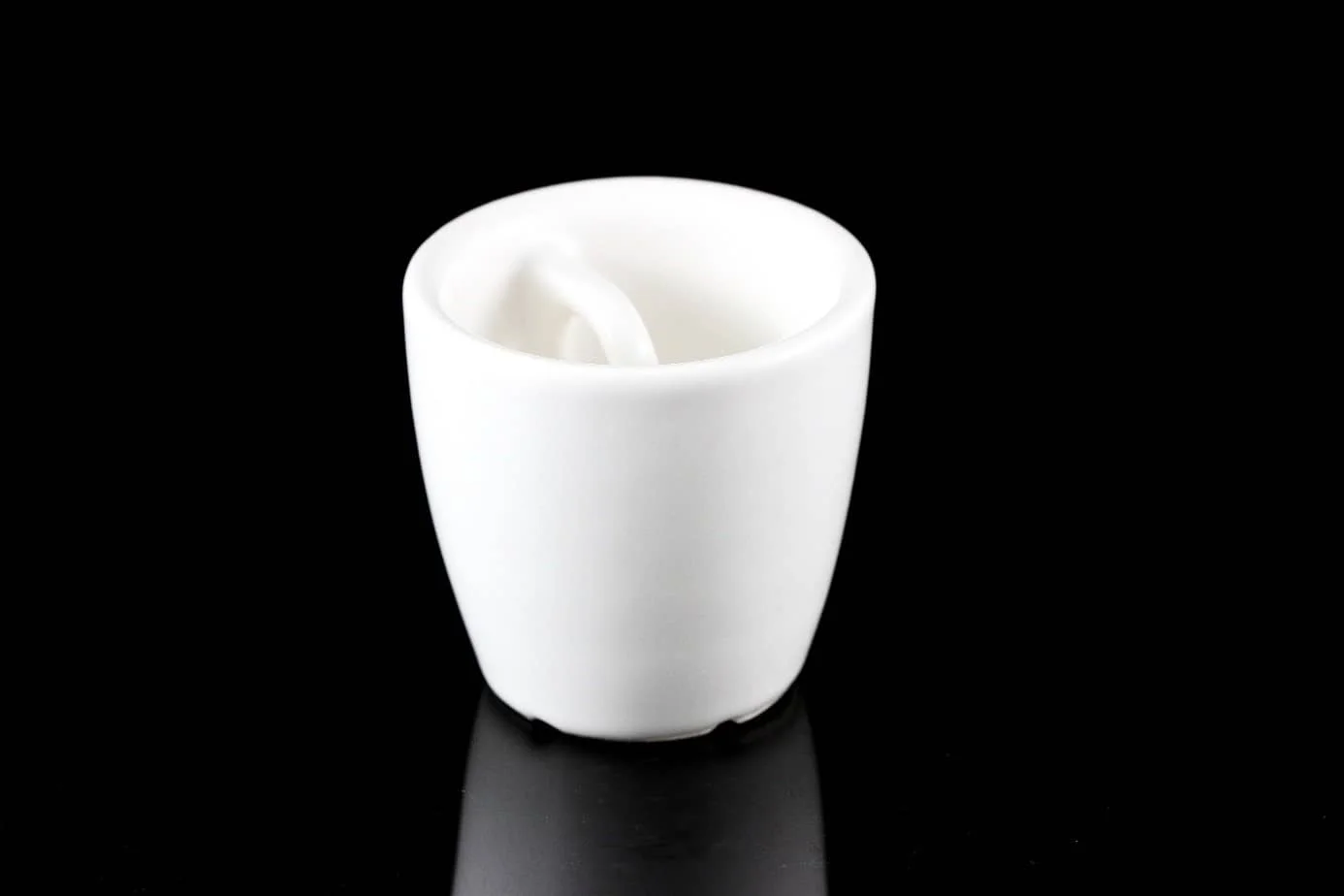


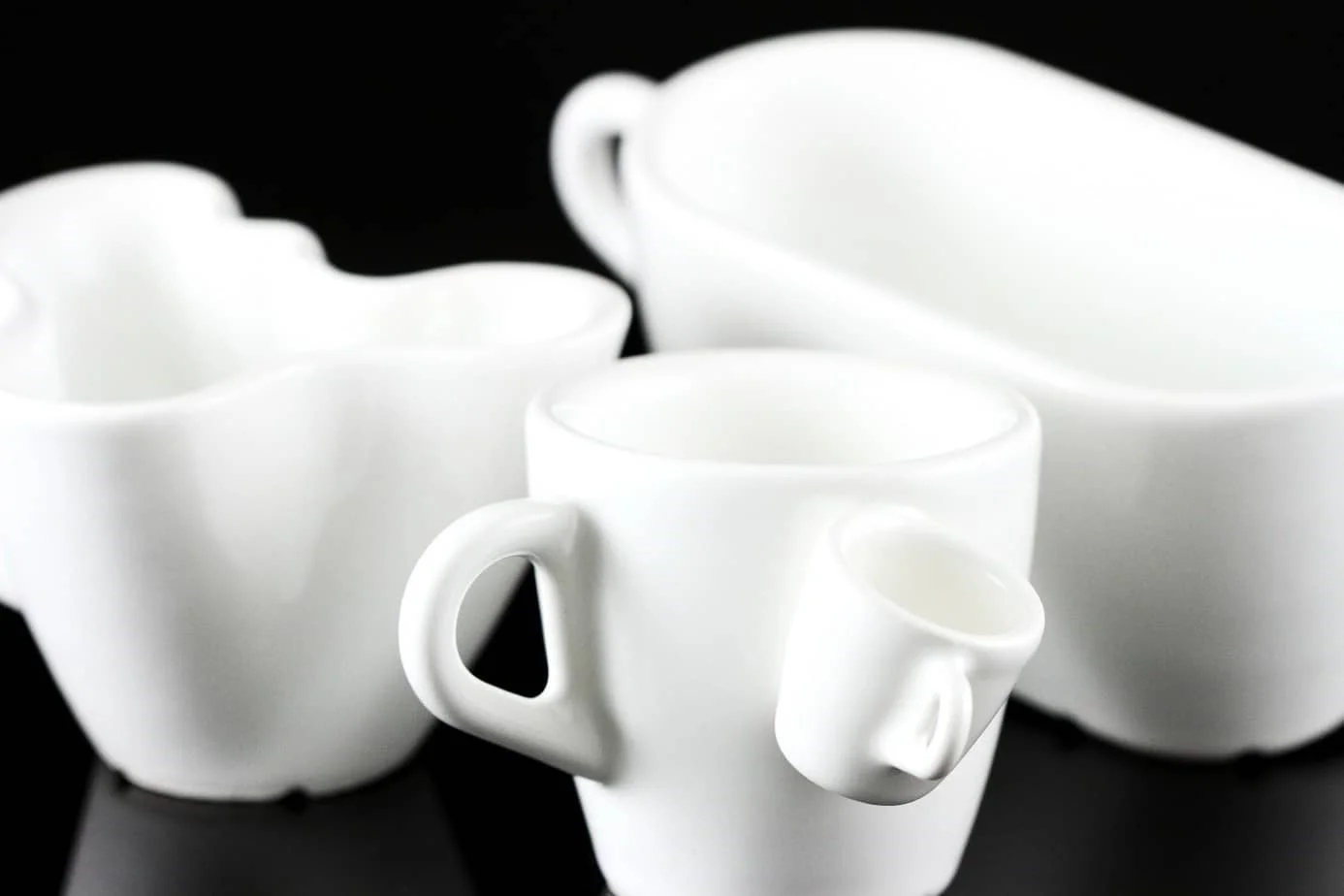

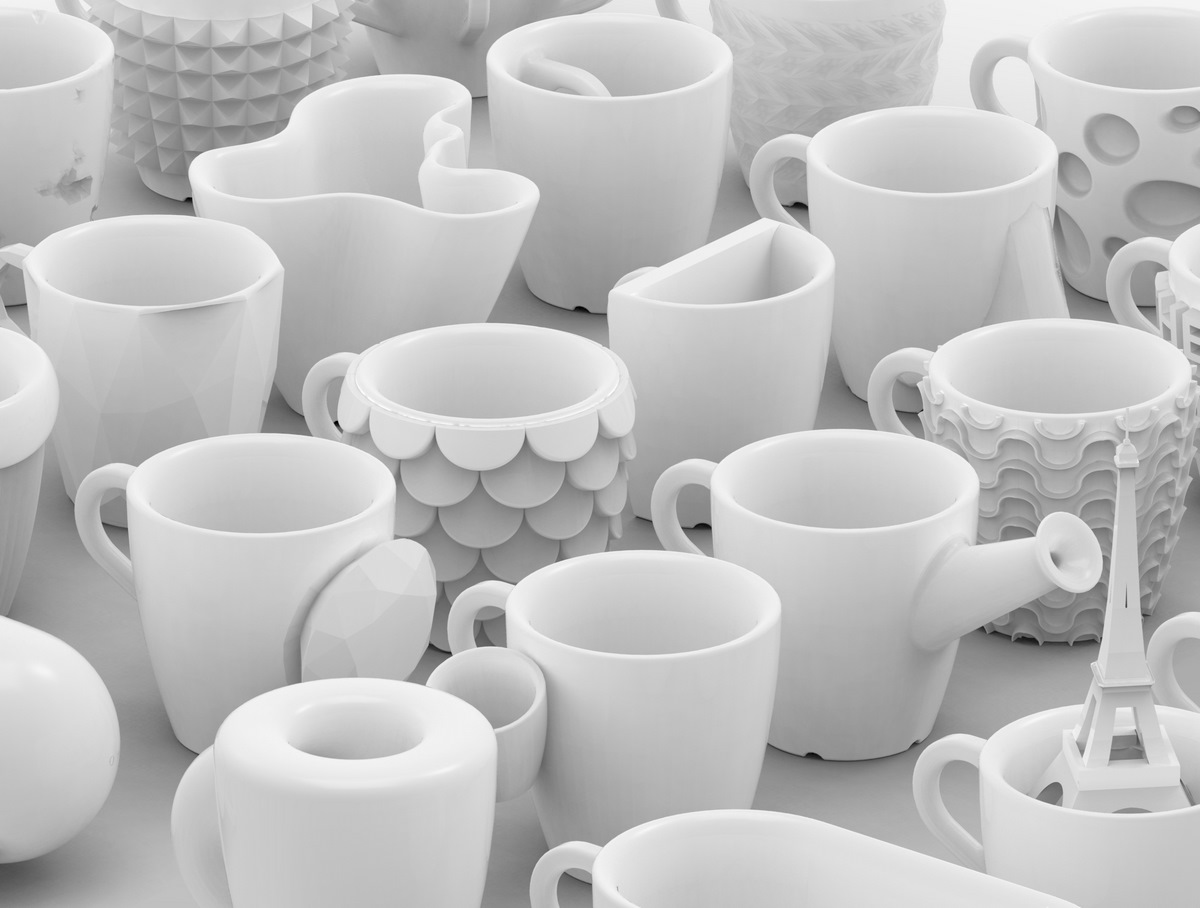
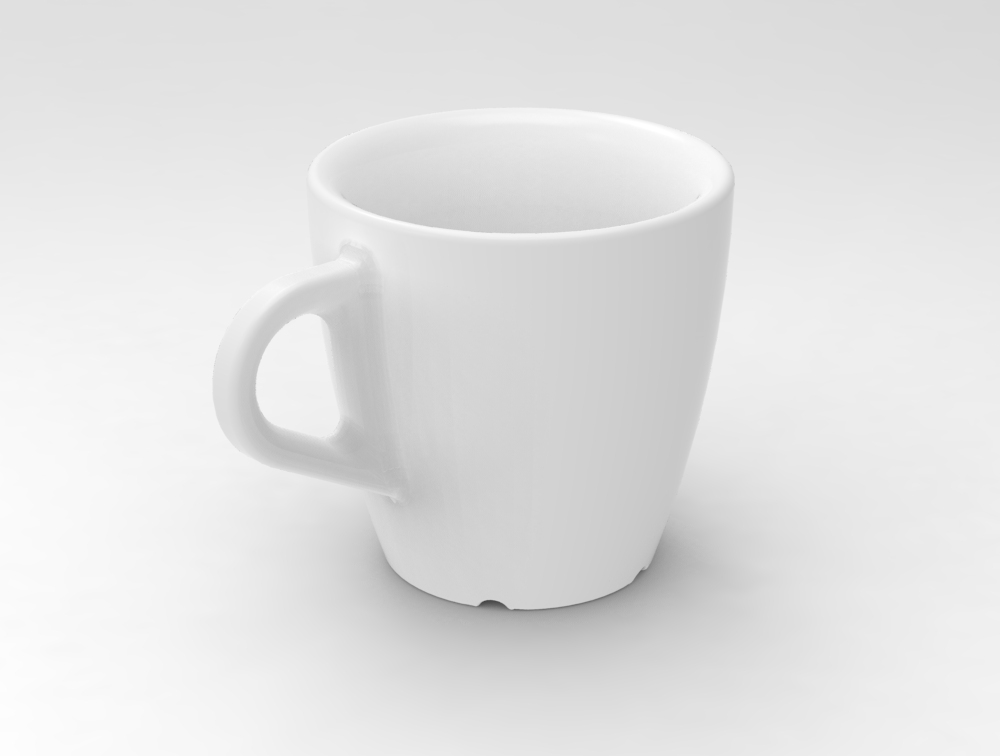
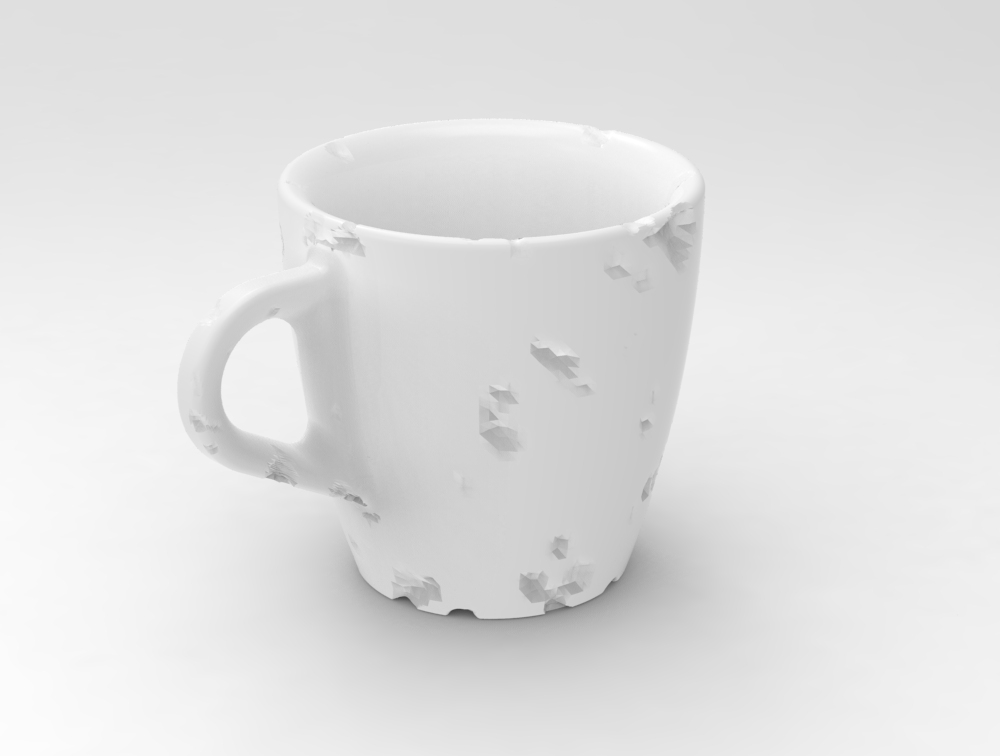
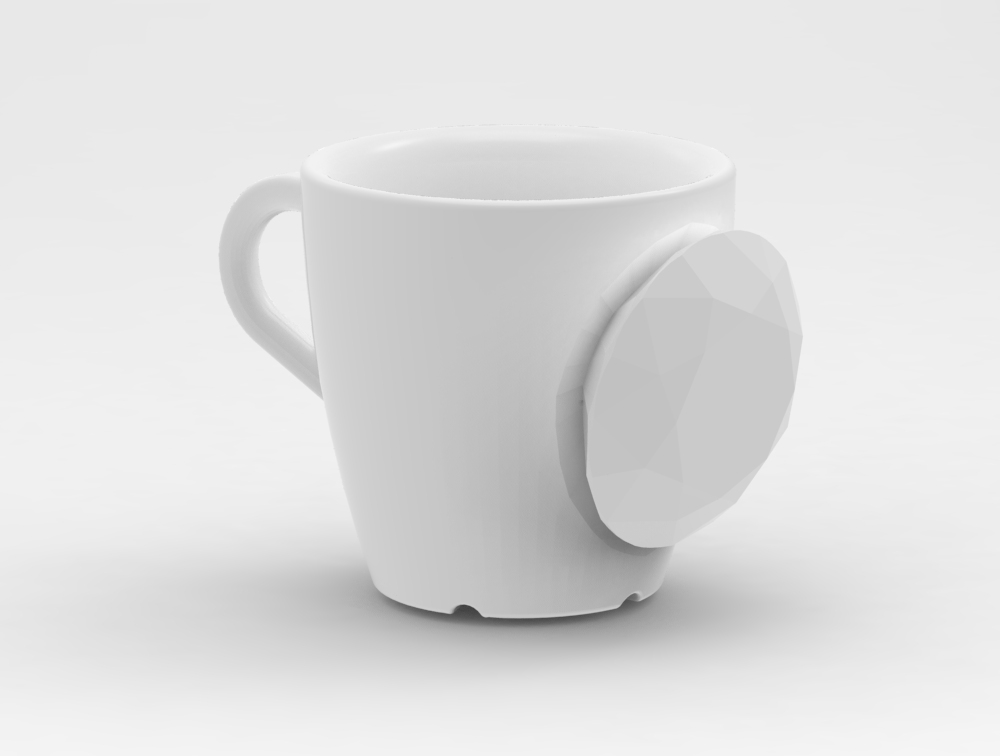
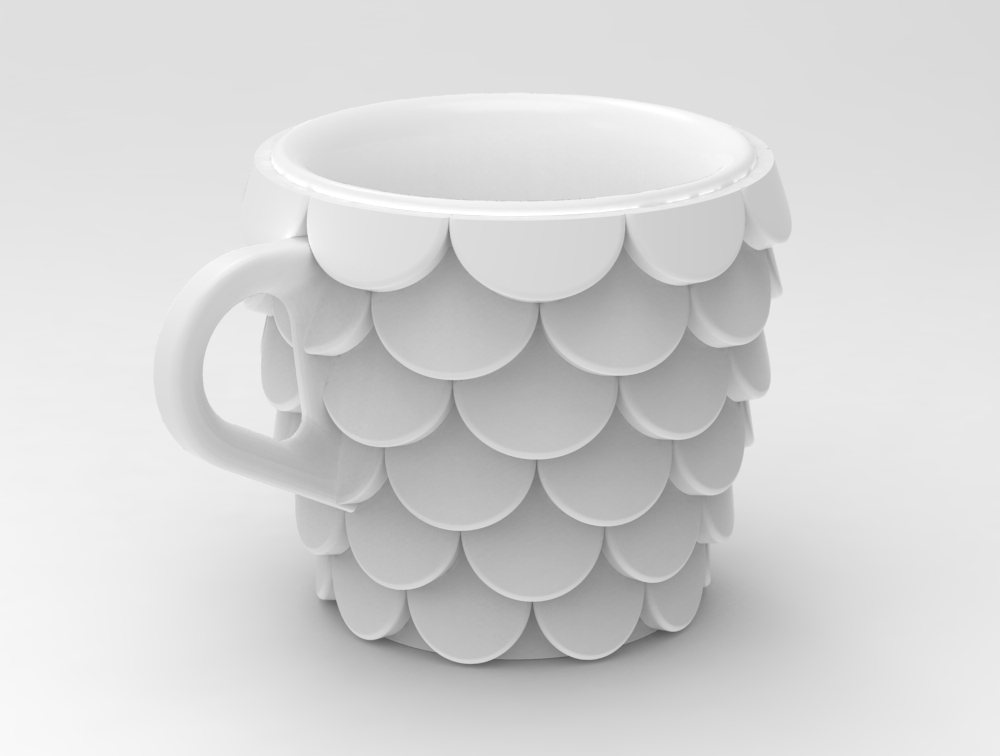
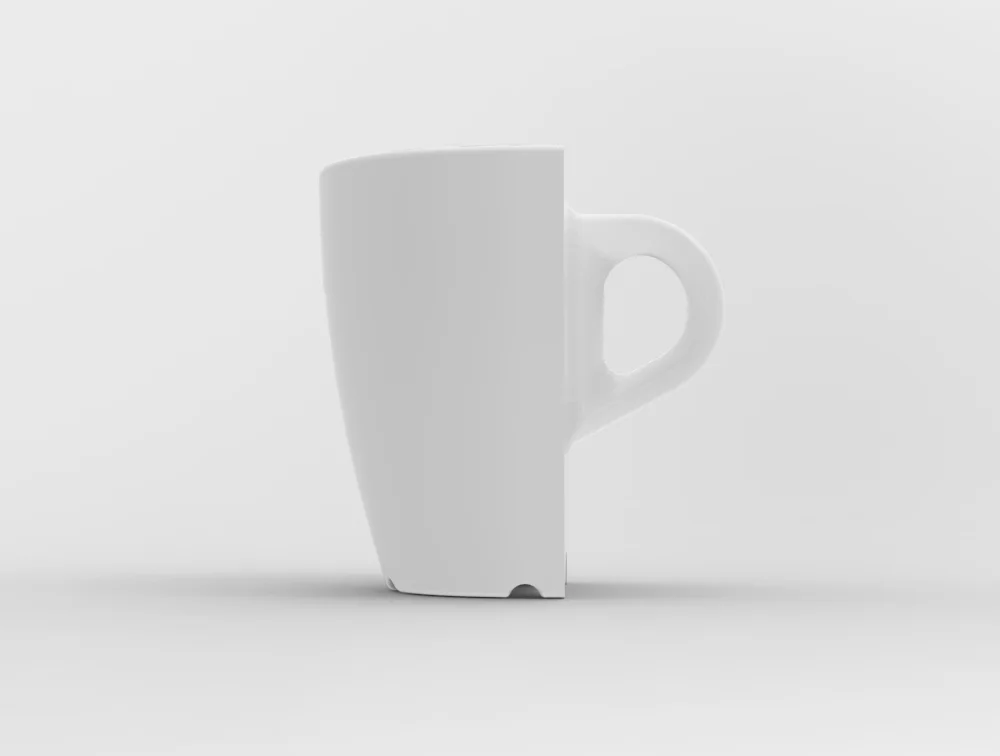
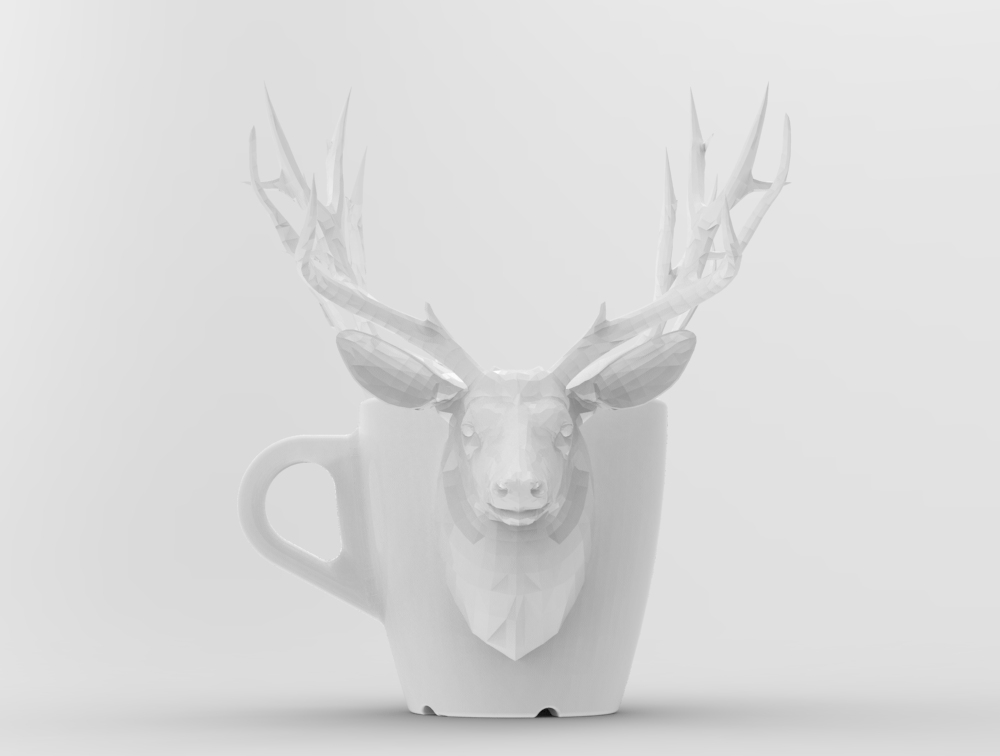
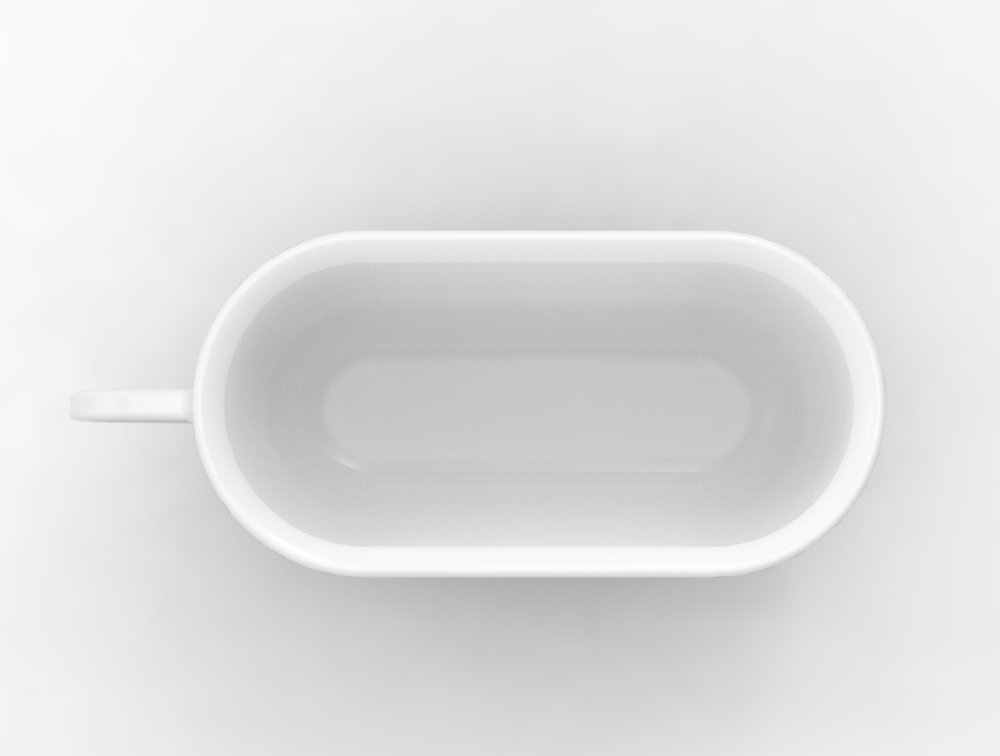
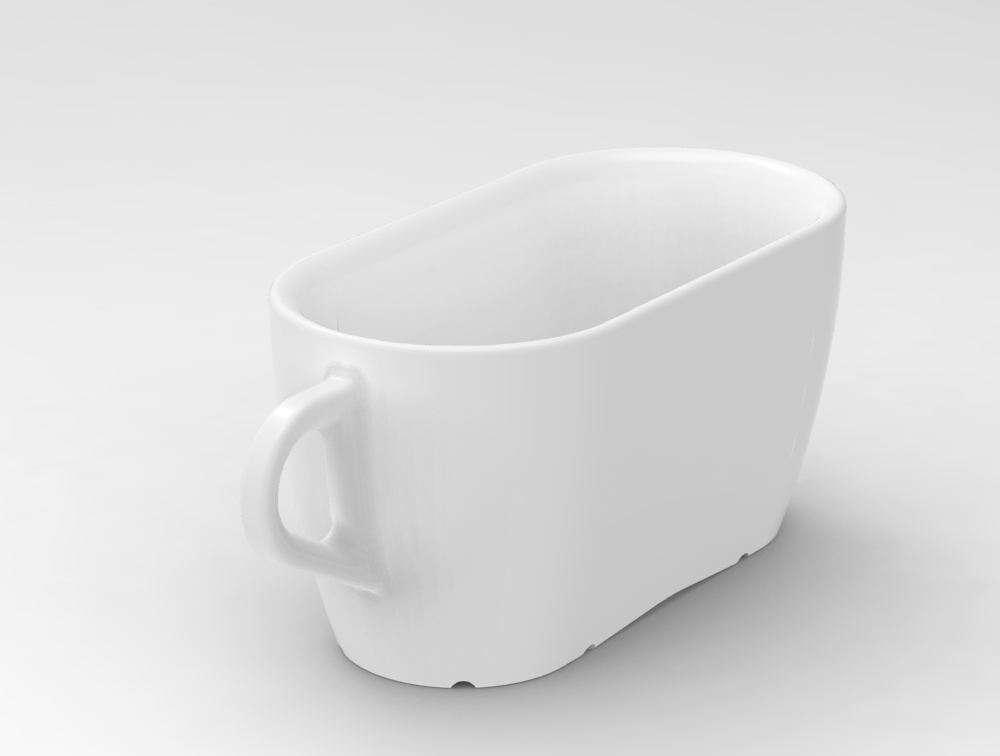
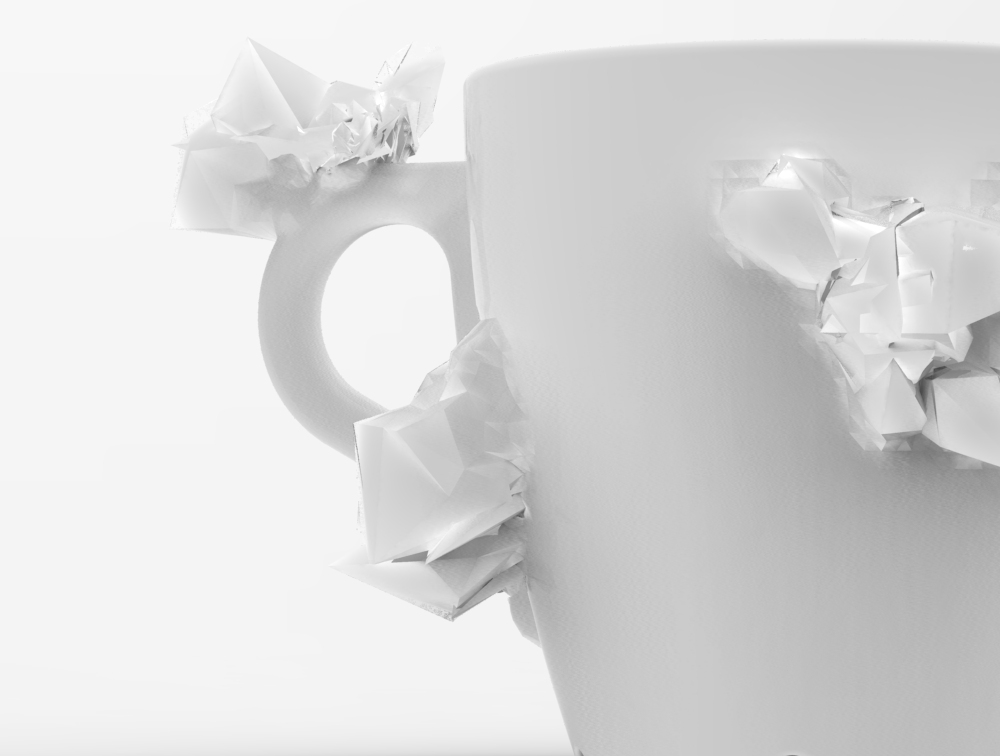
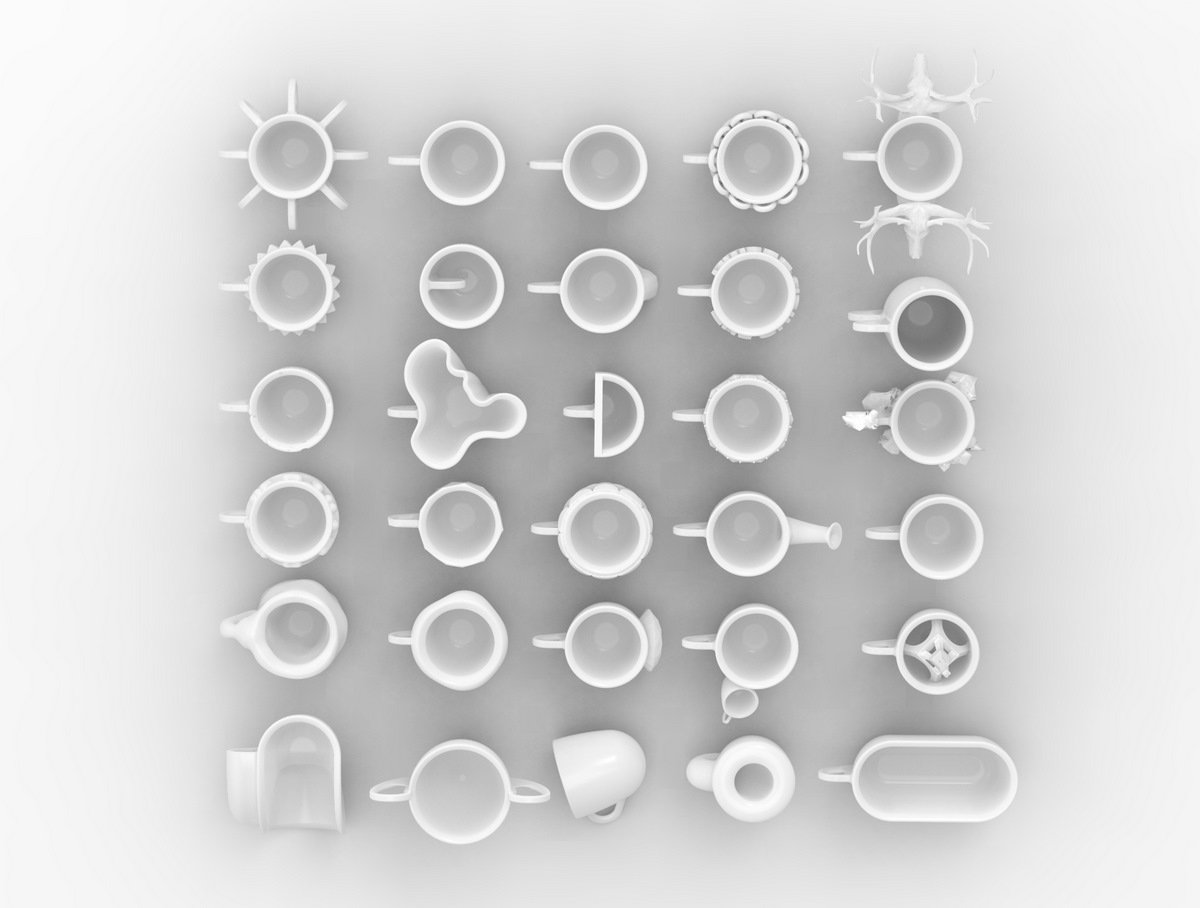
*the following images are computer generated visualizations of the cups, not the actual objects.
As 3D-printing in ceramics is a novel and experimental process, the 3D-printed cups might look different than the images below.













Design one yourself
This project is open for collaboration,
Here I make available the source files (as .STL & .IGS files of a template basic cup,
please, feel free to play around and modify it.
3D Print it yourself
The OctoCup is shared at Thingiverse, feel free to grab the files, experiment with it and share the results.
I printed one with a RepRap and it looks nice, (useless, but nice).
Learnings
done! I made it; Design 30 cups in 30 days,
They are all at the store, ready to be 3DPrinted on demand.
Surprisingly, the idea generation has been the easiest part of the project,
I still have tons of cup ideas on my head that were not designed: (Banana Handle cup / Toilet cup / Matrioska cup / Melted cup / Mustache cup…)
The hardest part of the project has been preparing the 3D geometries and files for 3DPrinting.
The 30 designs can be grouped into 3 categories
Morpho-jokes = cups adopting shapes from other contexts with a funny result.
Uselessly nice = cups whose striking uselessness makes them interesting.
Texture Analogies = cups wrapped by textures.
I really enjoyed the project format, the challenge and the results.
3D Model vs. 3D Print:
The first 3DPrinted Cup in Ceramics just arrived,
and it looks fantastic!
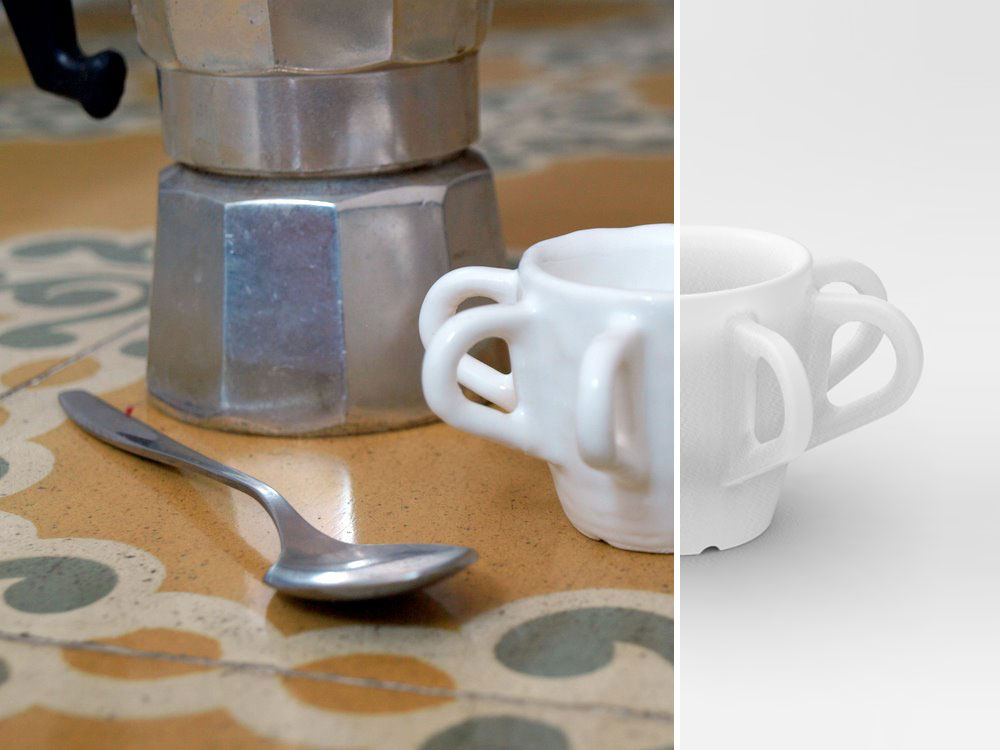
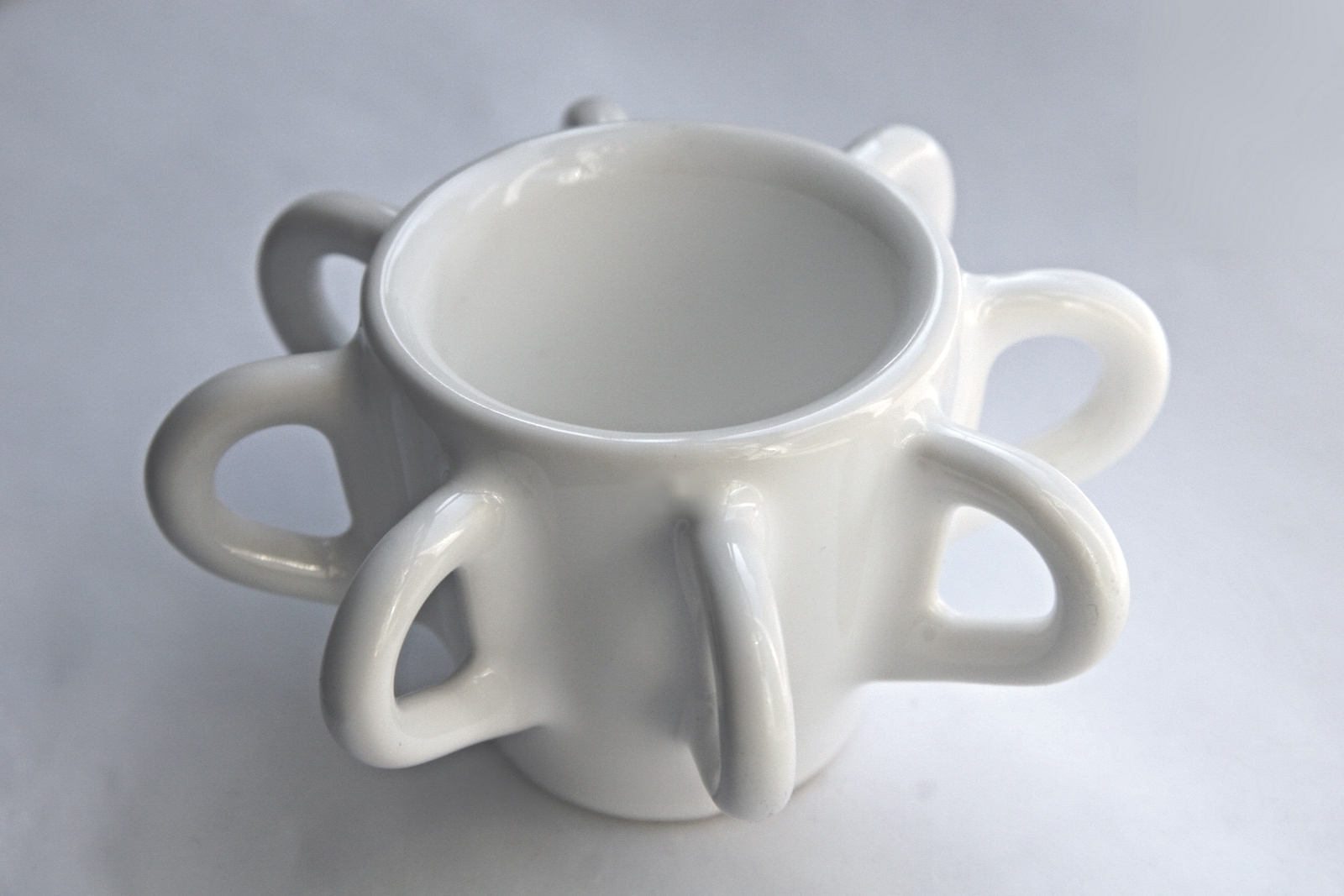
The glazed layer is quite thick and it hides a lot of the original detail, which is OK for the OctoCup, but it might be a bit too soft for other designs, like the Knitted Cup or the LowResolution Cup.
It has an overall look and feel of a hand-made product, which is very interesting, because this object was “untouched by humans” (except for finishing and shipping), meaning that it was designed in computer, with perfect radiusess, and perfect proportions, Then, it was 3DPrinted with a computer controlled machine accuracy, but the result is bumpy and imperfect, and it is nice.
It almost feels like an craft object, but this cup is entirely a computer-born and grown object.
Update: Shapeways improved their 3DPrinting process and the results are much better now.
Notes
About the design:
The cups are designed as a creative exercise and as a proof of concept for digital fabrication, in order to achieve something unthinkable some time ago: Create a product from the idea to the consumer in less than 24 hours.
Some designs are compromised due to time constrains, but that’s OK.
Not all the cups are ment to be the best and most functional of all coffee cups ever, they are designed with style, fun and diversity on mind.
About the material:
The coffee cups are 3D Printed in Glazed Ceramics.
Glazed Ceramics are food safe, recyclable and heat resistant. The glaze is heatable up to 1000 degrees celcius, at which point the glaze will start to damage.
3D Printed Glazed Ceramics material properties are exactly the same as standard ceramics as it is produced with fine ceramic powder which is bound together with binder, fired, glazed with lead-free, non-toxic gloss finish. For some designs with clear bottoms, the bottom side may remain unglazed.
Glazing reduces definition of design details, for example grooves will fill with glaze. up to 1 mm of glaze can be added in certain areas.This means that some cups might look much smoother once printed than how they look on the drawings, keep that in mind if you purchase any of them.
Step 1. 3D Printing, it takes about 4 hrs to print a 4 inch piece. During this step, binder is deposited on a bed of ceramic powder. After one layer is done, a new layer of ceramic powder is spread on top and binder is again deposited on that layer.
Step 2. After all the layers are printed, the box of ceramic powder is then put in an oven to dry, the models in the box solidify during this process.
Step 3. After the models solidify, the models are taken out out of the box and depowdered. During this stage, the models are solid but in a brittle, fragile state.
Step 4. Afterwards, the models are fired in a kilm with a “high fire.” This firing will lock in the structure of the model. After this step, a base model is created. The surface finish is very rough.
Step 5. Pre-glaze coating spray, a water based spray, is then applied. Then the models are fired away in a kiln at a lower temperature. Afterwards, the model is a bit more smooth and ready for glazing.
Step 6. The glaze spray is applied, and the models are again fired in the kiln. After this process, the model becomes shiny and smooth.
Note to buyers:
All cups are available for purchase here:
The cups are espresso size; about 65mm tall.
They might look quite small.
The images in this page are computer generated, not photos from the real cups.
3DPrinting in Ceramics is a novel and experimental production process, the resulting objects might loose detail and look different than the above images.
Production: Orders, payment, producing-printing, quality control, delivery & customer service processes is handled by Shapeways.com, a 3rd Party Company not related to Cunicode.
Pricing: 3DPrinting in Ceramics is quite expensive, that’s why the cups are very small, to keep the price down. Cunicode gets $5 per cup sold only, the rest goes to the producing company,
Further development
Thanks for the interest and support,
special thanks to ignant.de / Swiss-Miss / Neatorama / BoingBoing & others fantastic sites for writing about the project.
I'd like to 3DPrint all the cups and prepare an exhibition.
Please contribute to make it happen.
Thanks.

Jewelry / research
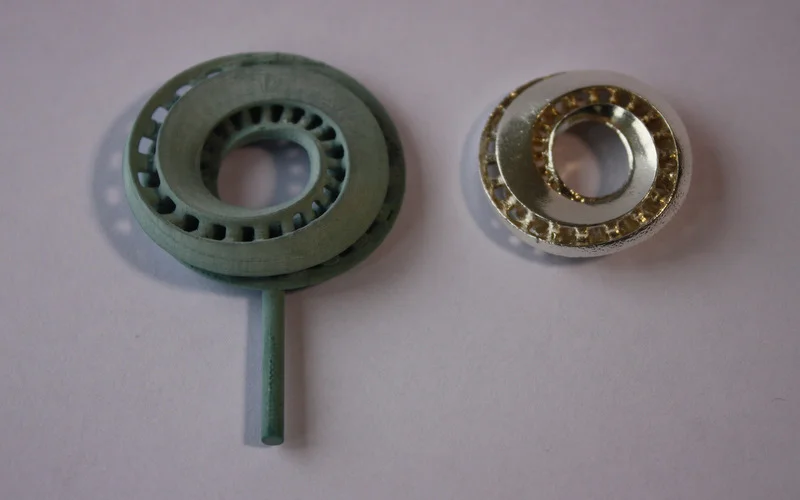
Ongoing design exploration to identify the aesthetics and possibilities of Additive Manufacturing processes in jewelry production.
Experimenting with a wax 3DPrinter,
the designs are then casted in silver and machine finished.
[WIP]
Cunicode partners with a global jewelry manufacturer in an ongoing research project to identify the aesthetics and possibilities of Additive Manufacturing processes in jewelry production.
Experimenting with a wax 3DPrinter,
the designs are then casted in silver and machine finished.
[WIP]




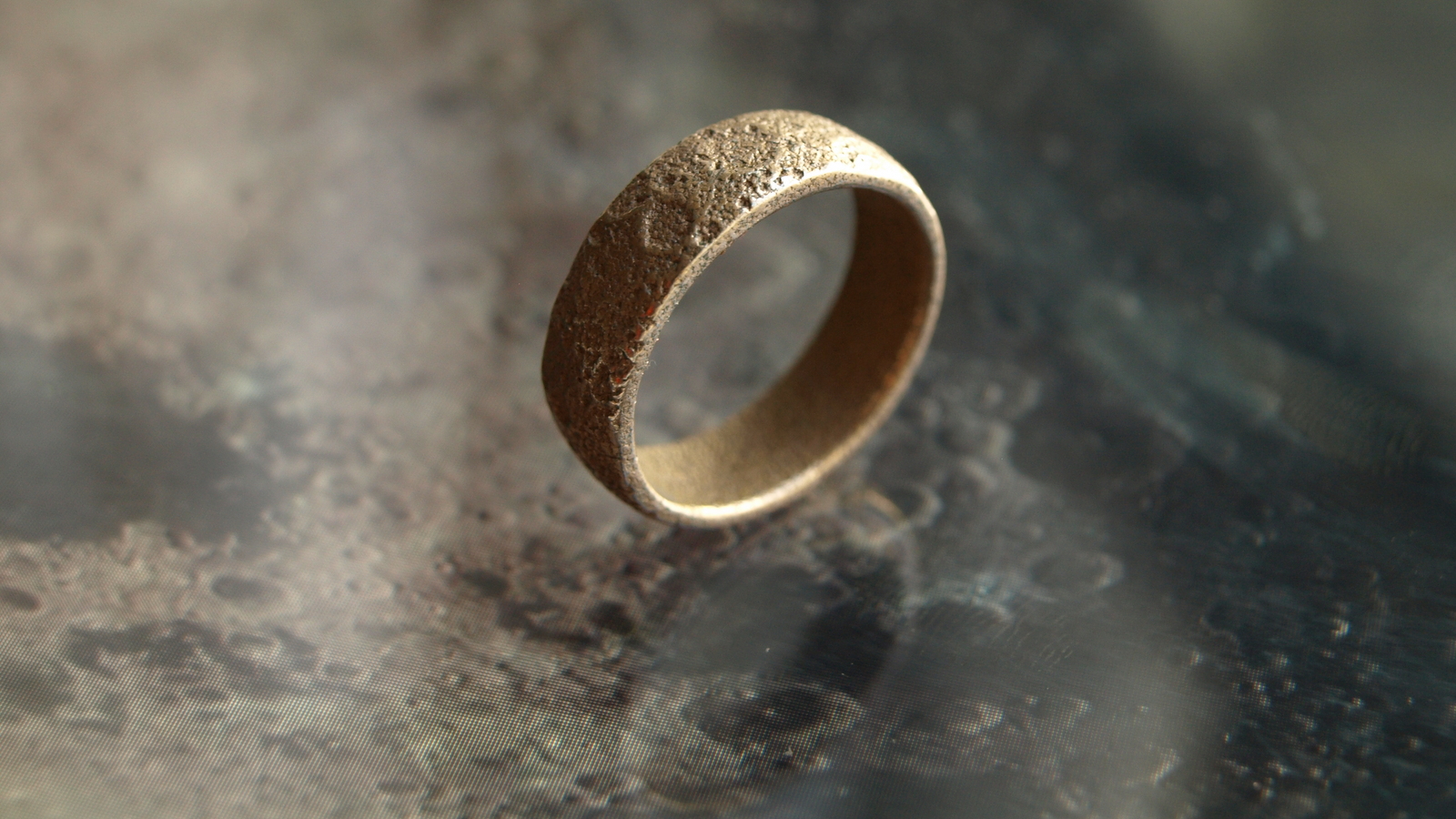
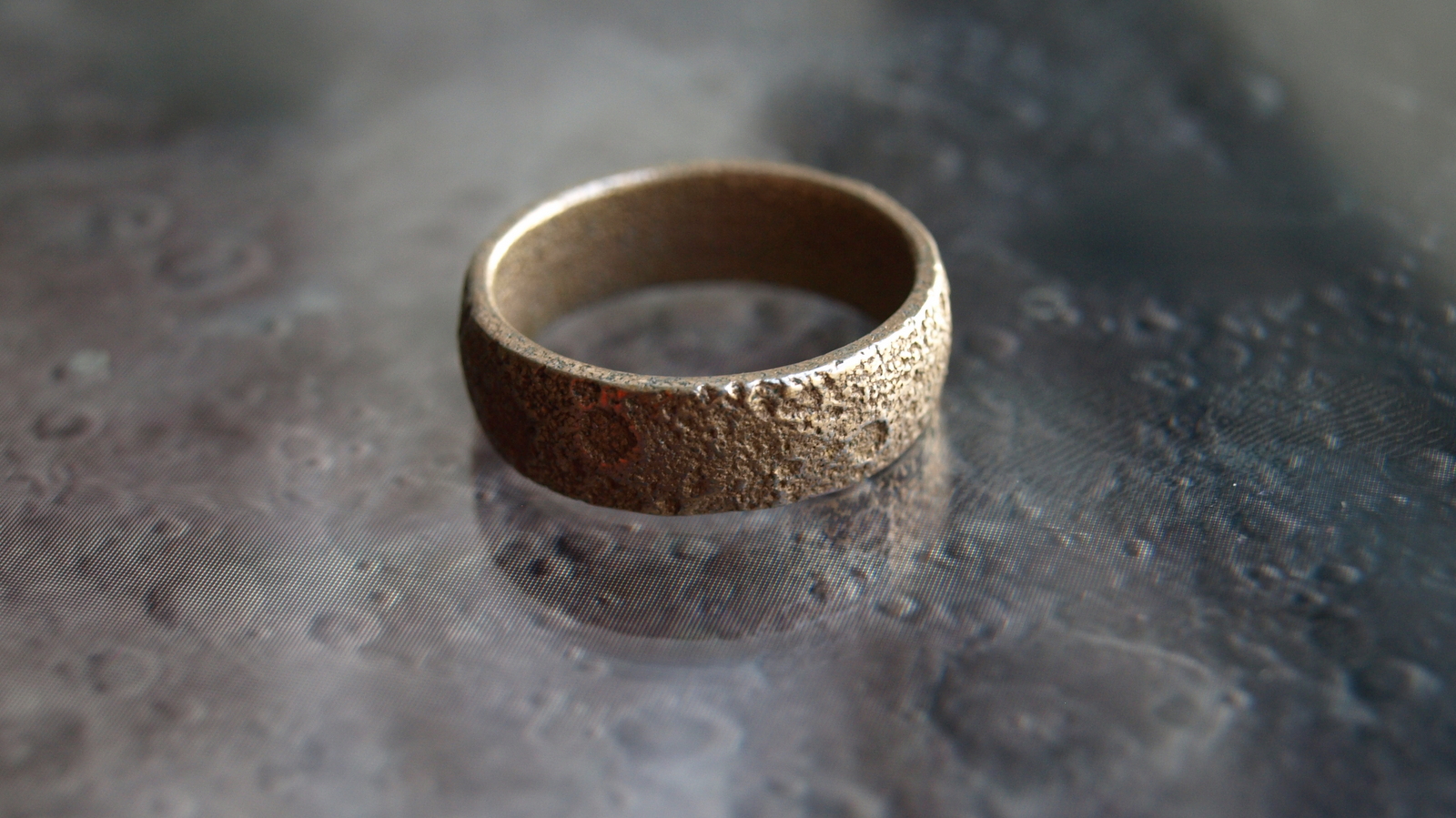


JANA
An ongoing collection of 3DPrinted toys based on a 3DScan of a real teddy bear combined with textures and modeling deformations. Each Jana model lives digitally in a server, and they are teleported to the physical world just when needed. The toys are made on-demand, they don’t exist until they are bought.
This is Jana, a teleported teddy.
he just got 3D-Scanned, poly-abused and texturized.

Jana is 1.5in tall (38mm); perfect for sitting on your desk watching you surf the interwebs.
She is cool, just take some photos every now and then, and she’ll be happy.
Jana loves music, loud and noisy if possible.
Get some of them, and they’ll entertain themselves.
3D-Printed in full color, a very nice material with a sandstone finishing.
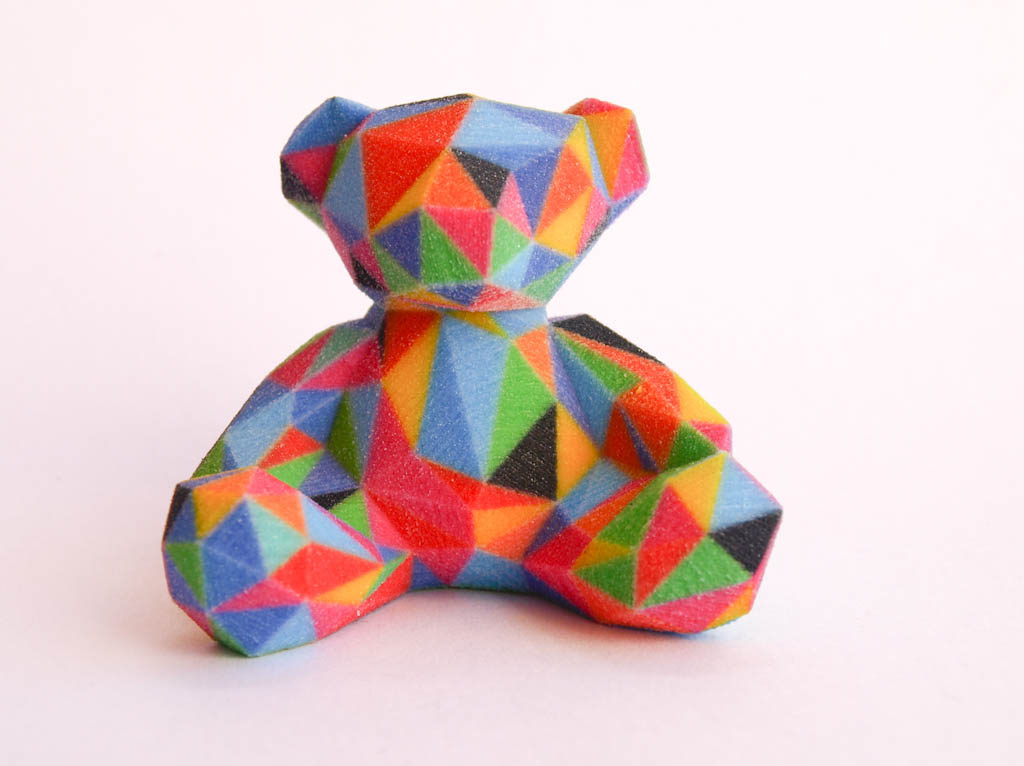
Jana Harlequina

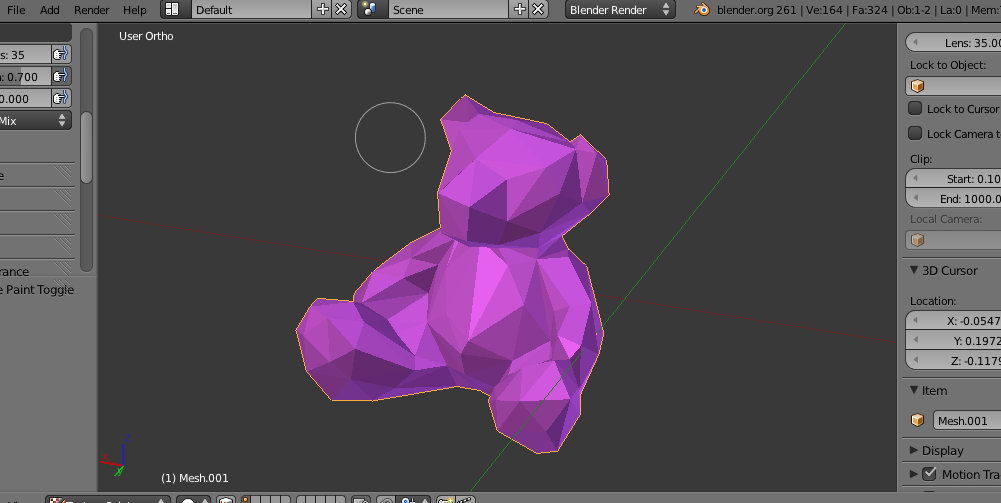
Jana is made of 324 triangles, randomly colored.
The primary aspect of Arlecchino was his physical agility.
While generally depicted as stupid and gluttonous, he was very nimble and performed the sort of acrobatics the audience expected to see. The character would never perform a simple action when the addition of a cartwheel, somersault, or flip would spice up the movement.

Jana at the Seven Seas


Jana Rainbow
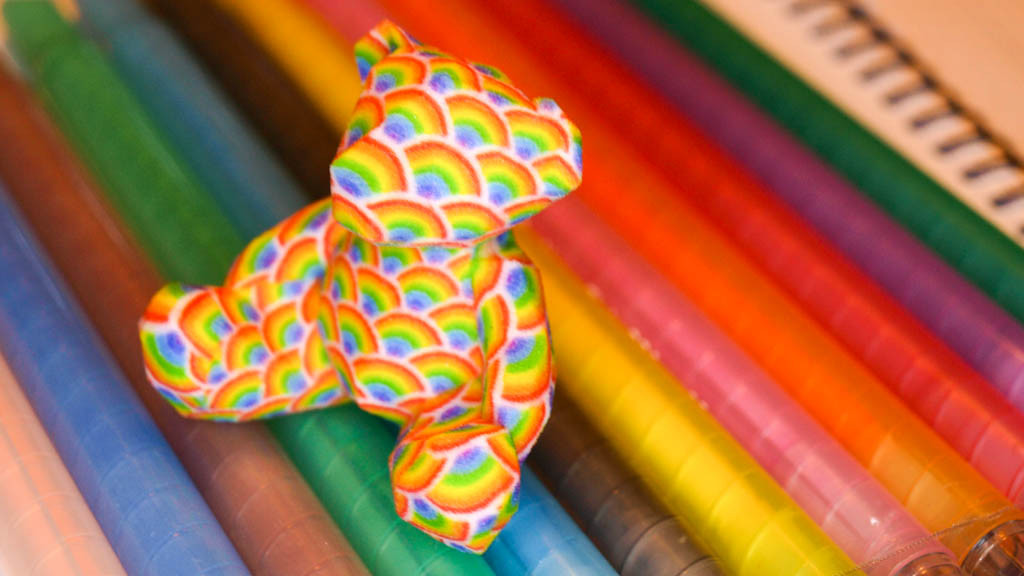
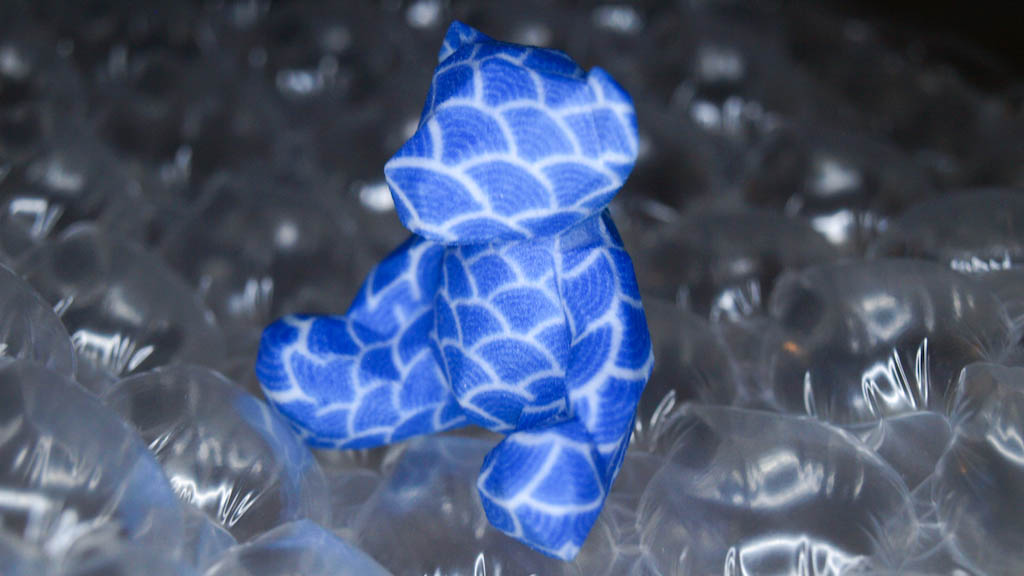
Jana fully covered by rainbows.
Because double rainbows are too mainstream!
“In my world, everyone’s a pony and they all eat rainbows and poop butterflies!” - Dr. Seuss


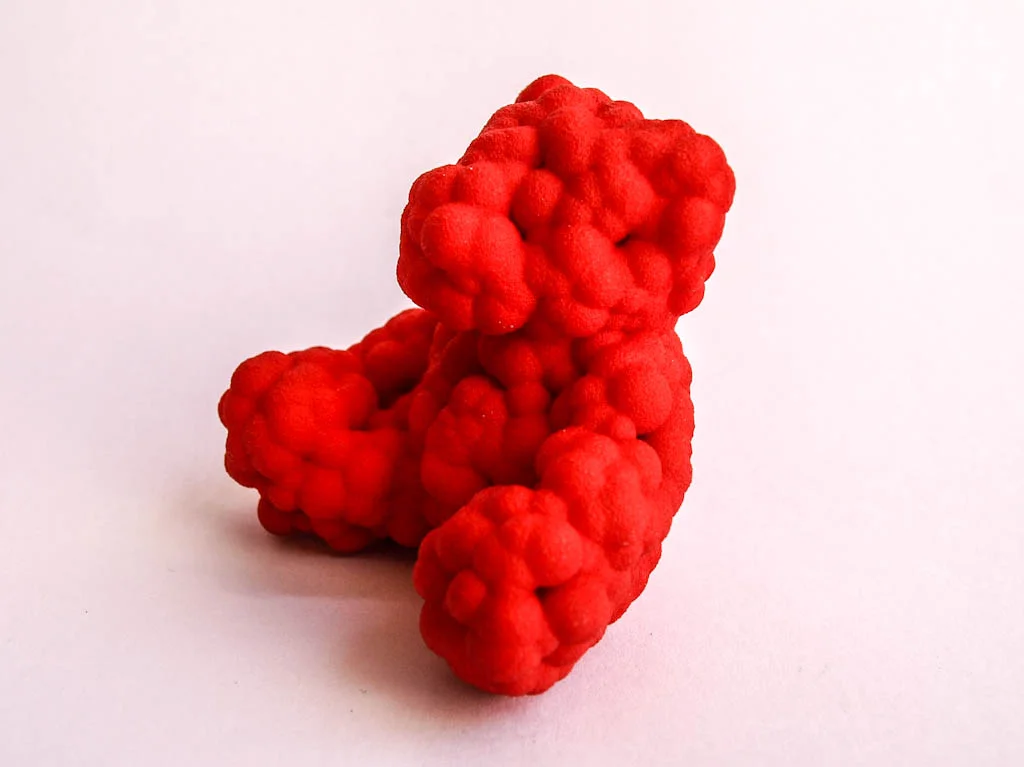
Jana BathTime

Built with a skin of bubbles and a hollow body.
Inspired by the Pix-Cell works by Kohei Nawa.
3D Printed in Red nylon.

Jana Fetish Black

3D Printed in shiny black glazed ceramics, this Jana got a sleek fetishist look & feel. She is the big sister, 2 inches tall (50mm).


Jana Hong Kong

Topographical Jana,
wrapped with the Hong Kong Harbor.


Jana Skeleton

Real bears have bones inside,
Teddy Bears have cotton,
but Jana has polygon vertices.


Jana Sketchy
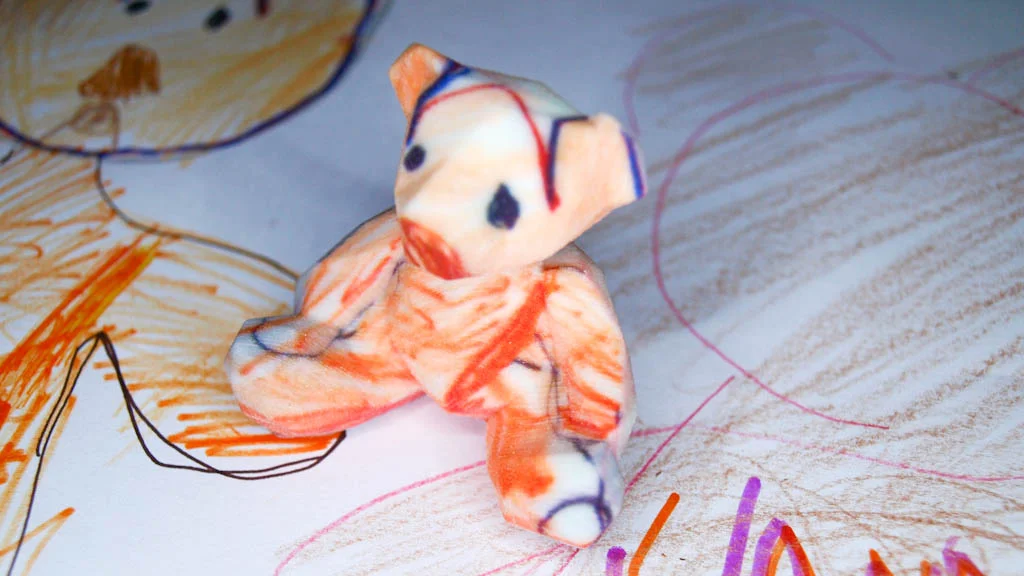
Jana painted from a kid’s drawing.


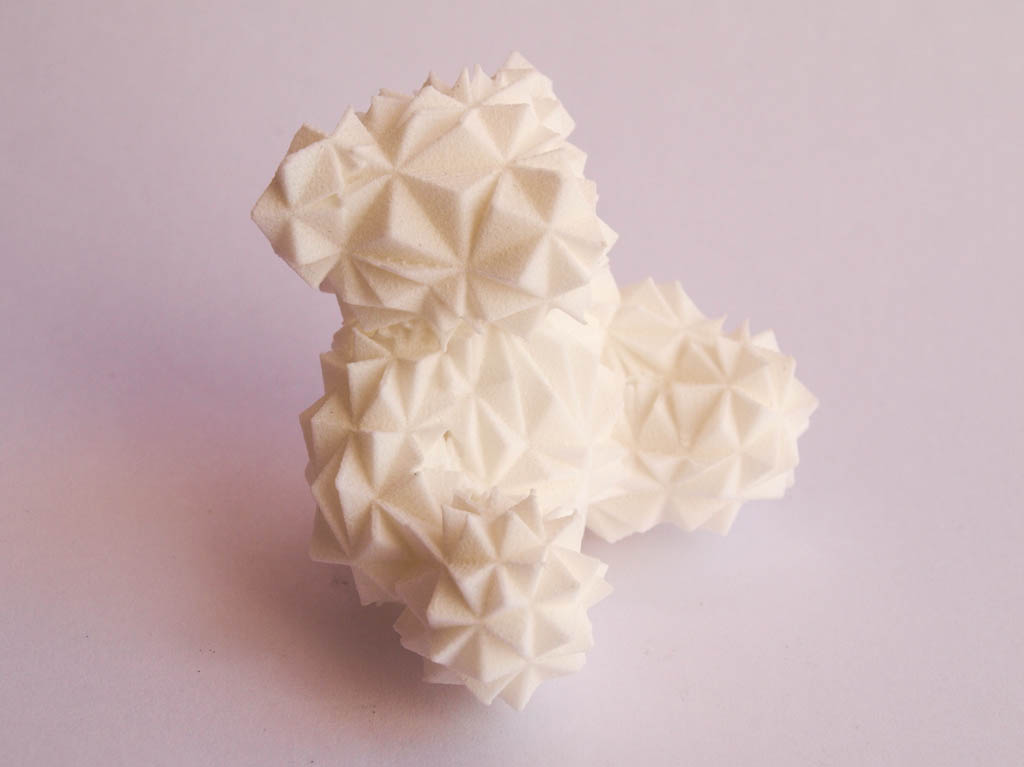
Jana and the Urchin Affair

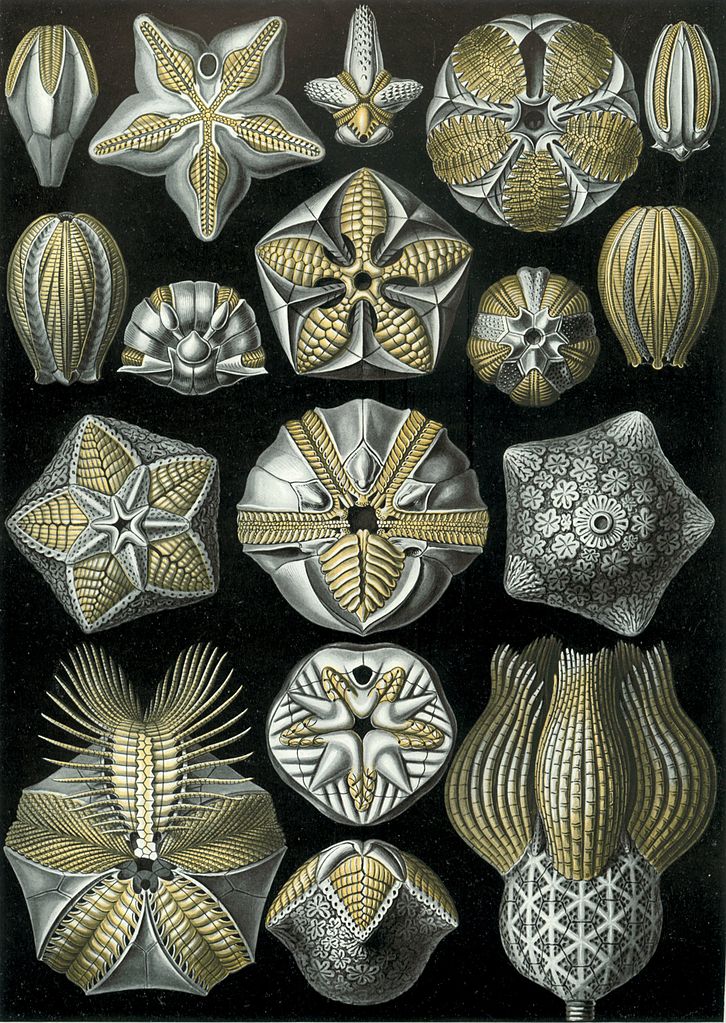
Spike filled Jana, like one of those lovely echinoidea drawn by Ernst Haeckel at the Kunstformen der Natur
About
Jana is an ongoing collection of 3DPrinted toys based on a 3DScan of a real teddy bear combined with textures and modeling deformations.
Each Jana model lives digitally in a server, and they are teleported to the physical world just when needed. The toys are made on-demand, they don’t exist until they are bought.
Process
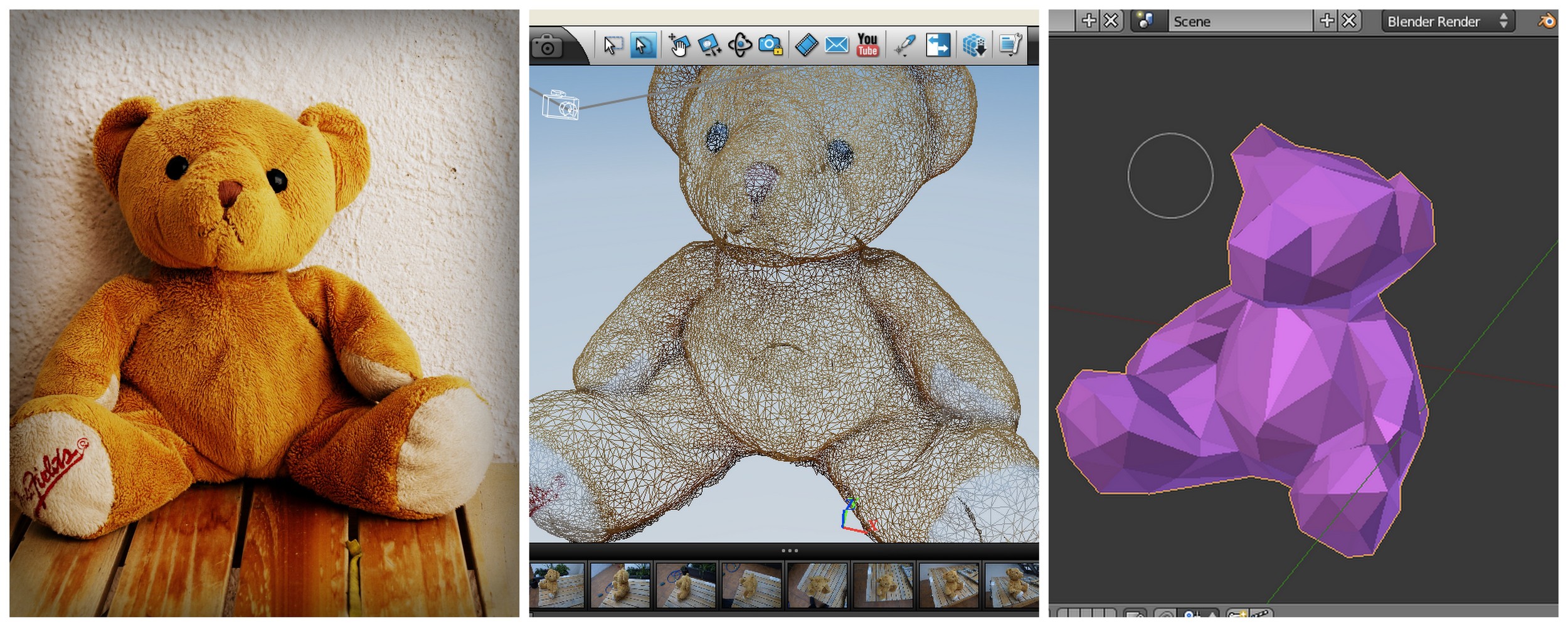
Jana is the real Teddy Bear from a 5 year old girl,
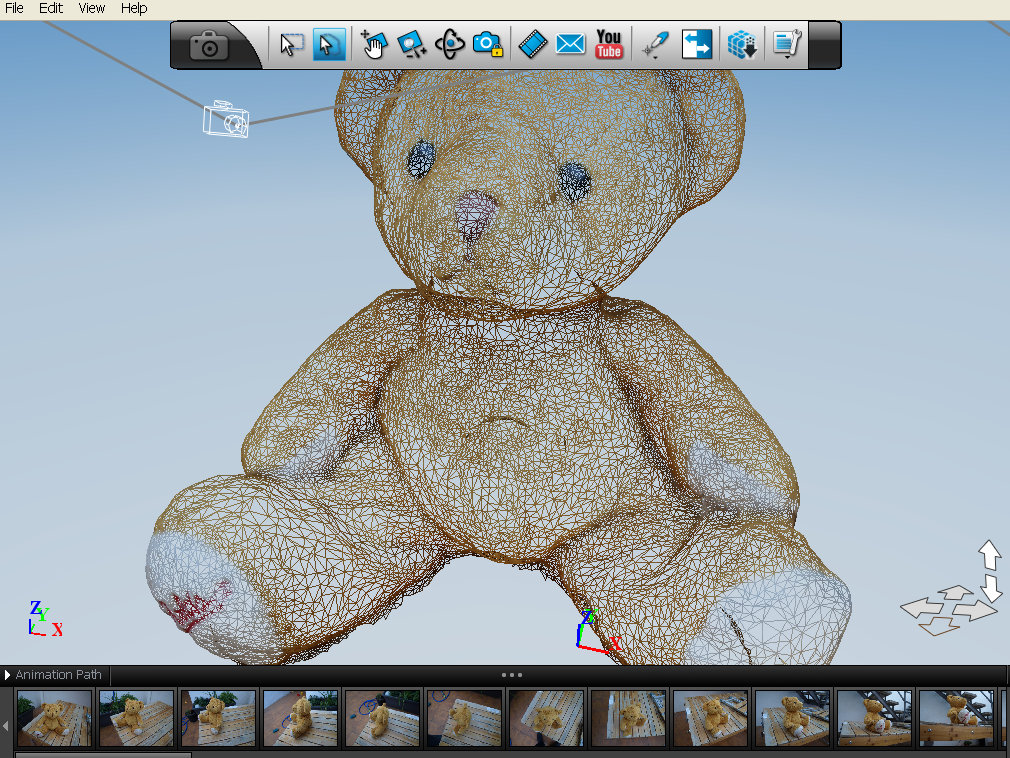
It was scanned using the Autodesk 123D-Catch software,
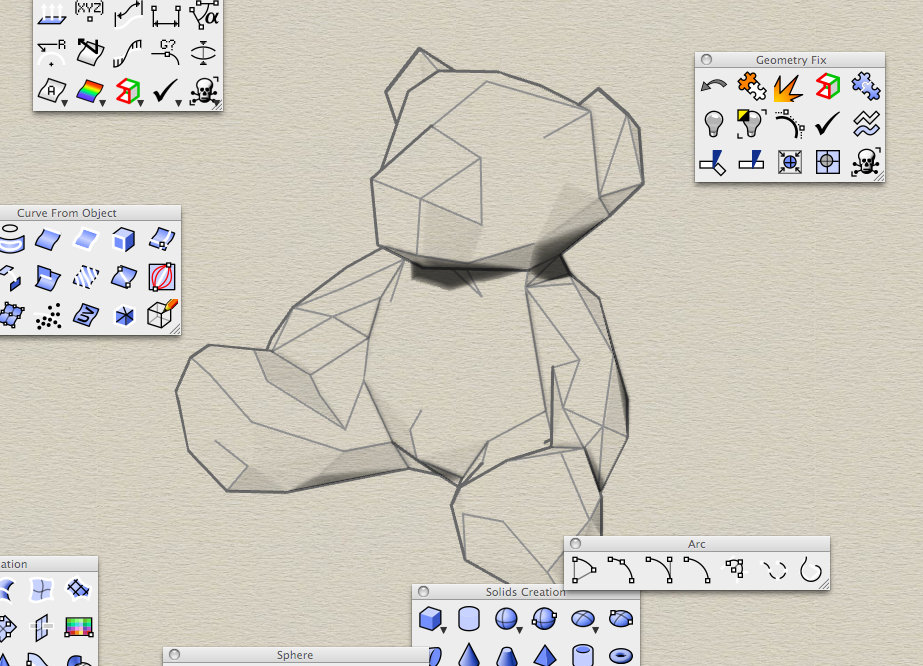
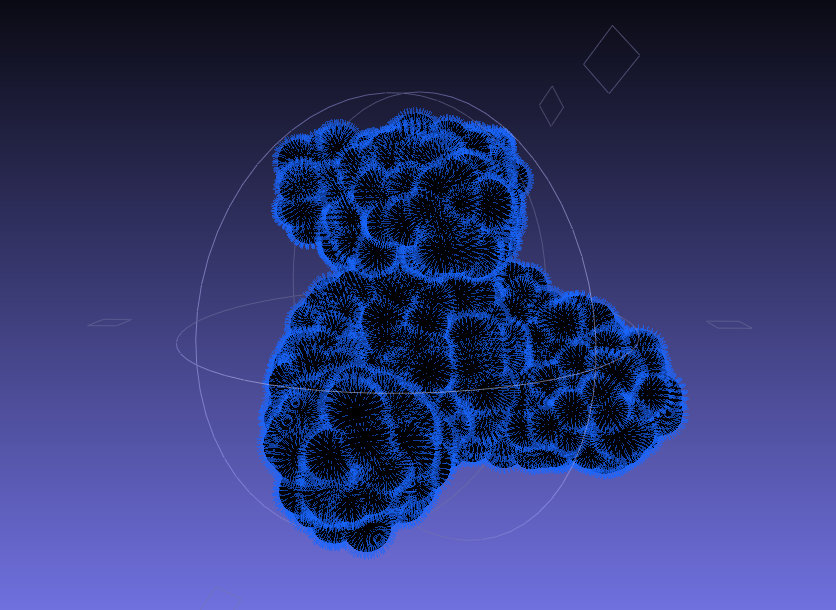
The cleaning up and re-mesheing was done with MeshMixer.
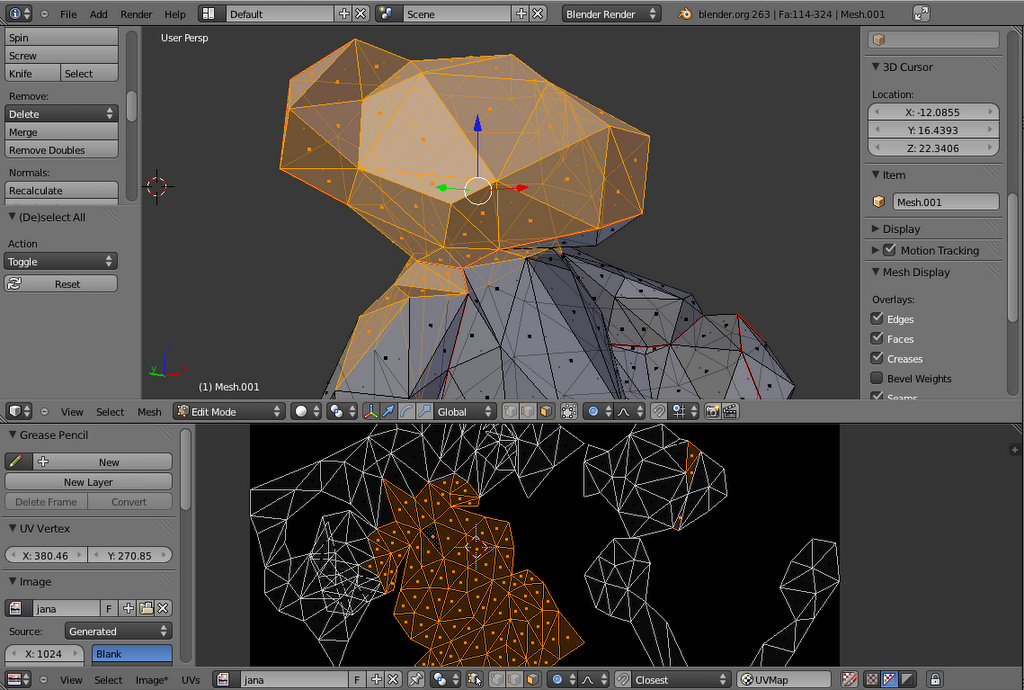
The texturing and UV mapping was done in Blender.
Mesh edits were done with MeshLab.
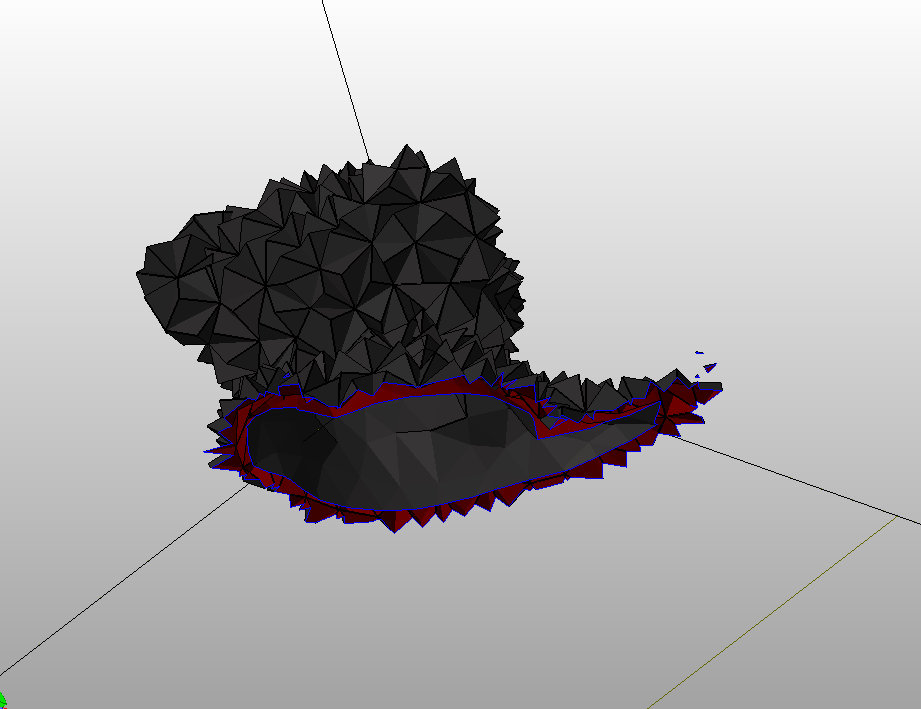
Final fixes and file preparation for 3DPrinting was handled with Netfabb.


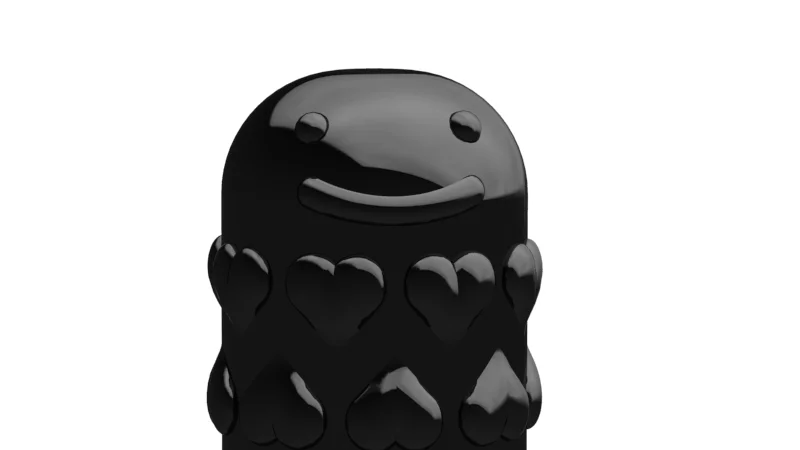
dilDIY – coDesigned pleasure objects / concept
coDesign application to make 3D Printed ceramic pleasure objects.
-> This project has been archived and removed from this site.


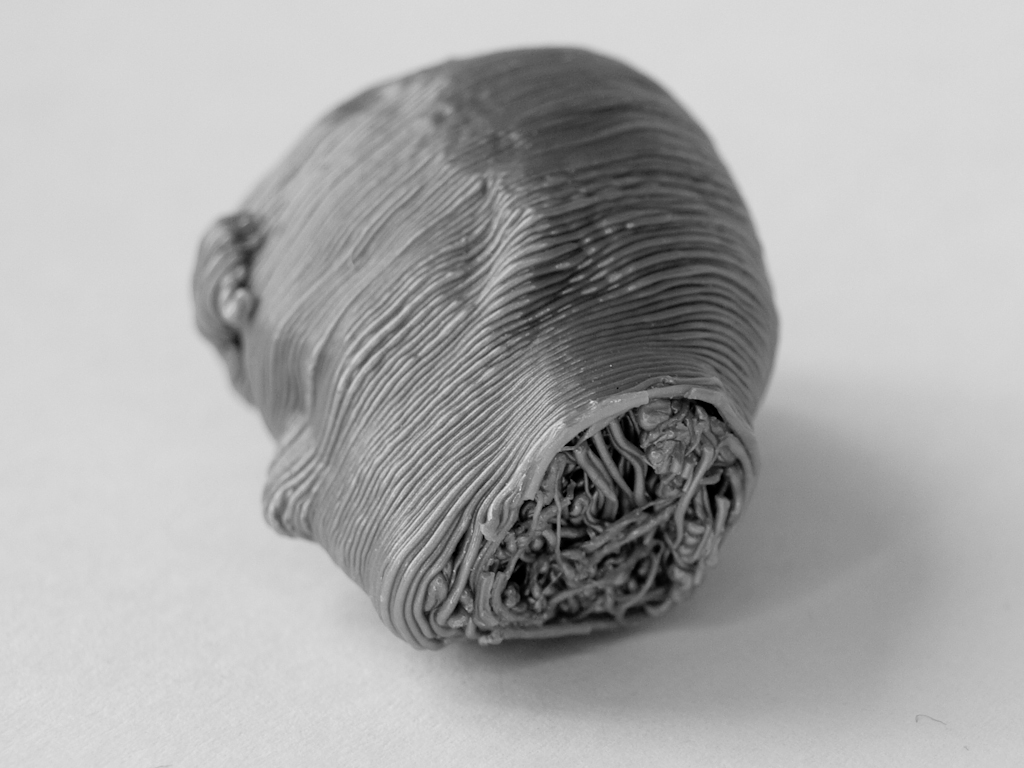
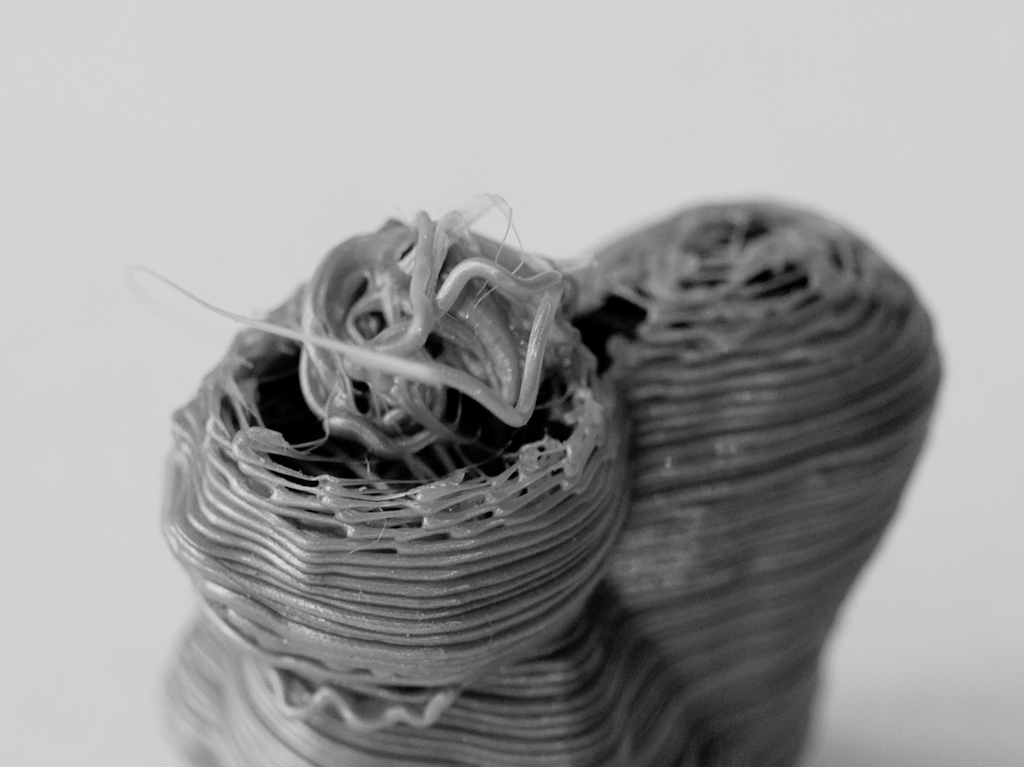
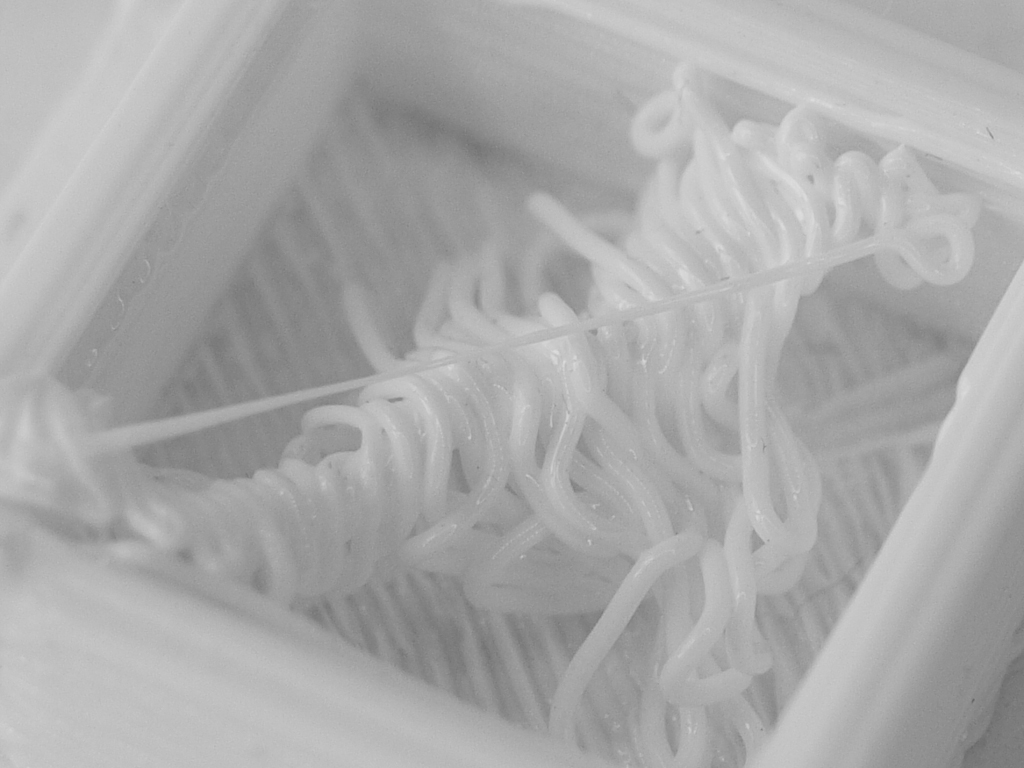
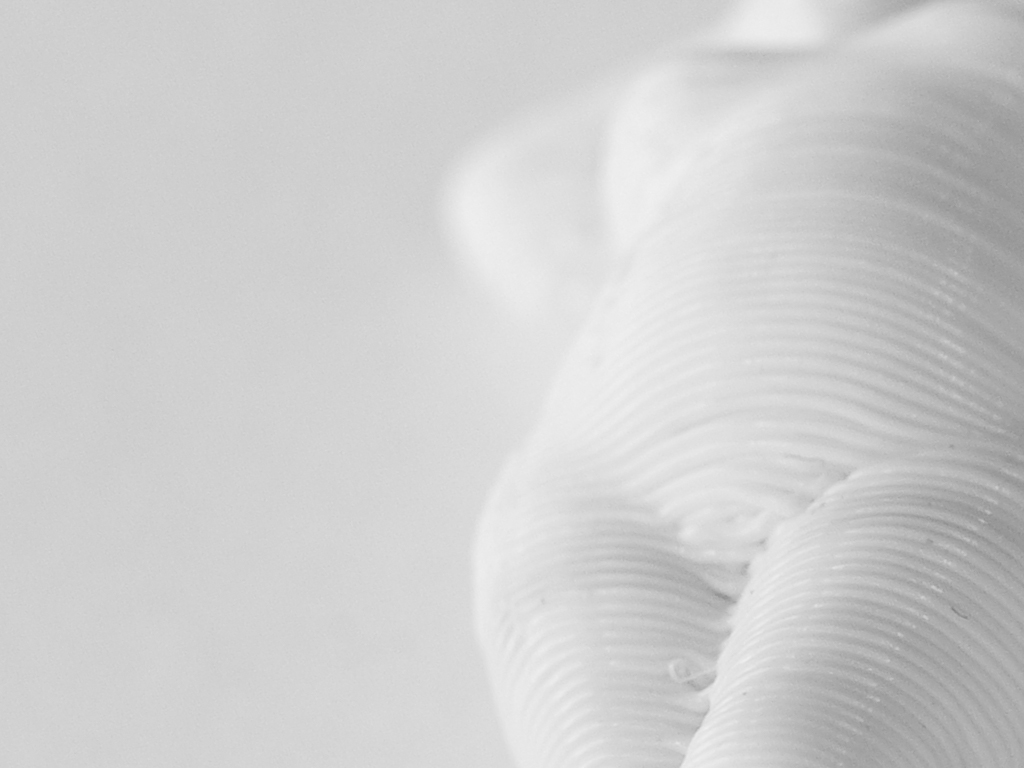
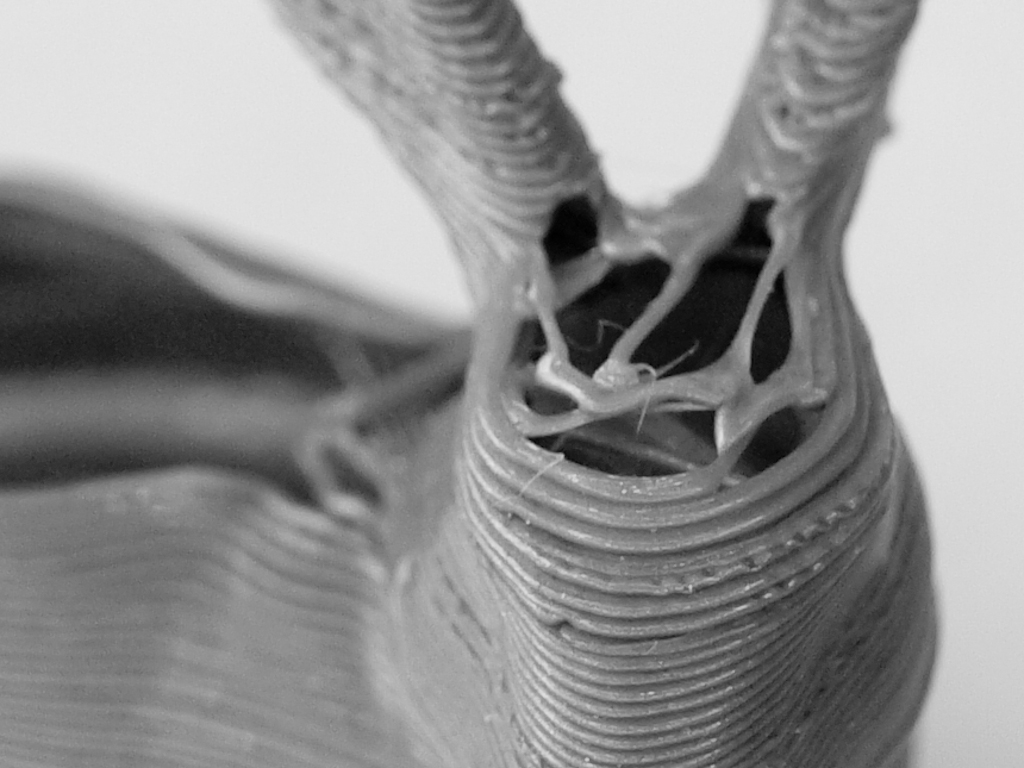
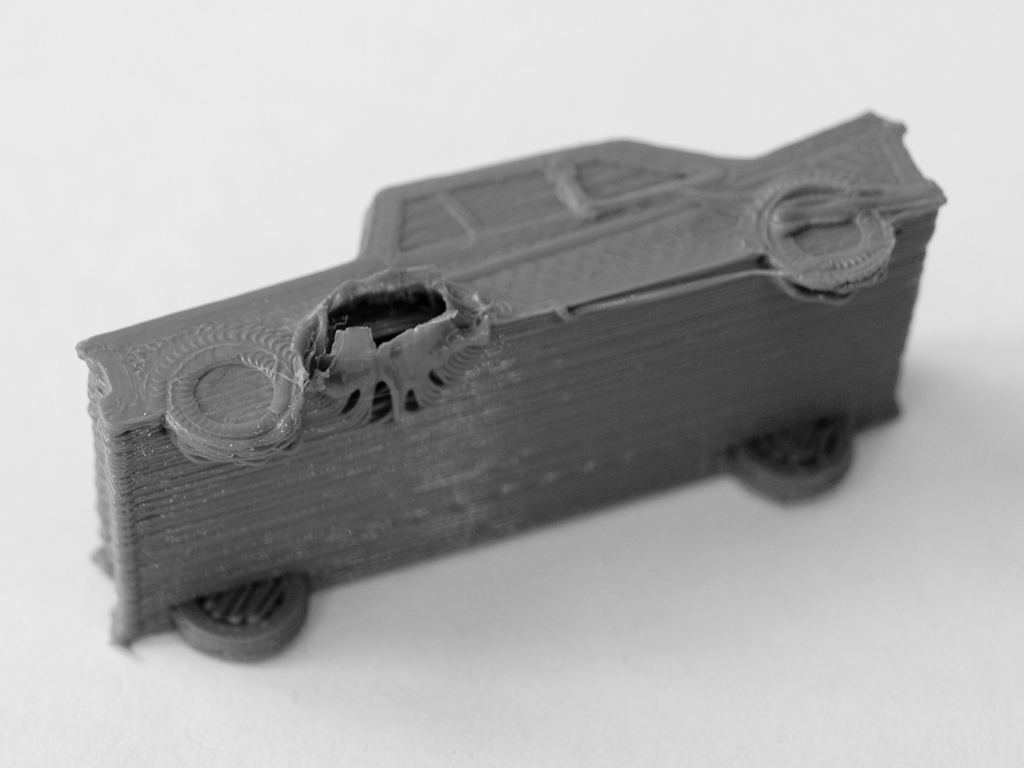
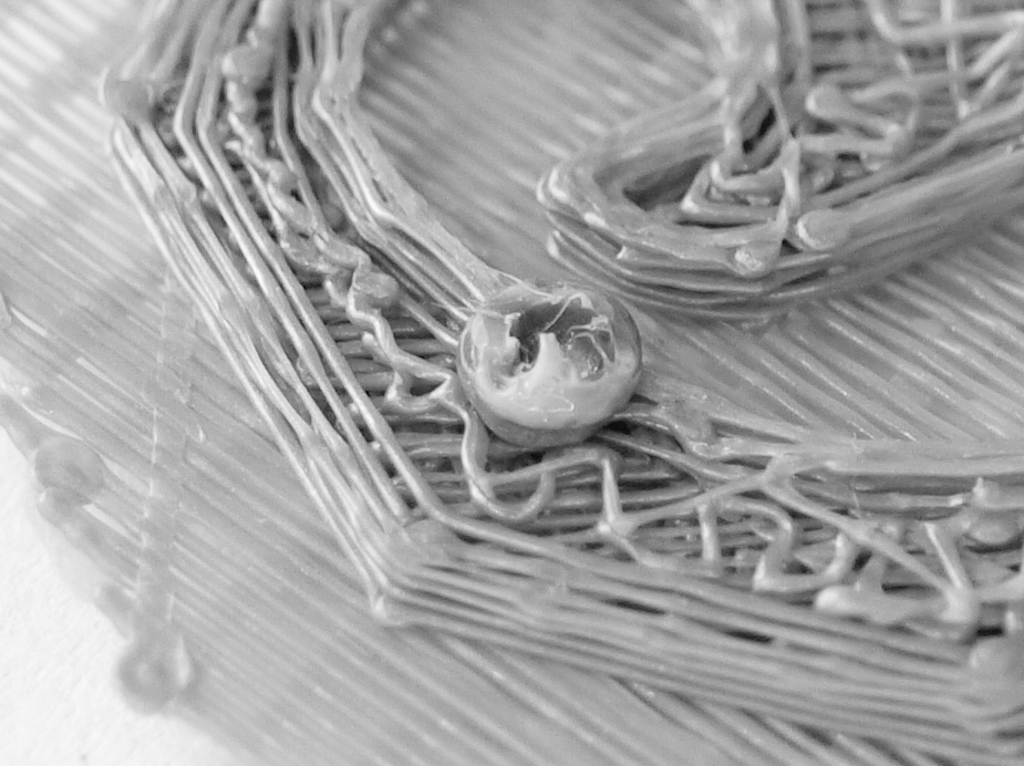
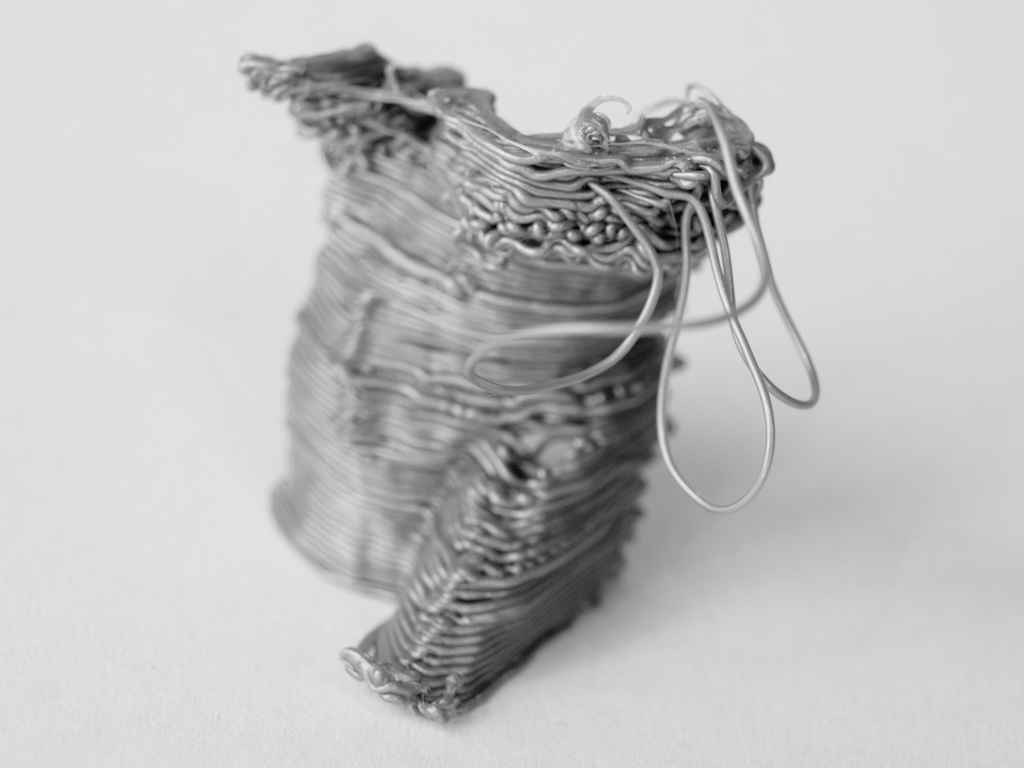
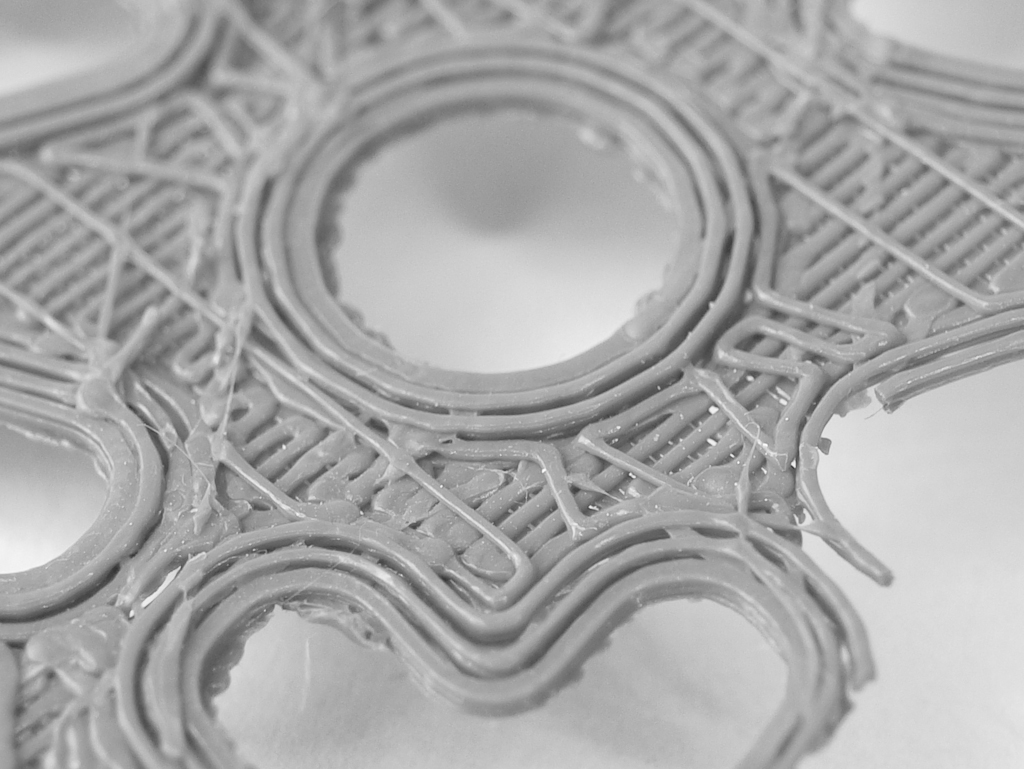
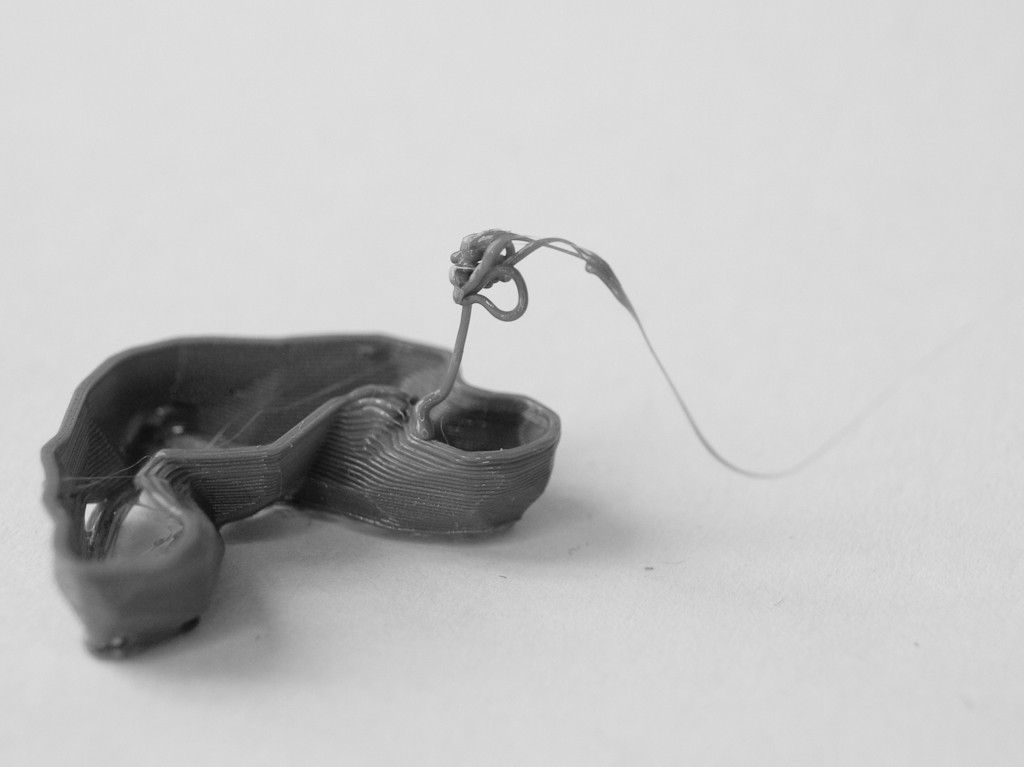
beautiful failures | accidental 3D Prints
On the path to get the perfect 3D-Print, many meters of filament get piled up as discarded disappointments,
as bastard objects that never were,
as unborn half-things…
… and they are beautiful.
A photographic collection of discarded pieces made with a domestic 3D Printer.
Back in 2011 I got my first DIY 3DPrinter, an Ultimaker, a very nice piece of hardware that builds whatever I command.
Mastering a 3DPrinter is a craft; it is earning a set of skills coupled with a set of tools.
In the process of domesticating my 3D Printer I had to figtht with hundreds of variables, thousands of settings and millions of lines of GCode.
I can’t describe well enough the joy of getting your first object 3D printed as intended, but it is a huge success.
But, on the path to get the perfect 3D-Print, many meters of filament get piled up as discarded disappointments,
as bastard objects that never were,
as unborn half-things…
… and they are beautiful.
Ever since I first saw a 3D-printed object, I’ve been fascinated by the layered look & feel.
As a designer I call for honesty on product's aesthetics, I tend to like things that don’t hide their nature. Same with 3DPrinted objects, I like the texture and finishing of additive manufacturing, specially FDM (Fused-Deposition-Modeling).



nice? I also made a book.

Beautiful Failures - serendipity & the art of 3d printing
A video by Adam Proctor

What is it about failed 3d prints that piques our curiosity? Whilst ruined 2d prints are often just discarded, failed 3d prints may often be kept as aesthetically pleasing artefacts, with designers sharing their 'rejects' on forums and image galleries. Product designers are even manipulating code to force prints to 'fail' in the hope of discovering new printing methods and engineering solutions.
Contributors:
Bernat Cuni
Dr. Paul O'Dowd
Dr. Peter Walters

Music: Poddington Bear
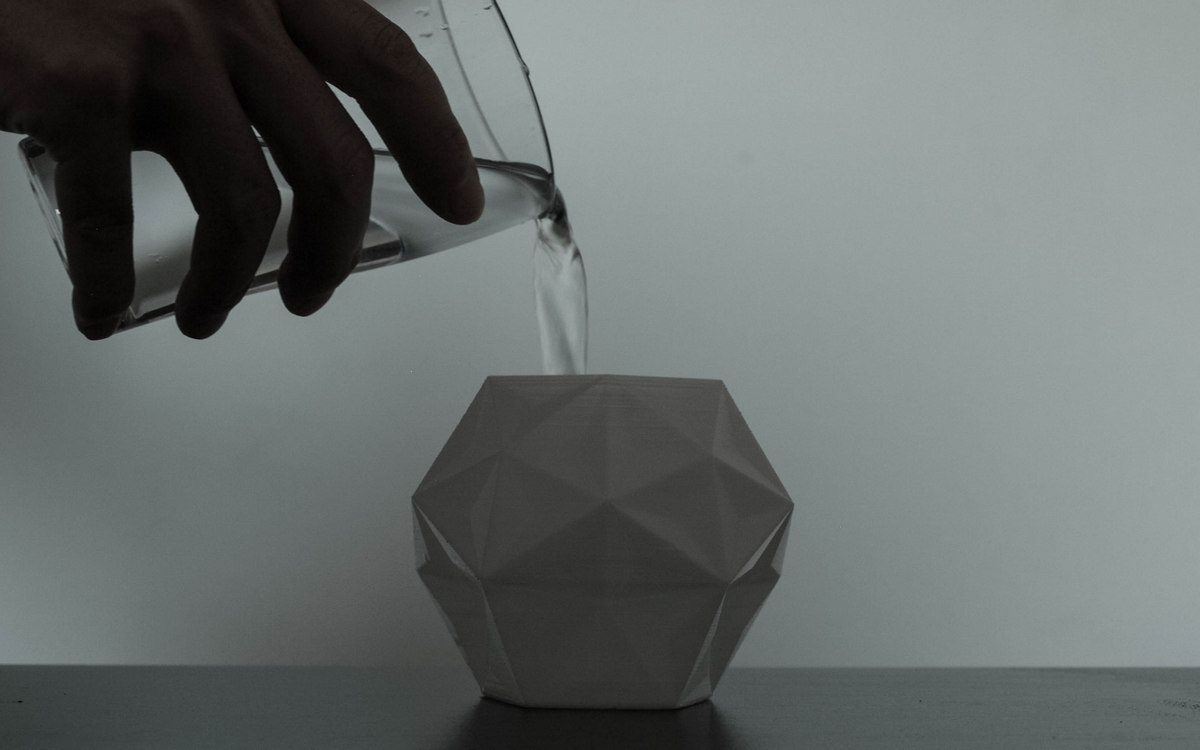
StarVase
A nice vase with pentagonal sides.
Evolved from a dodecahedron, surrounded by stars.
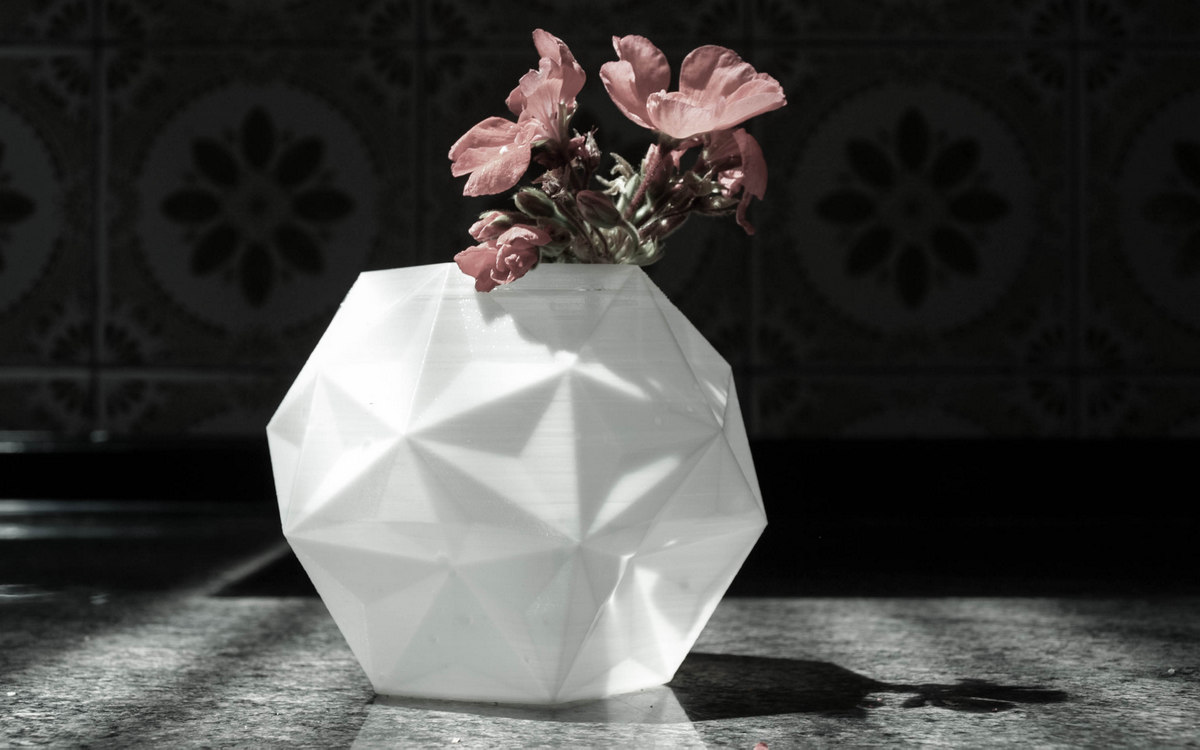
A nice vase with pentagonal sides.
Evolved from a dodecahedron, surrounded by stars.
Robot made, in a domestic 3D-Printer.

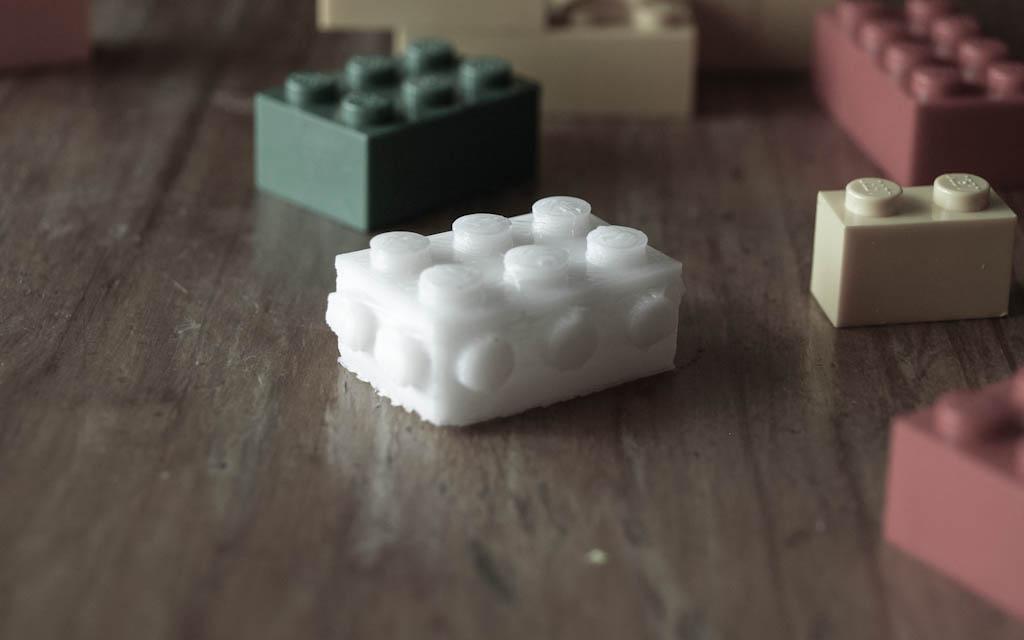
brick 2×3 = 16
A classic lego-like brick with knobs on every side.
A classic lego-like brick with knobs on every side.

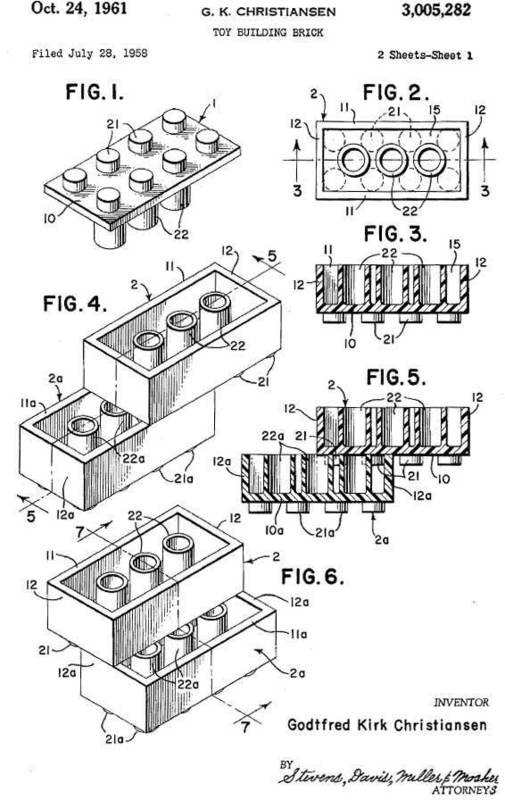
Inspired by ffff.at Free Universal Construction Kit,
fffff.at/free-universal-construction-kit/
and the fact that Lego’s brick patent is over.
boingboing.net/2011/10/21/expired-patent-of-the-day-lego.html
Detailed dimensions and proportions of a classic Lego brick can be found here:
robertcailliau.eu/Lego/Dimensions/zMeasurements-en.xhtml

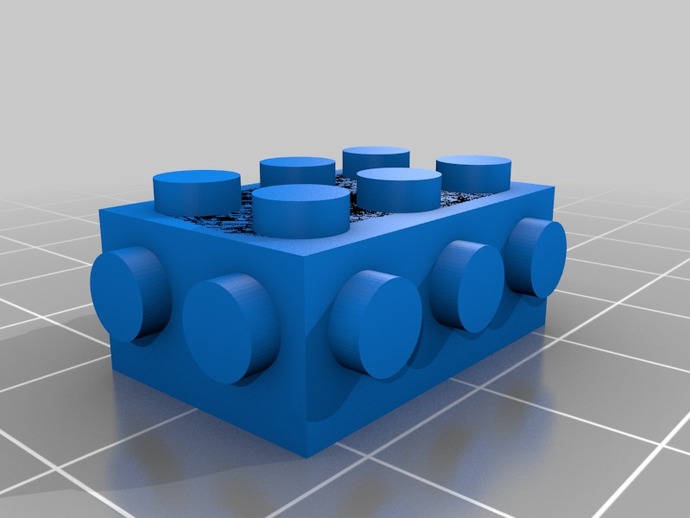
Print & share: grab STL files @Thingiverse


Structures & Lattices
Ongoing research on structures & lattices to enhance SLS 3D-Print properties.
3D printing allows for the creation of shapes and volumes never possible before,
thus, materials might behave differently when presented on new shapes.
Ongoing research on structures & lattices to enhance SLS 3D-Print properties.
3D printing allows for the creation of shapes and volumes never possible before,
thus, materials might behave differently when presented on such shapes.
Taking the Selective Laser Sintering process as the starting point for this exploration,
we have developed the following structures:
CubHex
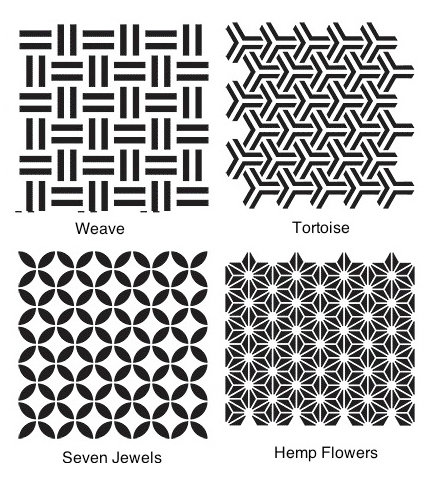
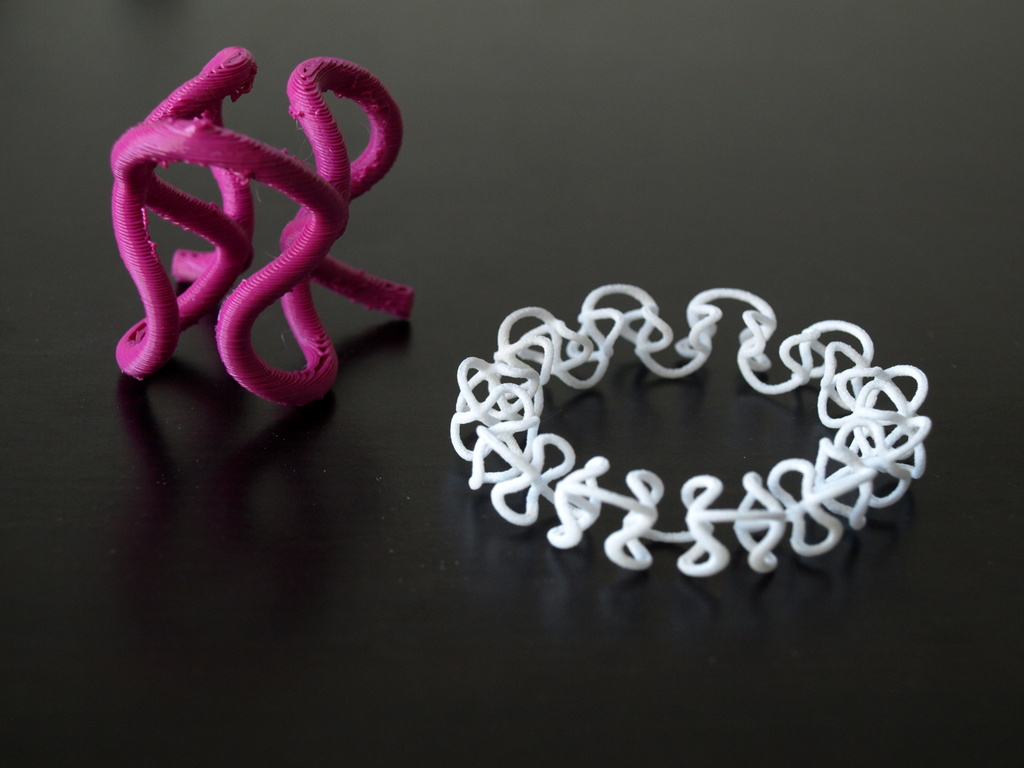
Inspired by traditional Japanese patterns, this structure is composed by three interlaced structures build with 90 degree connections that appear hexagonal when seen frontally.
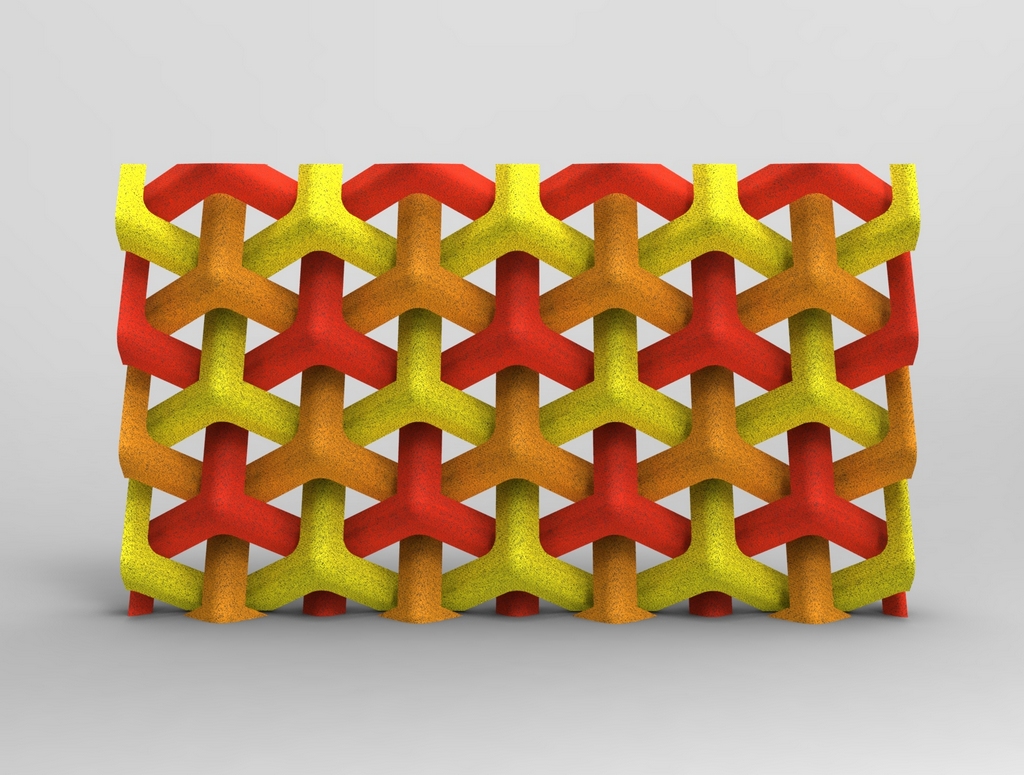
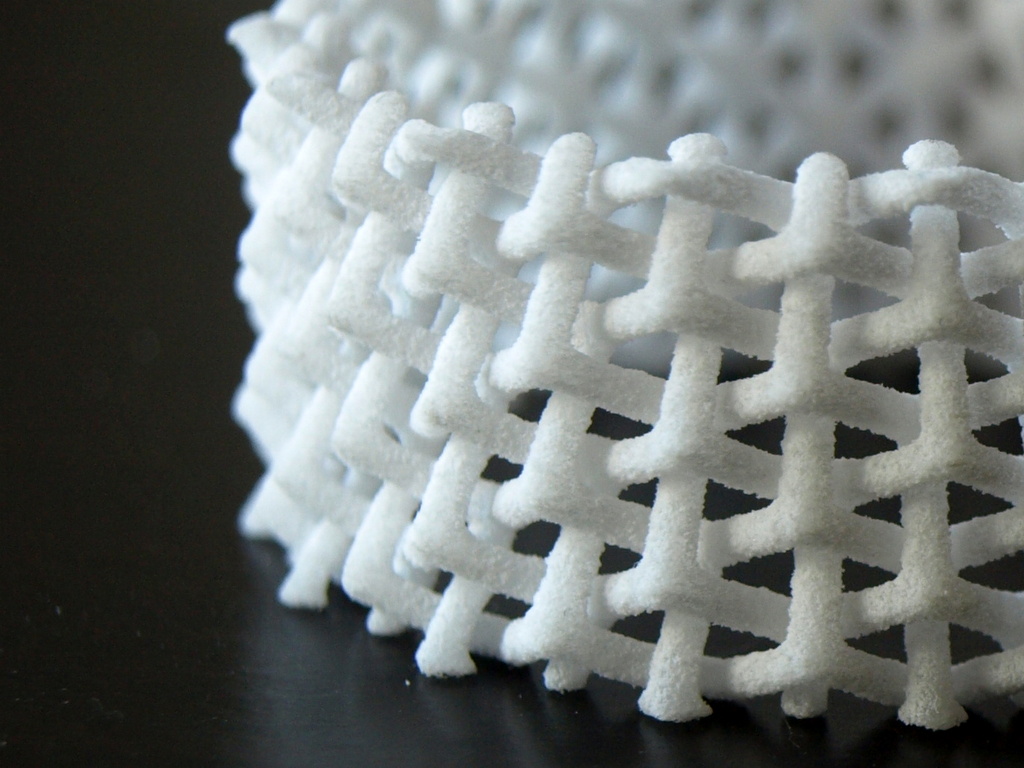
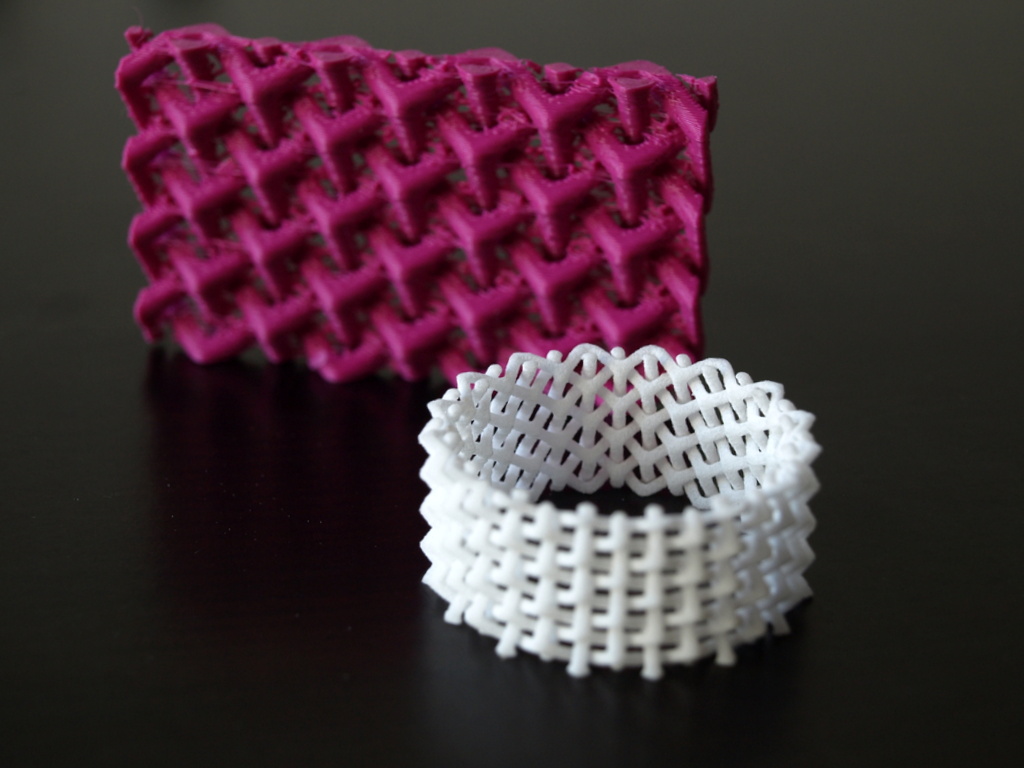
This structure is suitable for external walls and parts that require strength in one axis but demand flexibility in another, like this example of a cylinder, which is incredibly strong in height direction, but the circumference has certain deformable tolerance.
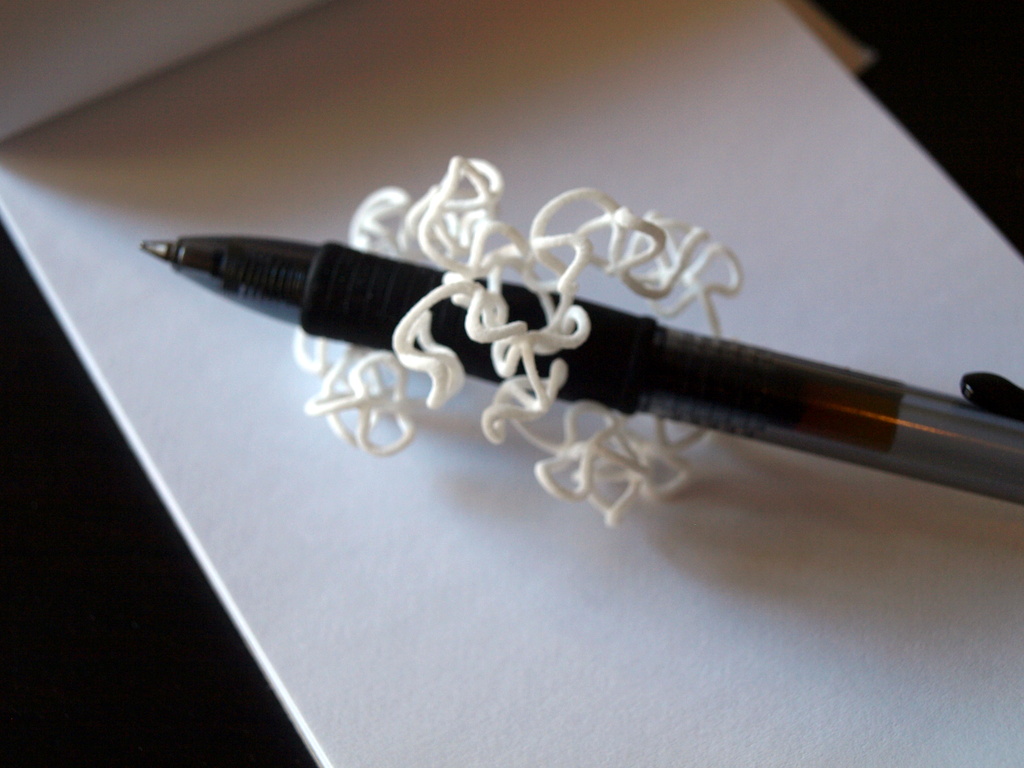
FleX2
Structure capable to flex in various directions.
The repeating unit, features connected curvatures for maximum stretchiness.
DoubleHoney
Stiff structure is composed by a stretchiness grid of connected bridges.

Expandable structures
Since one of the big limitations of 3D-Printing is size,
it wold be great if we could print folded parts that expand once printed: Think printing an umbrella.
Selective SLS technology is totally capable of printing interlacing and moving parts,
so, it is a matter of finding the right structure to minimize printing size and maximize volume and strength.
initially , I focused on designed a 3D version of the popular Origami Magic Ball,

Early results weren’t satisfactory enough; They involved too many connectors and hinges.
I’m still looking for the right proportions to successfully generate live-hinges in SLS,
if any idea, please share your thoughts.

About
Bonus: an inspirational video on how to quickly fold a t-Shirt.how to fold a T-shirt.
The idea to develop some enhanced structures for 3D-Printing came when discussing about Adiitive Manufacturing and Textiles with a colleague that was questioning the feasibility to print full body garments, so I suggested to print them folded.
Imagine; we could print filled-up wardrobes!
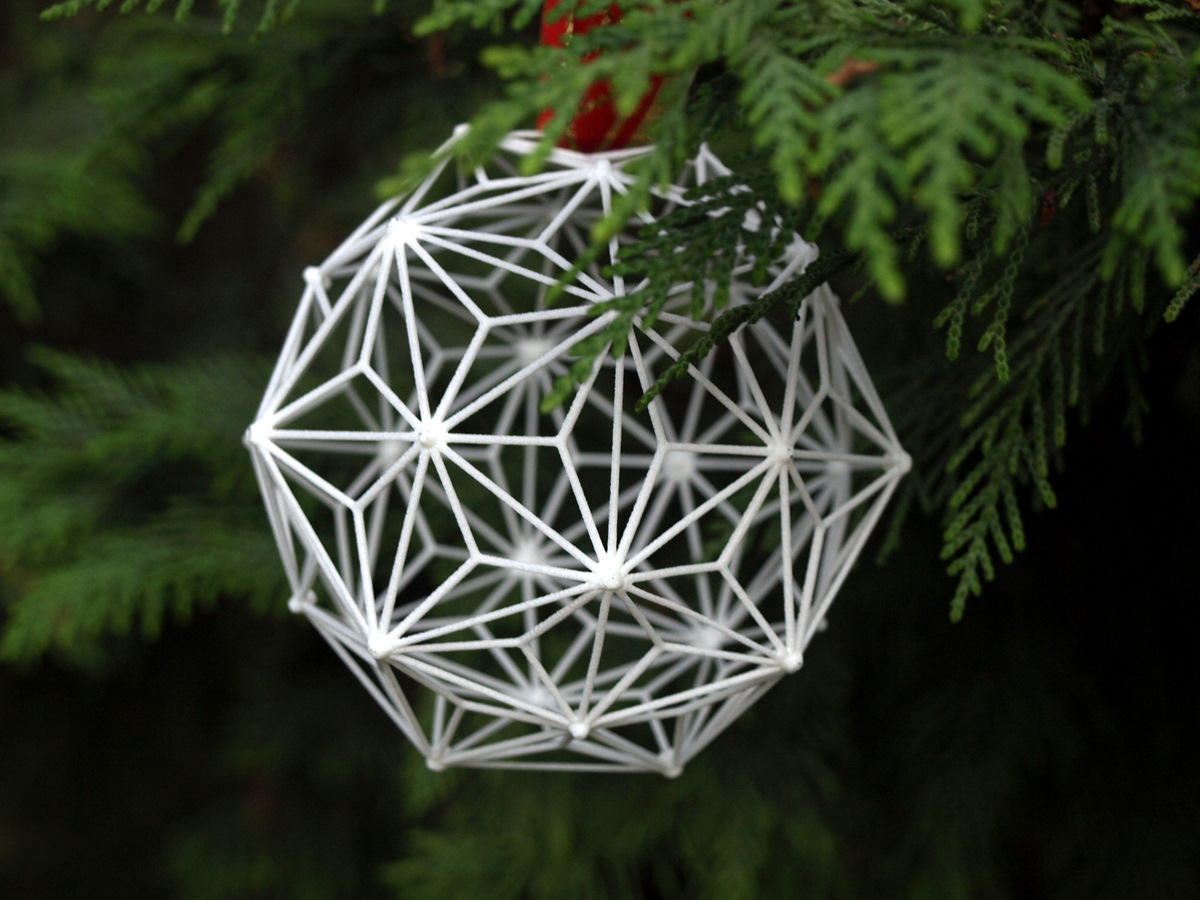
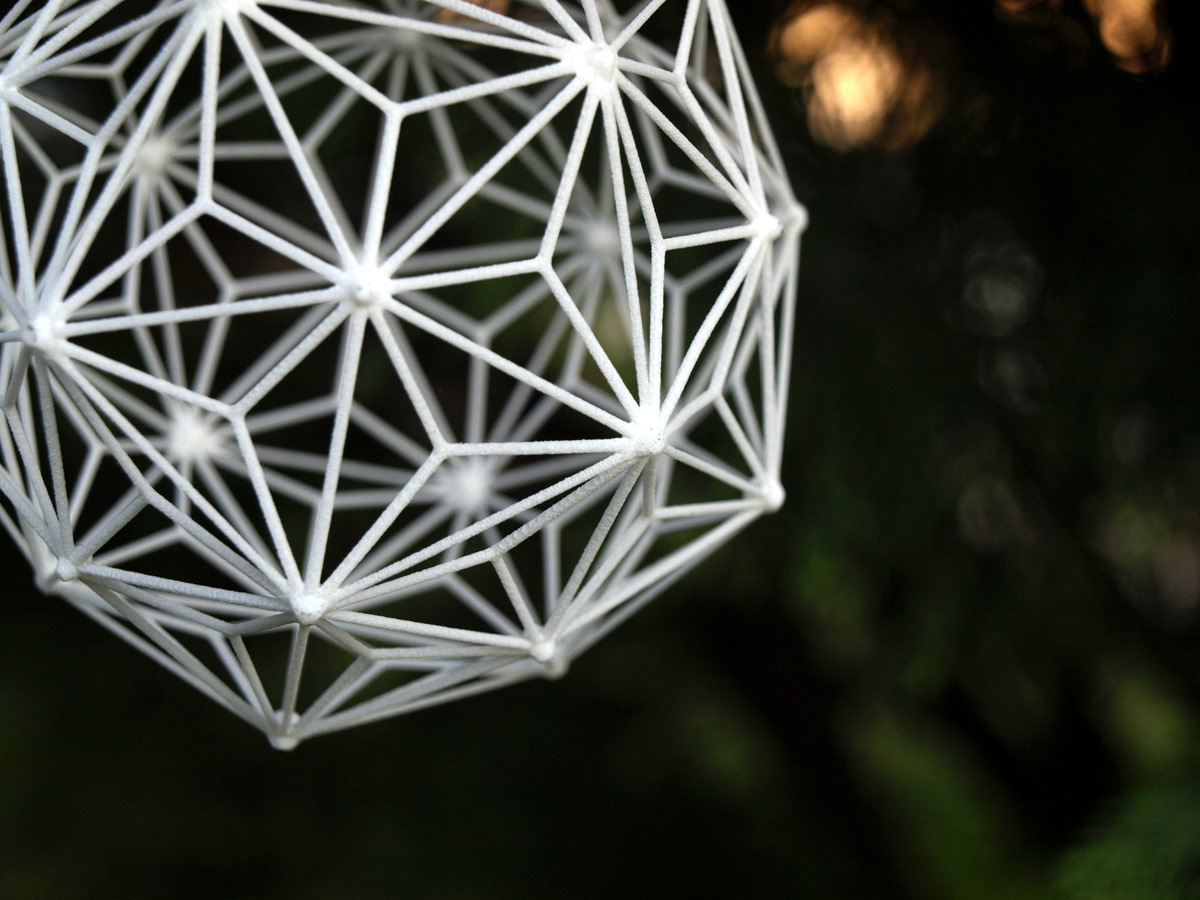
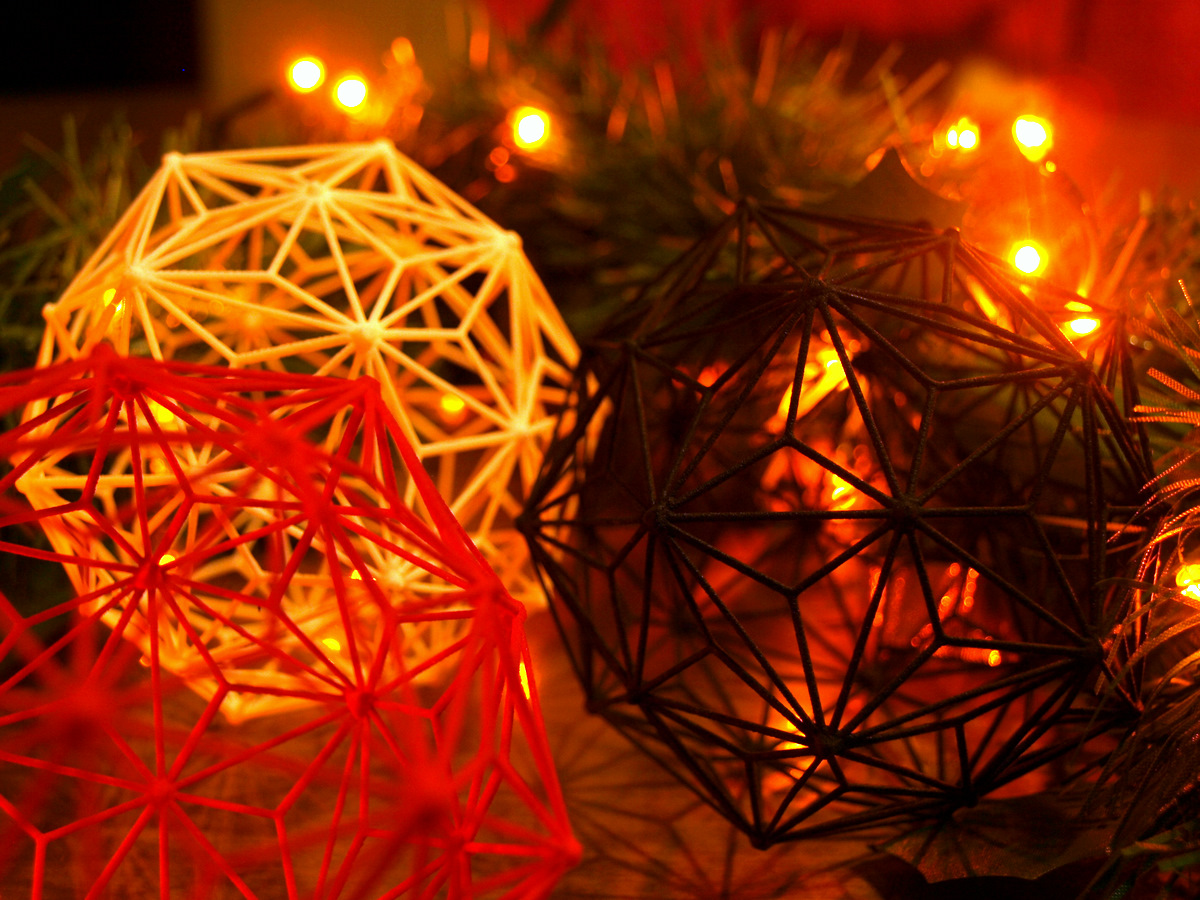
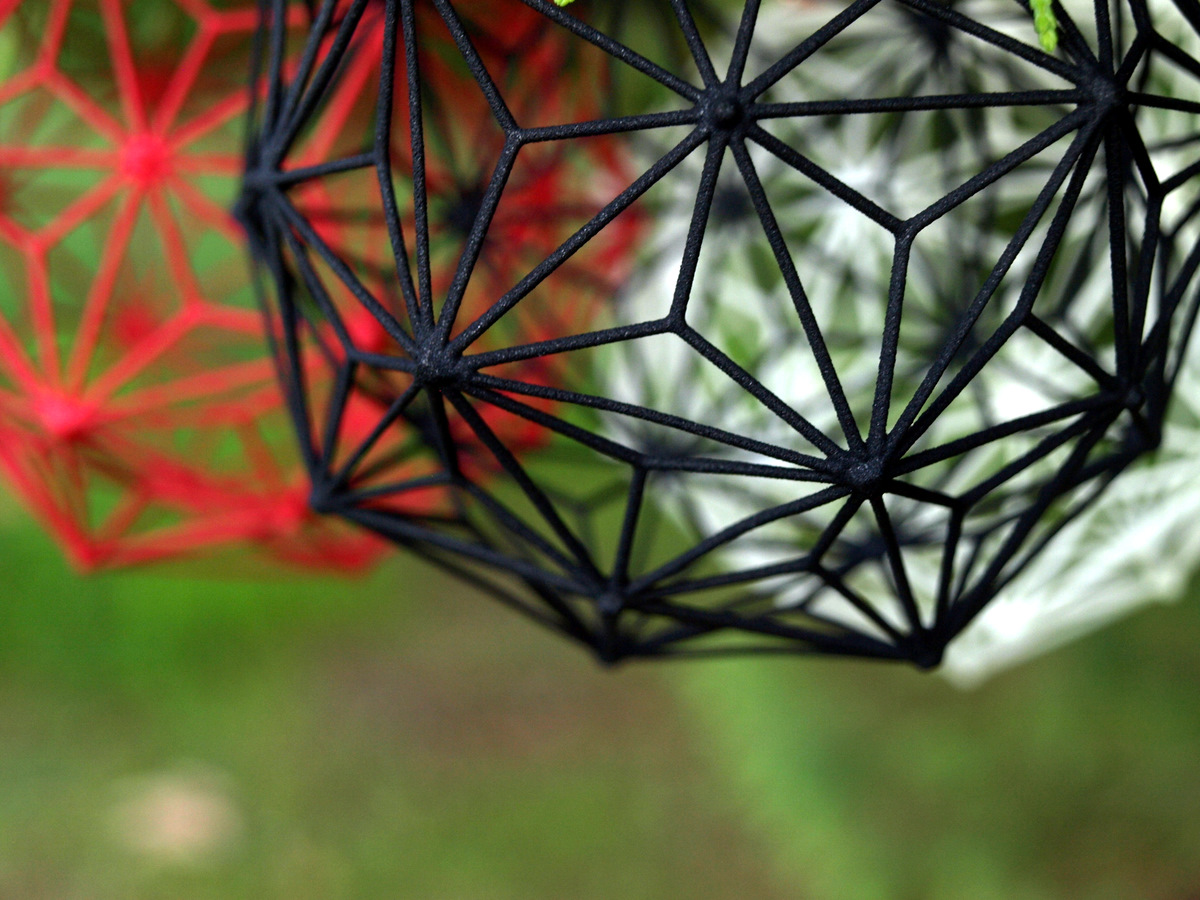
3D Printed Christmas Ball
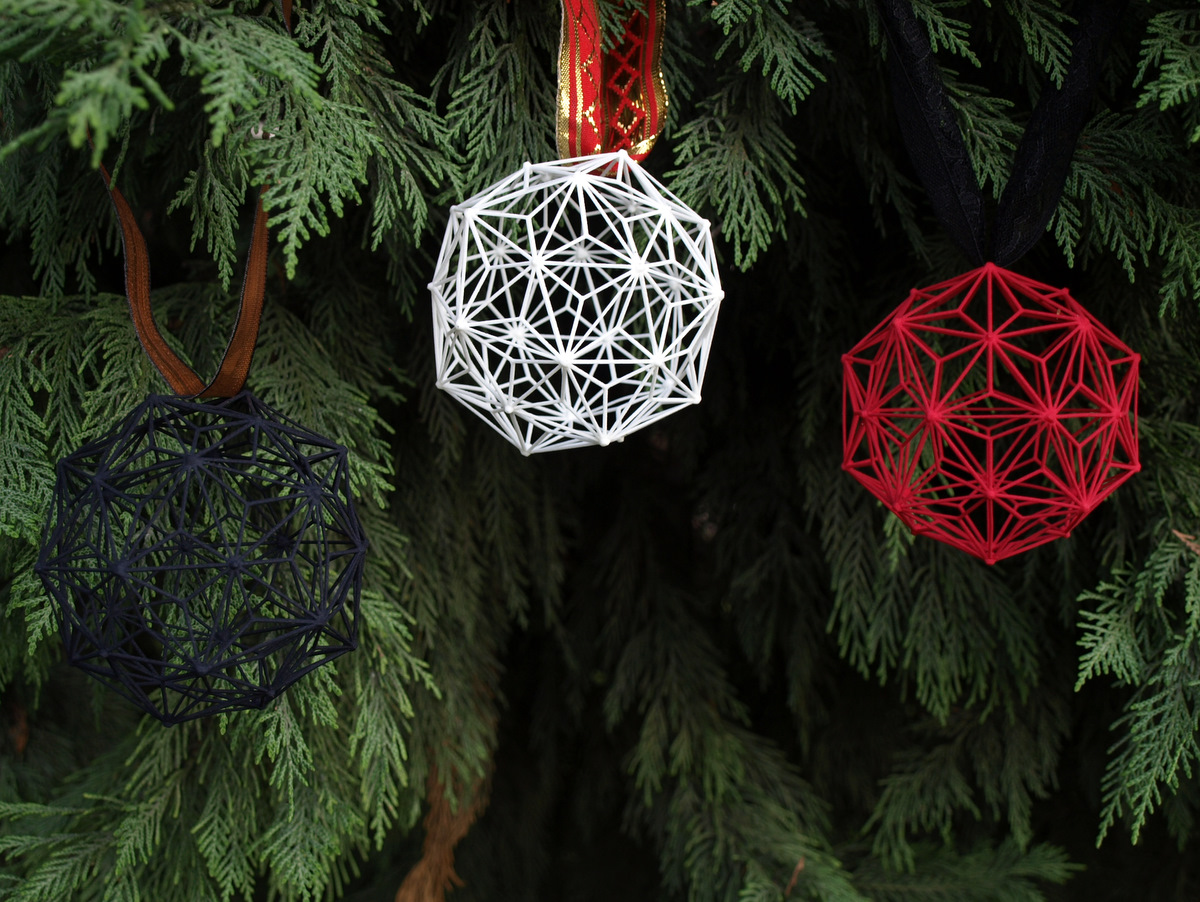
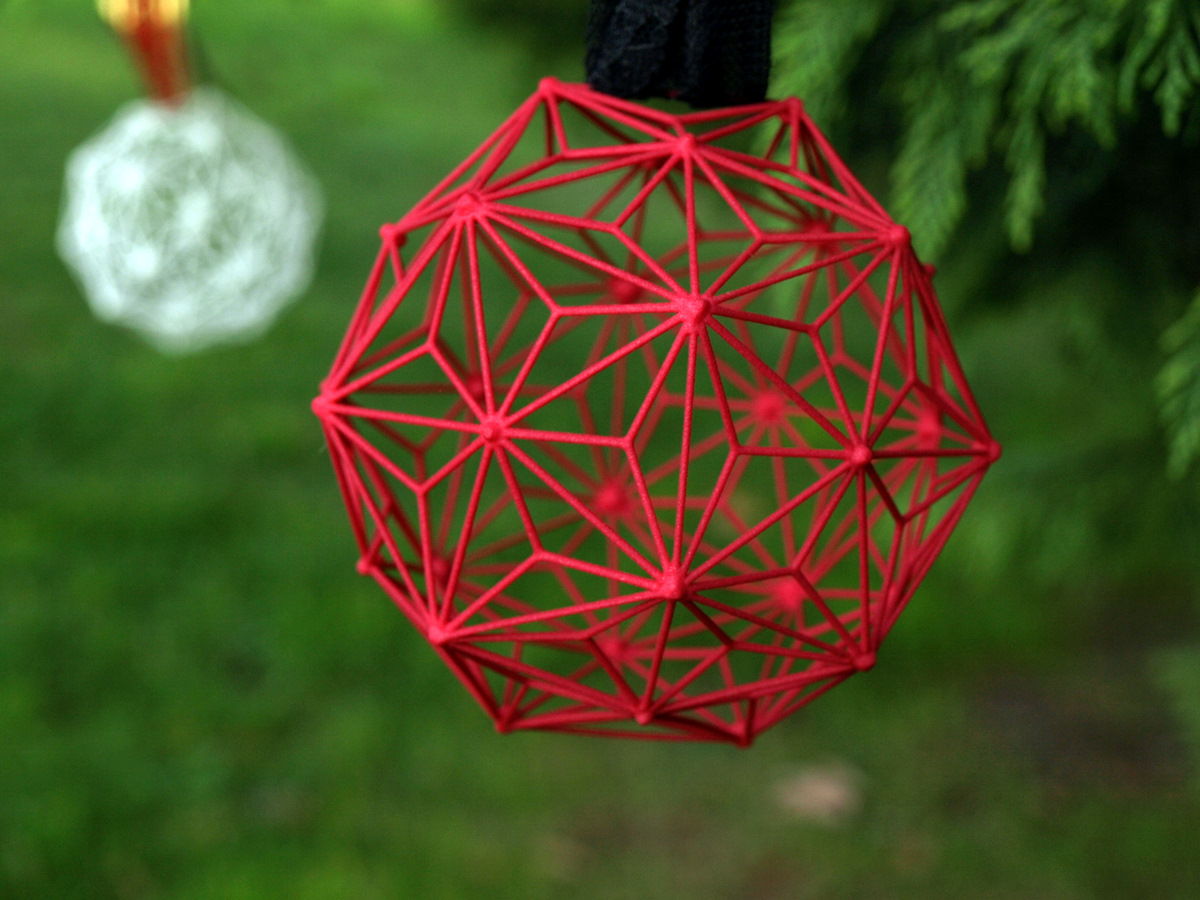
A set of lightweight geometrical christmas decoration balls 3DPrintd in Red, White and Black.
Why?
Because it was christmas and I wanted to design & make something with 3D Printing that was price competitive with mass produced objects.
Since 3D Printing costs are driven by volume and material used, I designed the geometry of these balls to use minimum material while keeping maximum strength, resulting in a $5 costs. quite OK compared with fancy mass produced christmas balls :)
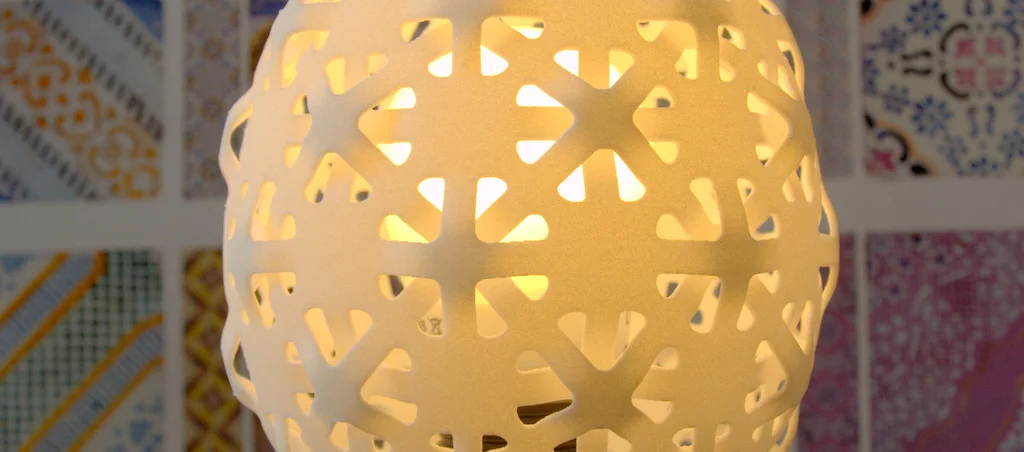
Mediterranea
3D-Printed lampshade inspired by mediterranean decorative tiles
3D-Printed lampshade inspired by mediterranean decorative tiles.

Dimensions: 100x100x95mm
lampshade fitting = 30mm diameter / suitable for all IKEA table lamps.
Small lightbulb, LED lightbulb suggested.
Interlaced design that creates beautiful pattern of light and shade.

Design & Development
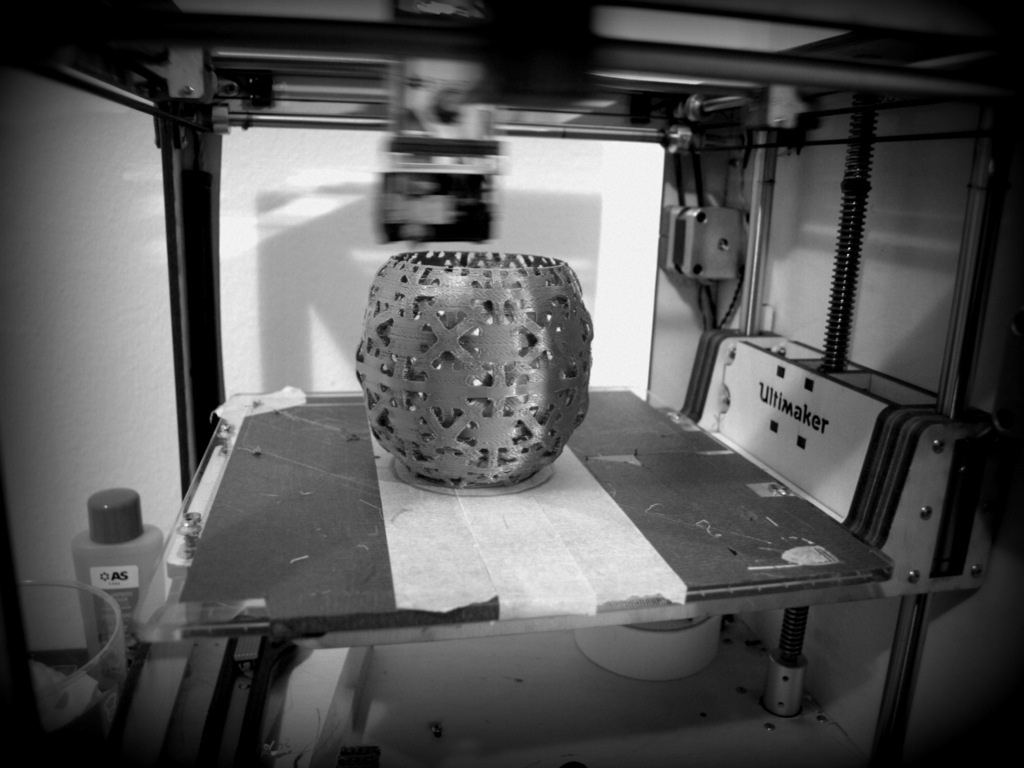
After inital sketches, a surface pattern study was built with a DIY domestic 3D Printer,
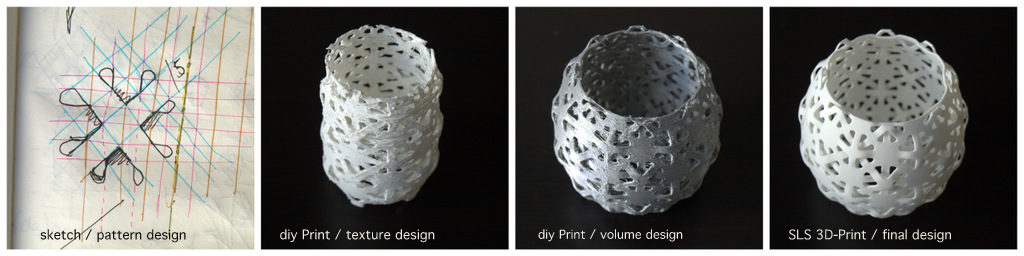
The final design is produced in Polyamide by professional Selective Laser Sintering machines.
Do you like tiles?
There’s a fantastic poster at Designboom
And this iPhone skin also.


Available at shapeways.com
Contact for resale and distribution.
Stellate Collection
3D-Printed Home Accessories
3D-Printed Home Accessories

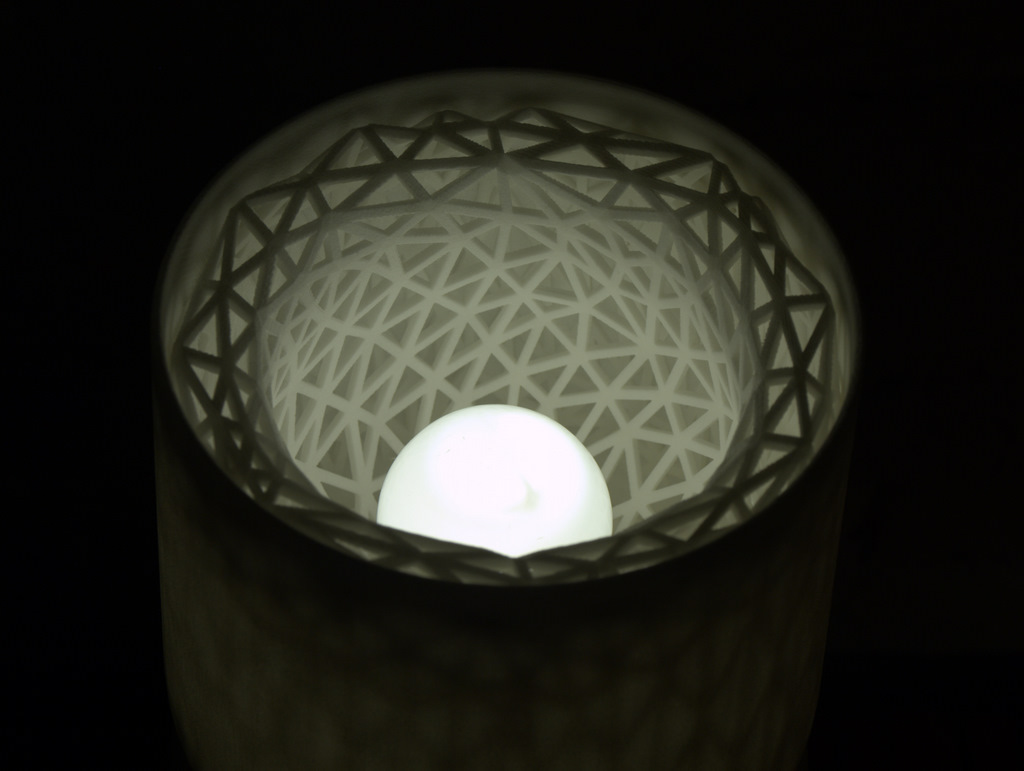
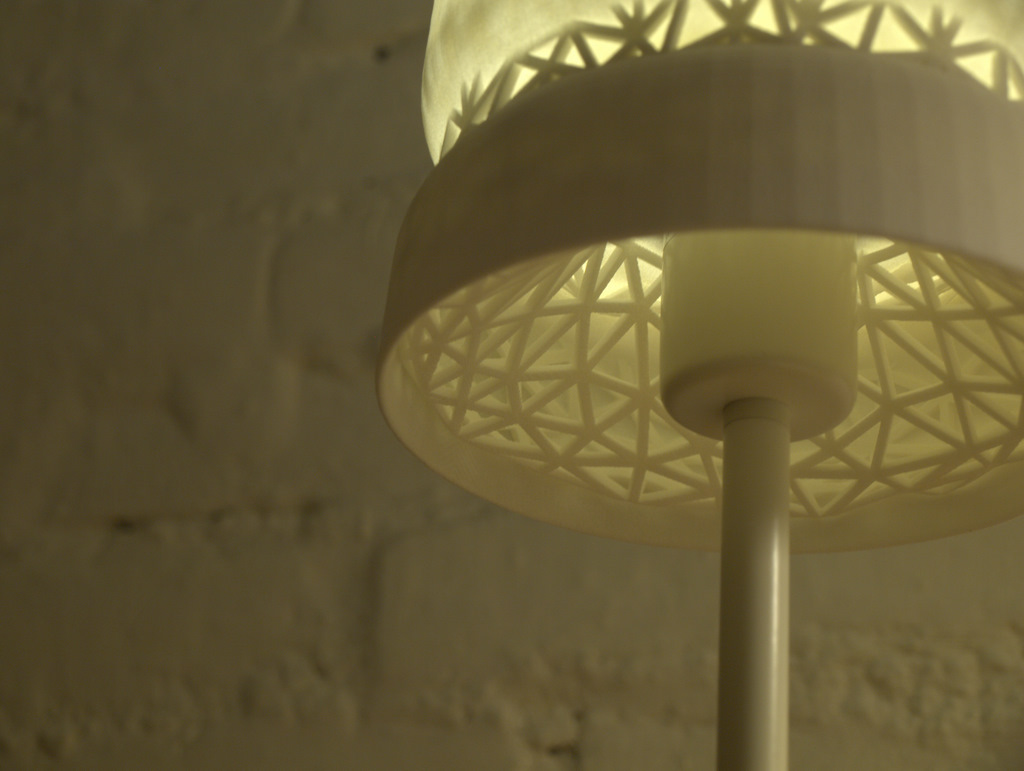
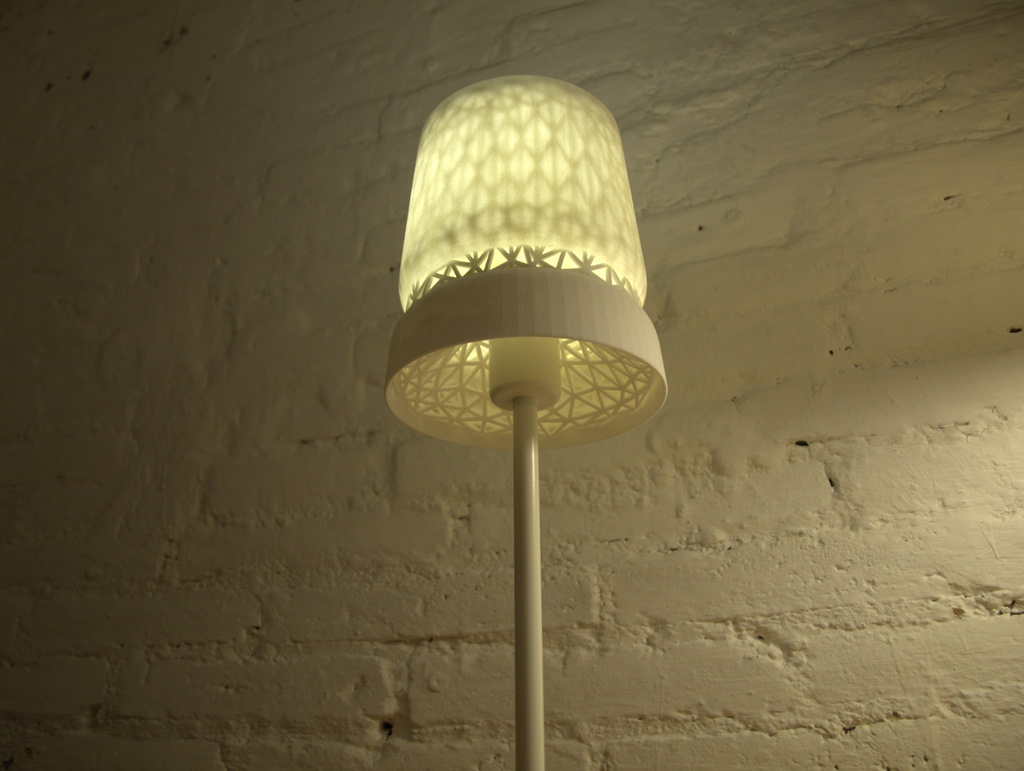
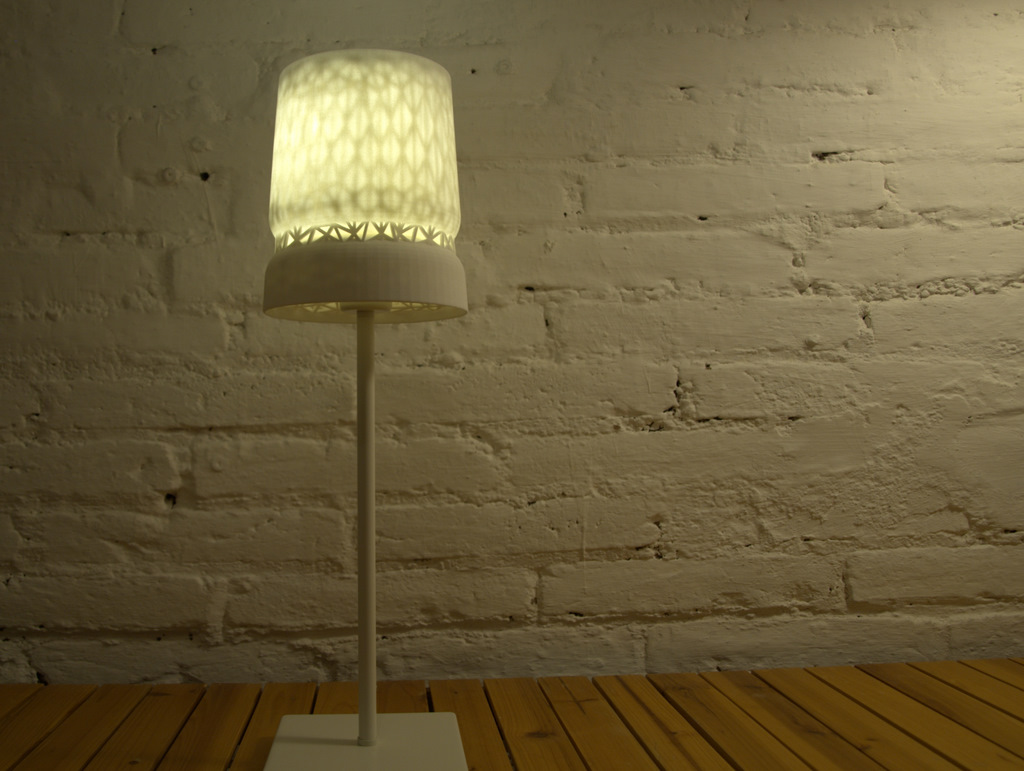
A collection of two lamps and a table tray made with 3D-Printing technologies featuring faceted surfaces and intricate stellate structures that appear when the pieces are seen through the light.
Computer generated shapes are generally built with wireframe meshes composing beautiful triangular geometries that normally are lost when the product is produced with traditional production methods like injection molding.
3D-Printing technology, being a computer controlled process that builds objects by adding thin layers of material one on top of another, it allows for those geometries to be translated into physical objects.
The Stellate pieces have a quiet design approach avoiding loud over-exposure of complexity.
The internal triangular structures live inside the objects and shyly appear throughout the external surface as a reminder of the birthplace of every object; the computer 3D modeling environment.
These simply shaped objects hide their complexity at a first sight, and only showing it to viewers who pay a second look.
Stellate Pendant Light
Dome shaped filled with a triangular wire structure


Stellate Table Lamp
Simple truncated cone with an internal mesh of triangles.

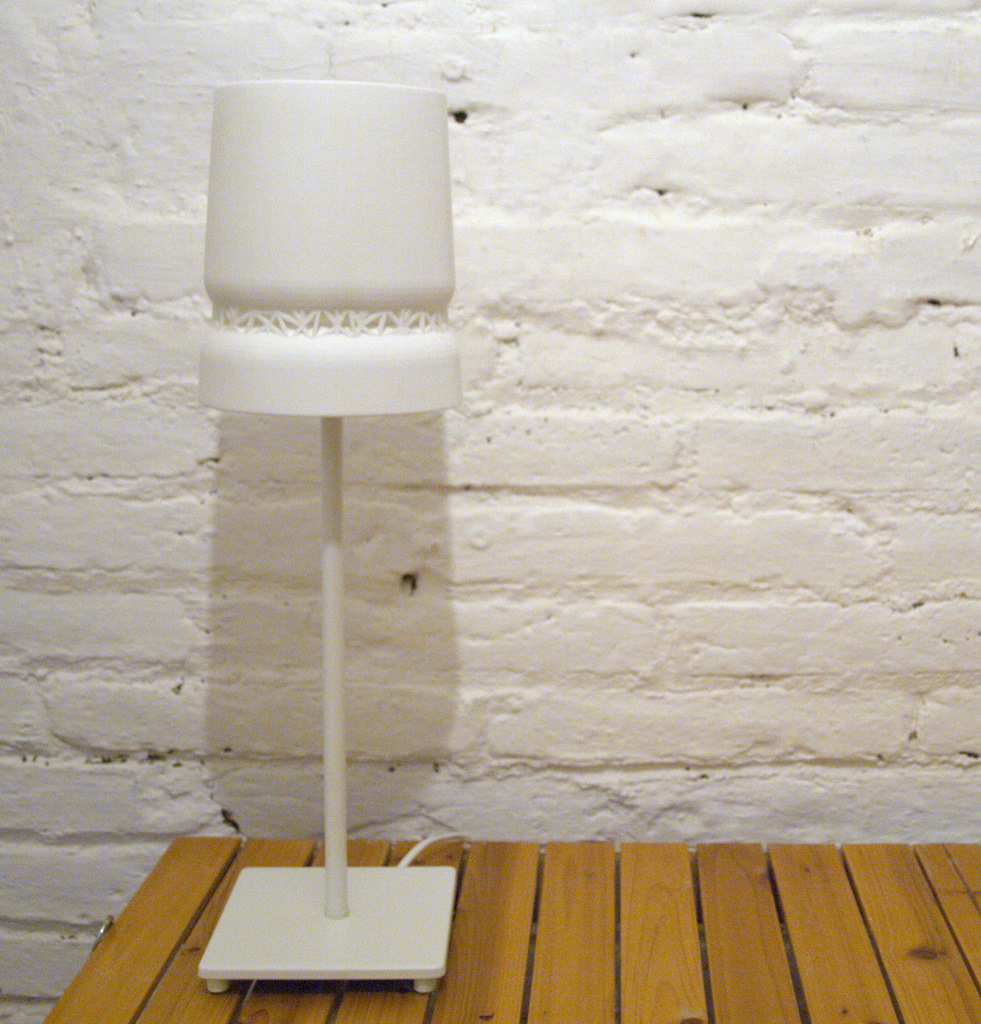

Stellate Tray
Concave bowl with a hidden mesh underneath it.


The Process:
3D-Printing final products shortens spectacularly the product development process.
Comparing the 3D-Printing process to the process followed by a mass produced light, the time and costs are reduced drastically.
The resulting pieces are fully functional products ready to be produced on demand, with the plus of offering space for customization and special requirements.
A) Design | product concept & sketches

B) Computer Model | sizes, proportions, details & fine-tune
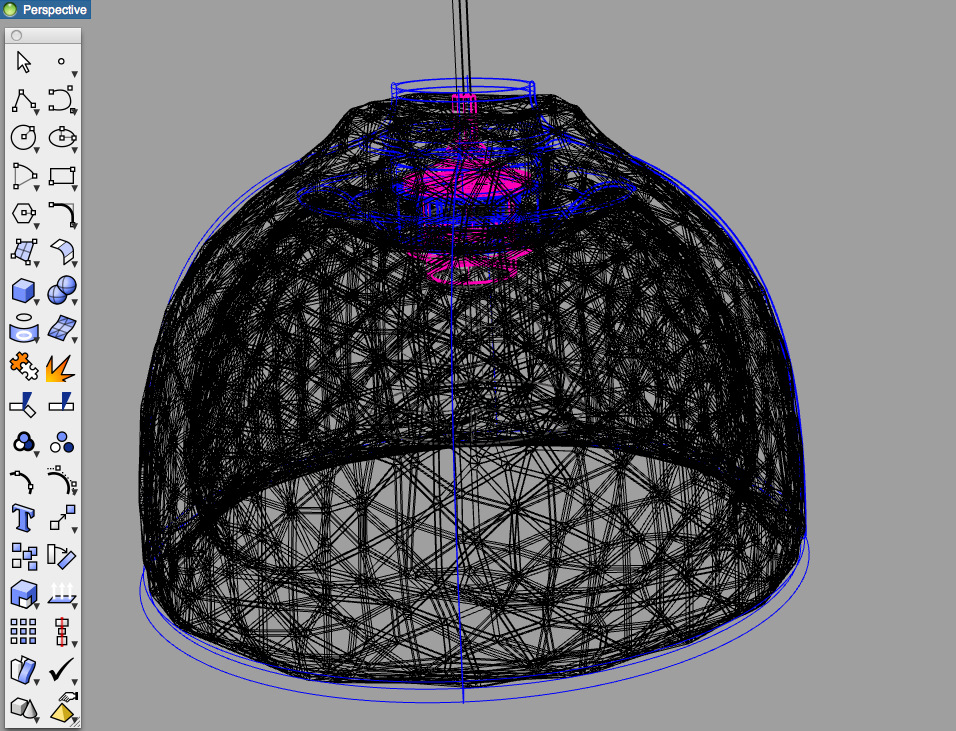

C) 3DPrint | prepare the file, wait & clean up.

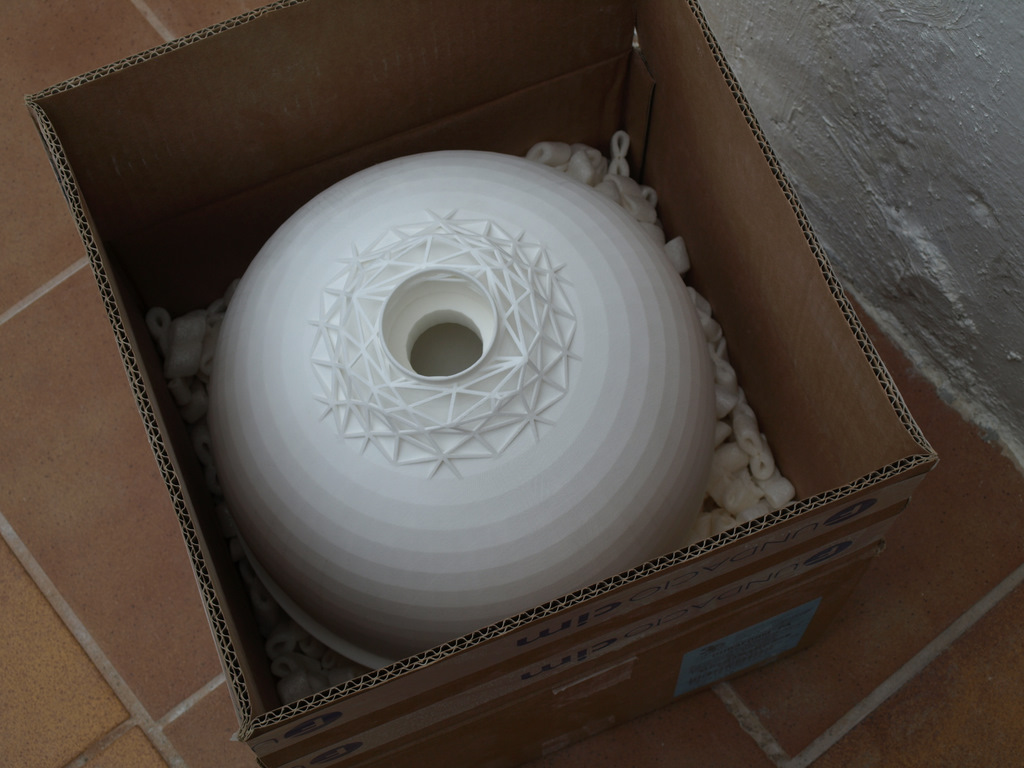
Product Launch: Moscow
The Stellate Collection was presented to the public in Russia during the DesignAct fair in Moscow, 8-11 September 2011.
The Stellate Collection, is produced on demand via 3D-Printing technologies, allowing for customization and client specifications.
Each lamp can be unique. Please contact us for delivery times and costs.
Credits:
Designed by Bernat Cuni.
Produced by Fundació CIM using 3D-Printing SLS Selective Laser Sintering Technology.

The Fundació CIM offers a wide range of technological services helping organizations to be more productive, improving their industrial processes and raise the quality of their products to compete successfully in global markets. The benefits of these services are intended to finance research projects, to renew the machinery and the provision of scholarships for technical careers. The main purpose of the Fundació CIM is the generation and transfer of knowledge & technology to the society. From the conception of a product to marketing, one must generally resort to different professionals and partners, representing a waste of time, information and project control. To minimize these drawbacks, the Fundació CIM supports the development of products from the design to the production phase.
BumpBangle
A rhombus pattern bracelet 3DPrinted with SLS Selective Laser Sintering.
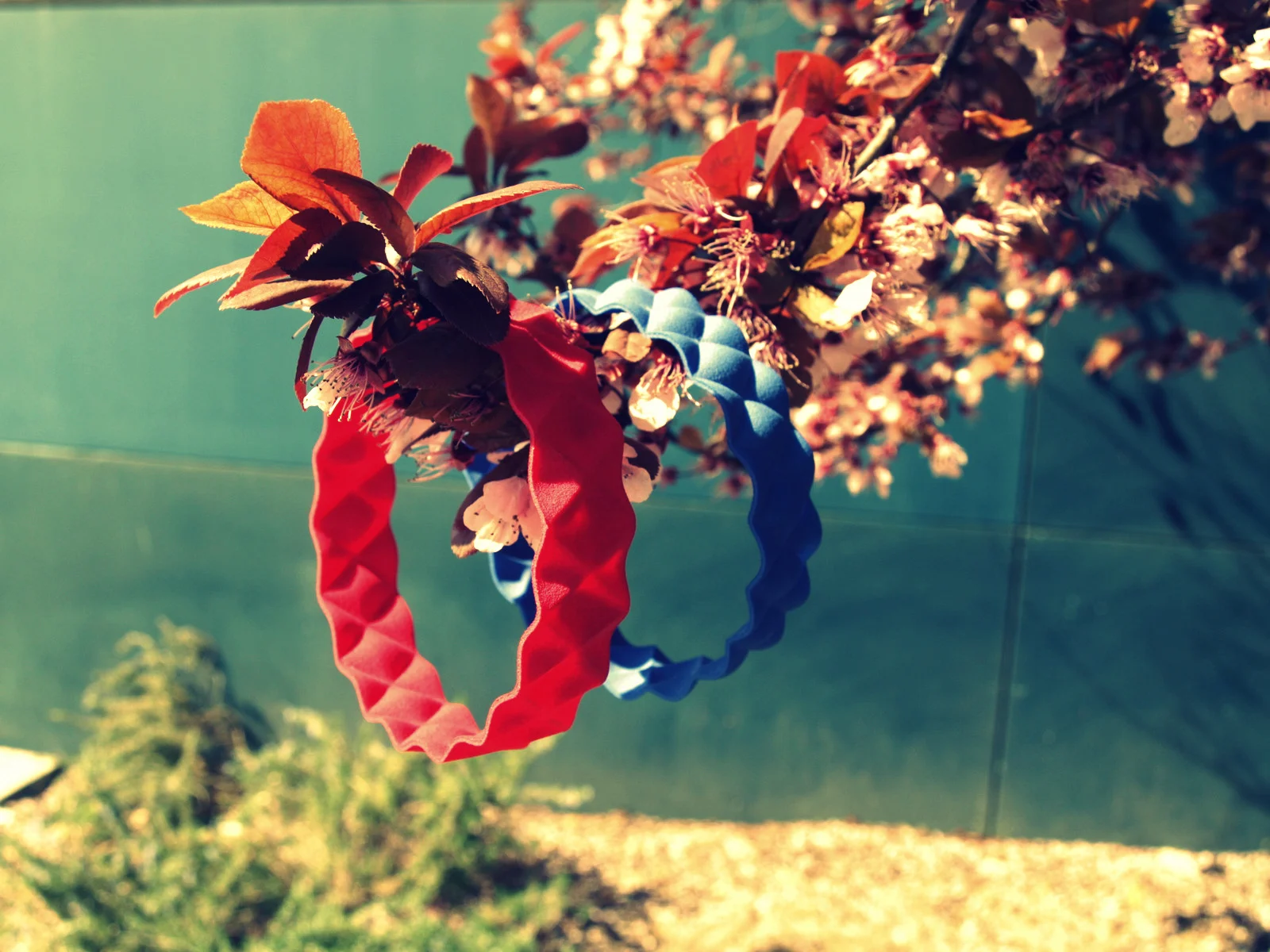
A rhombus pattern bracelet 3DPrinted with SLS Selective Laser Sintering, available in strong and flexible Nylon.


Outer BumpBangle


Inner BumpBangle


MoonLamp [concept]
The moonLamp explores the translucency proprietress of the 3DPrinted material by wrapping a lunar terrain geometry in the inner wall of the lamp shade.

The moonLamp explores the translucency proprietress of the 3DPrinted material by wrapping a lunar terrain geometry in the inner wall of the lamp shade.
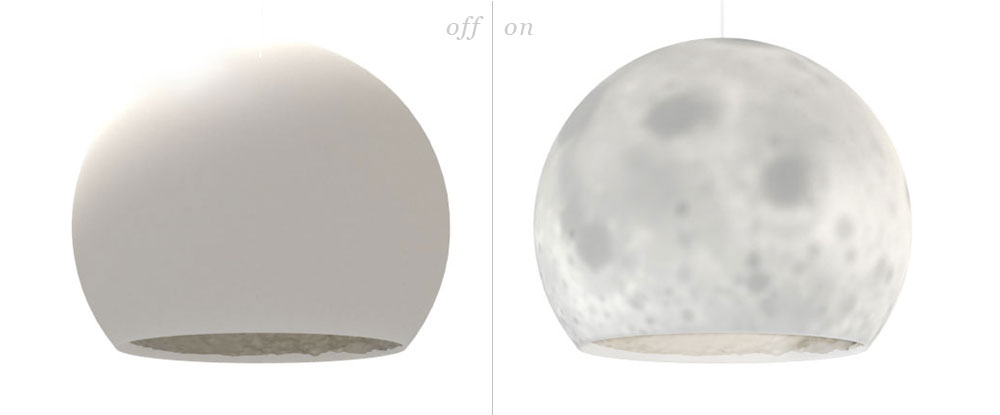
When the lamp is lighted, it displays a Moon landscape on its surface.
The lamp is smooth on the outside, and it appears as a white globe when the light is off.

This work proposes subtle complexity, a quiet approach towards the aesthetics of 3DPrinted goods.
The same design principle can be applied to other lamps by creating an inner wall texture from custom imagery like photos or drawings.
The moonLamp was modeled out of a lunar topographic bump map from Lunar Reconnaissance Orbiter LOLA data, released in 2010.


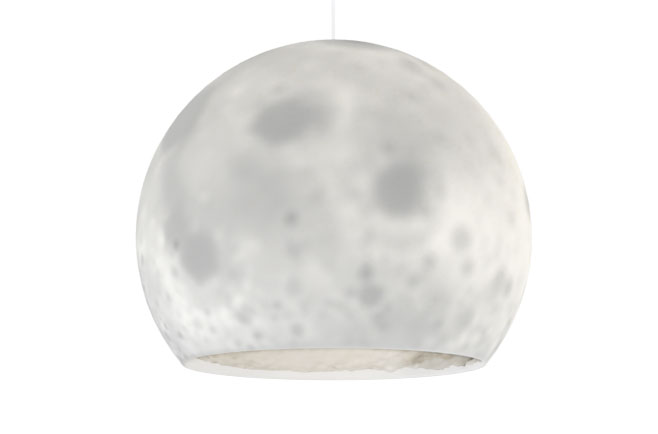

This lamp was a random idea in 2011.
now is a (kitsch) product made by someone (not me).
neopaleo
HandAxe, 3D Printed
HandAxe,
3D Printed


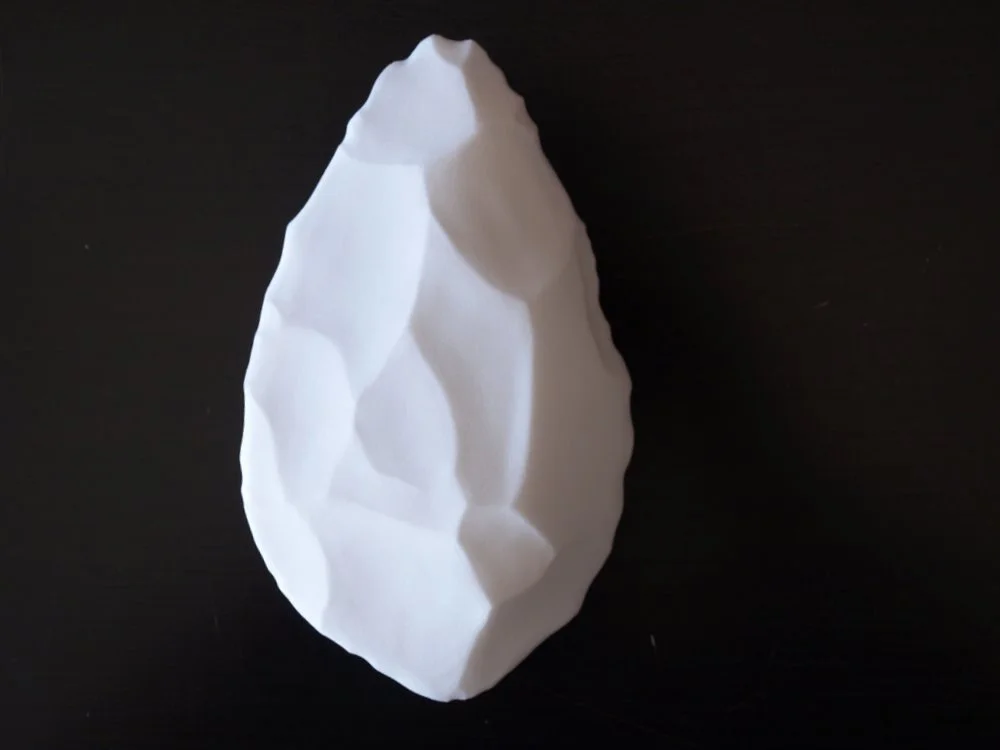
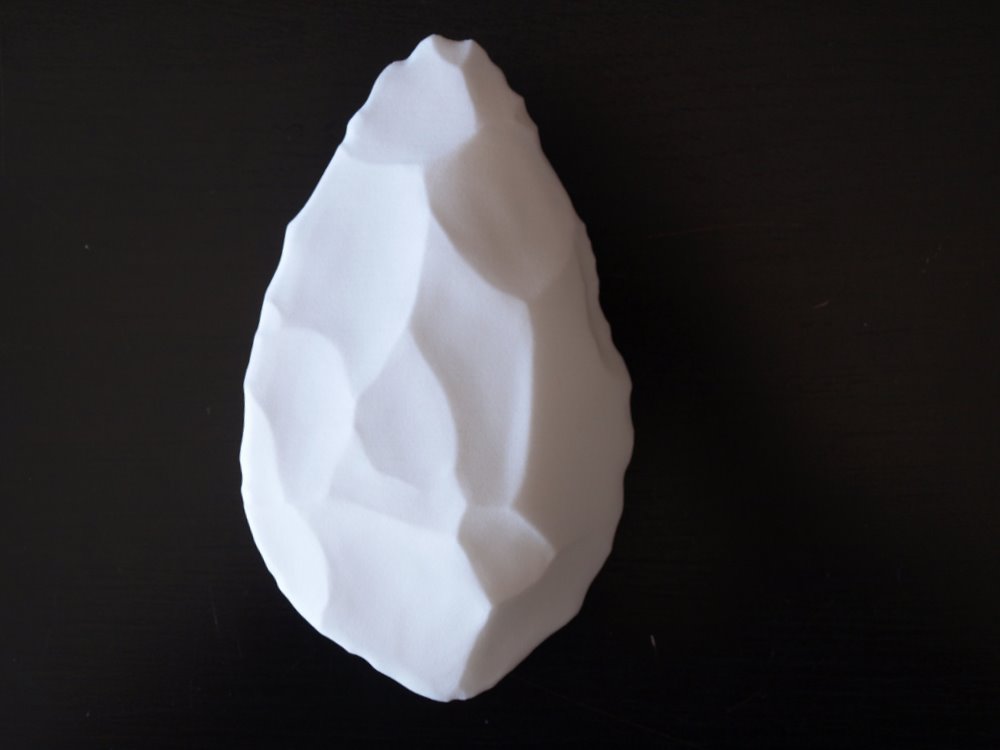
Stone Tools were very popular 2 Million years ago, back in the Paleolithic, hominids spent their time shaping stones meticulously to impress the peers on their skillful ability to make useful things.
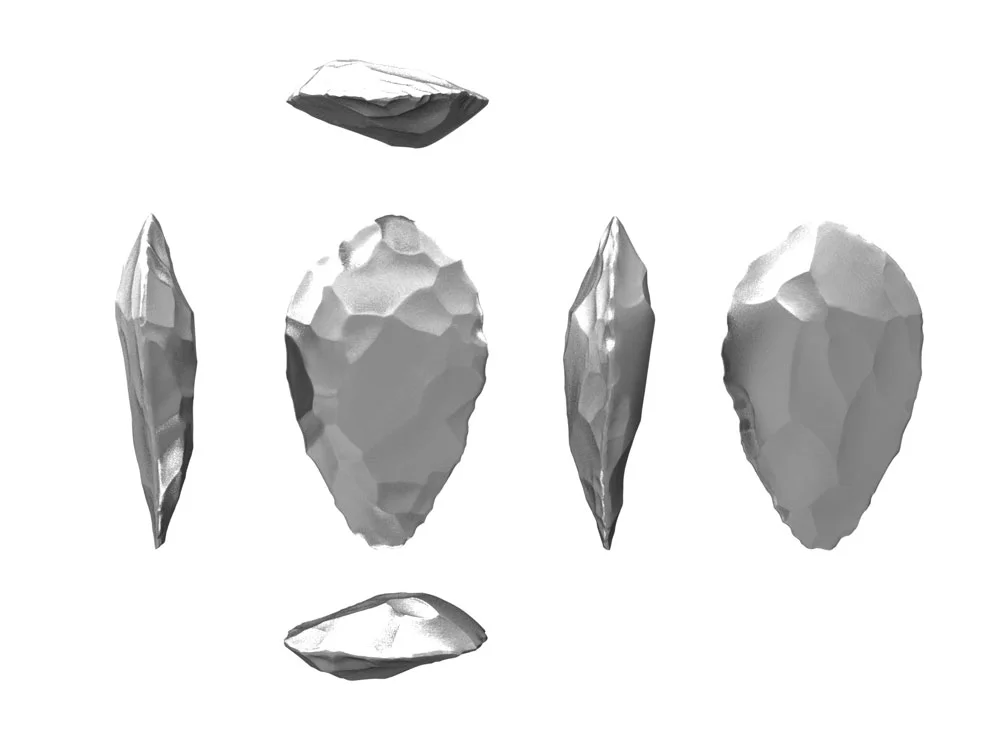
Now we can do the same, 3DPrint a hand-axe and showcase our technological evolution.
It has been a long time since individuals haven’t been able to produce objects using contemporary technology, during the last centuries, the production means have been capitalized by a few who controlled what was produced, when and how. Digital Fabrication brings the technology of producing things back to the individuals, allowing us to make stuff at our will, how and when we want.
3DPrinting a HandAxe, is the first step towards production independence; you make your tools.
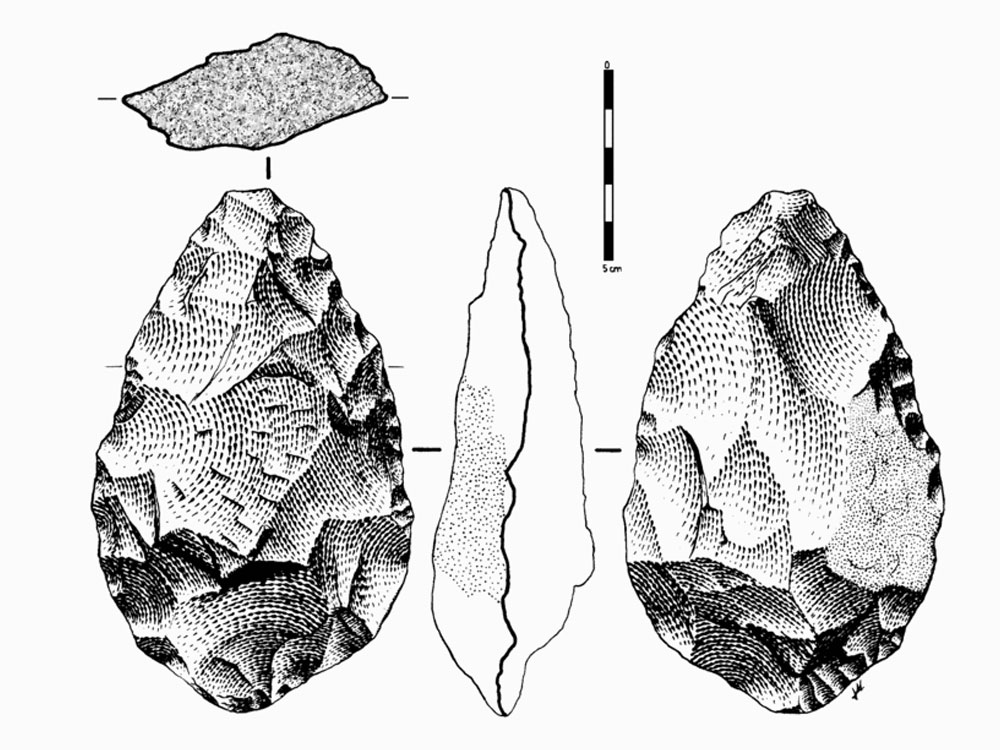
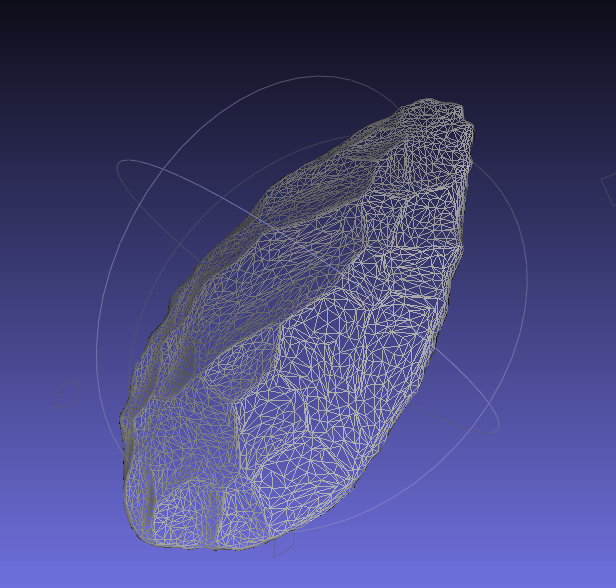
Fully functional hand-axe is modeled from a typical Acheulean stone tool found in Zamora, Spain.