
slopjects
A series of objects; all slightly different and all exactly the same.
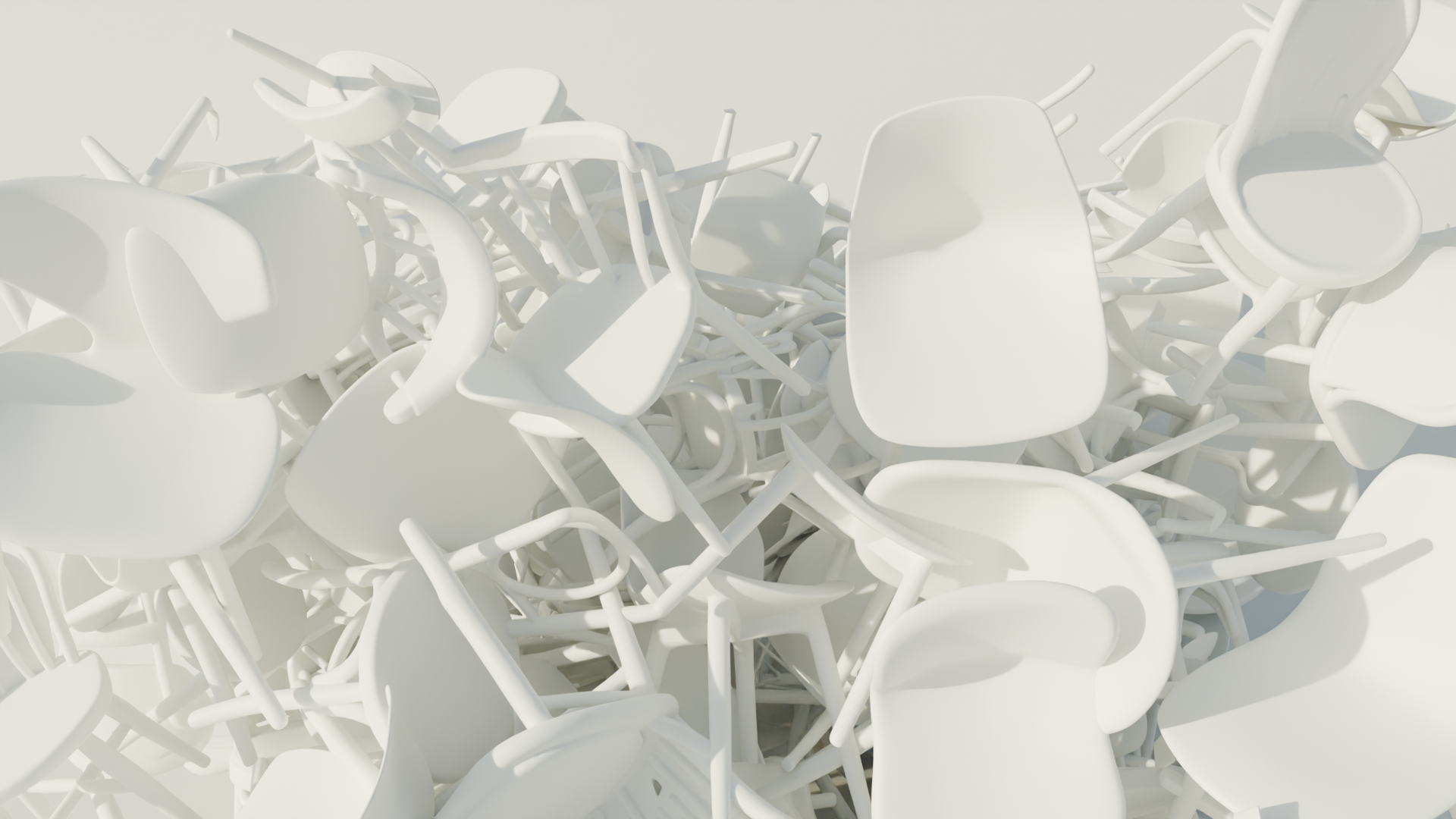
They are what a machine thinks something is.
The objective is to make visible the averageness of generative 3D, and to ask what is left out when we let it fill our digital spaces.
Slop, but in 3D
We already know what slop looks like in images and text: smooth, shiny, confident, and empty. Content made because it is cheap to make, not because someone needed it.
Text-to-3D and image-to-3D tools are next. Type "chair", wait a few seconds, get a textured mesh ready to drop into a game, a virtual stage, an XR experience or a heritage platform.
It works. That is the problem.
These models learn from huge collections of 3D assets, mostly scraped from online repositories and asset stores: clean, catalogue-like, made to be sold or reused. So the output is a probable shape: the statistical middle of every chair the model has seen.
And they will do to 3D what image generators did to images: quietly replace the specific with the generic. At scale.

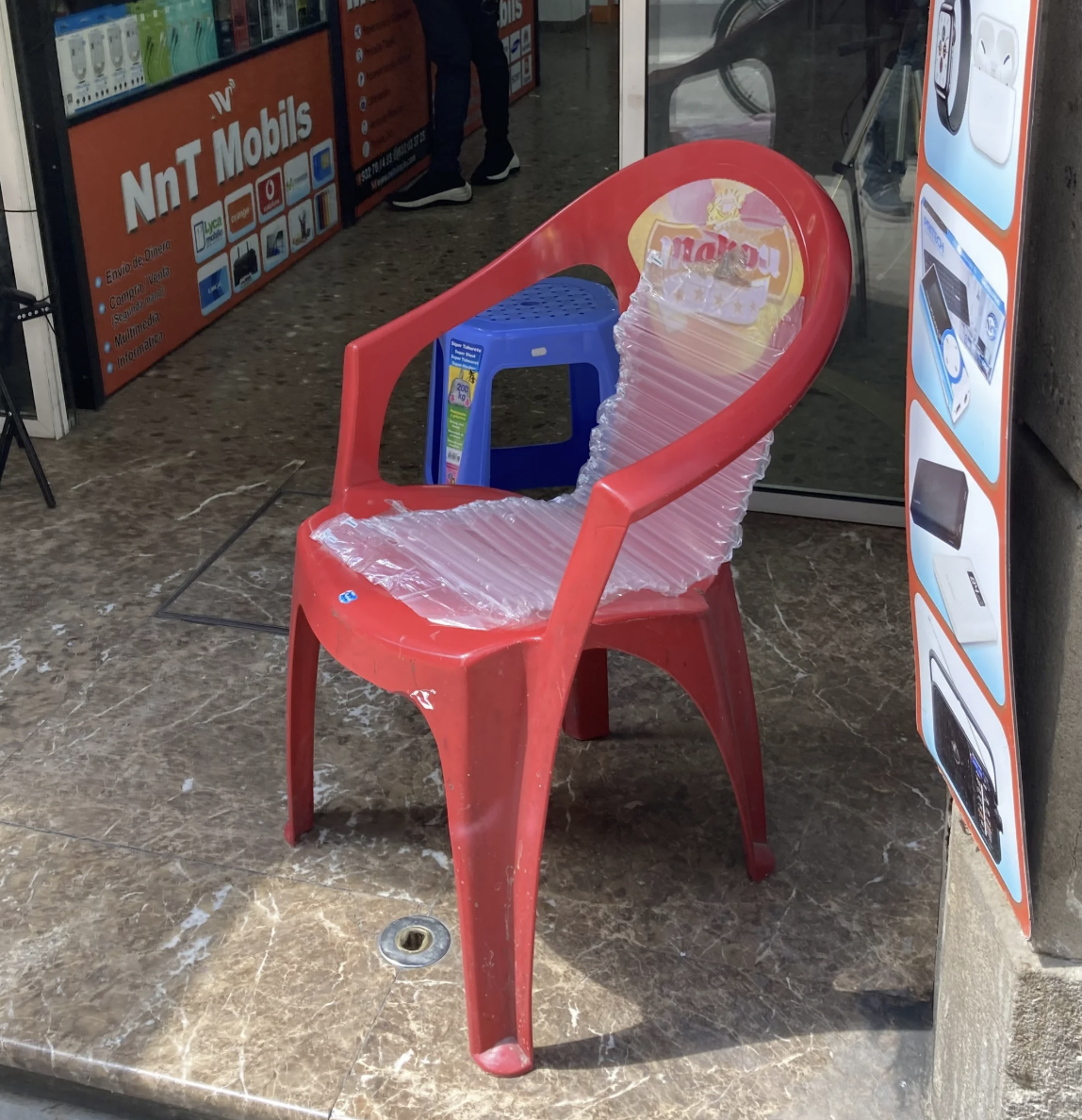
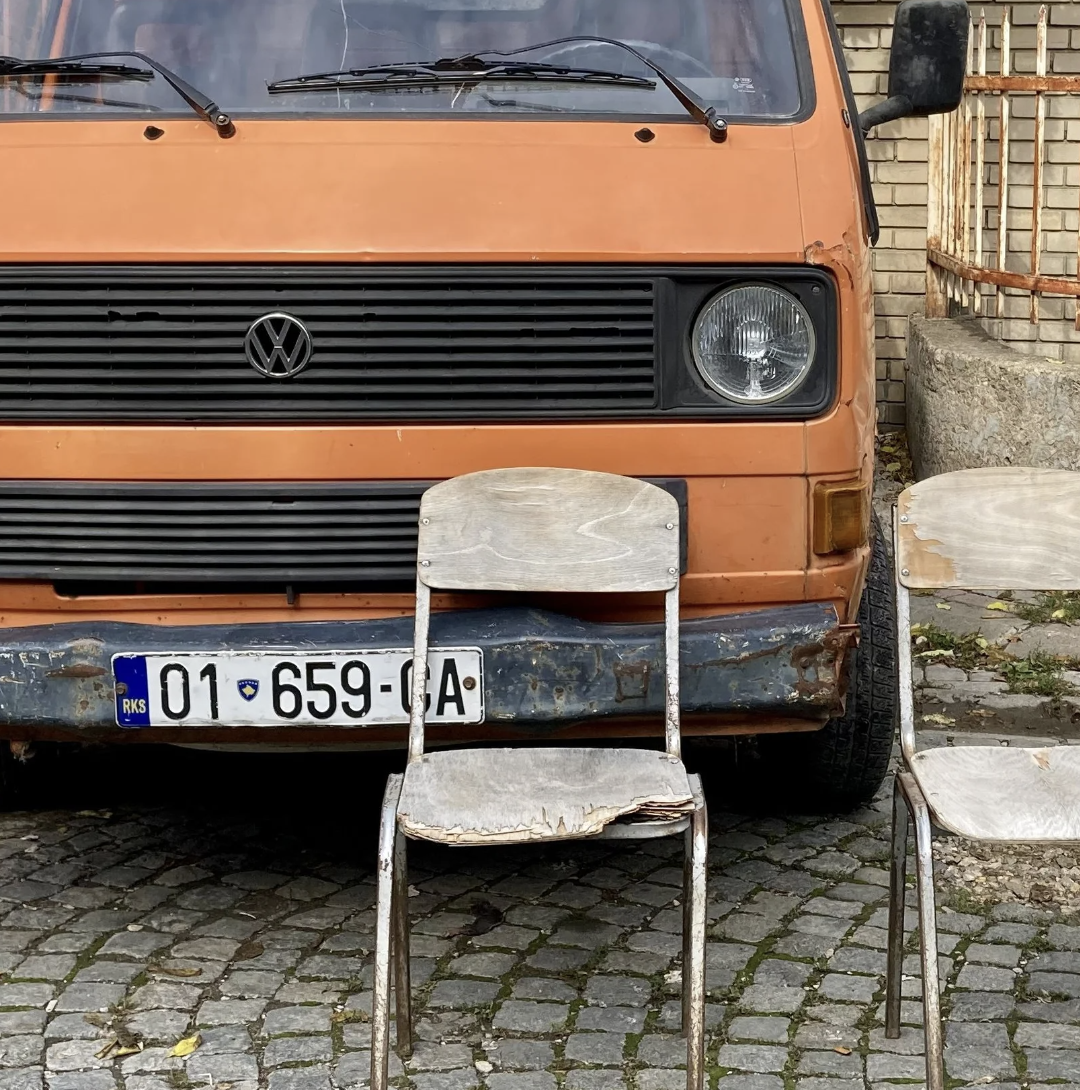
What is missing
When I look at a generated object, I see the things that are not there.
The strange joint someone repaired with wire.
The local way to weave a seat.
The material that only exists in one town.
The scratches, the sun, the rust, the dirt.
Time.
Generated objects are always new. They never age, never break, never get fixed. They have no owner, no street, no story. They come from nowhere, so they can be placed anywhere.
Real objects carry where they come from, their surface is the record of a place.
Where the average comes from
The chairs a model knows are not random chairs. You can read them in the datasets:
ShapeNet (2015): the grandparent. 3 million models indexed from Trimble 3D Warehouse (the SketchUp library) and Yobi3D. Its clean core, ShapeNetCore, keeps 51,300 models in 55 categories. The world as 55 nouns.
Objaverse and Objaverse-XL (2022–2023): 800K and then 10M+ objects from Sketchfab, GitHub, Thingiverse, Polycam and the Smithsonian. Mostly made by artists, hobbyists and students who uploaded their work under Creative Commons, years before anyone trained a 3D generator on it (some of them found out later).
Amazon Berkeley Objects (ABO): 3D models from 147K Amazon.com product listings. Literally a catalogue.
3D-FUTURE: ~10K industrial CAD furniture models, made with Alibaba's home-design platform.
HSSD: synthetic houses and their furniture, built for training home robots and agents.
Microsoft's TRELLIS, one of the most used open models, was trained on 500K of these, mixed and filtered by aesthetic score. The "ugly" ones were removed before the model ever saw them.
And the loop is closing. Newer models train on objects generated by previous models: Tencent's Hunyuan3D-Buffalo (2026) uses 50M text-to-3D pairs produced by an automated pipeline, and Meta's SAM 3D learned from ~3M model-generated meshes ranked by human annotators. Slop trained on slop. The average of the average.
The technopolitics of the average
Averageness is not neutral. Every "normal chair" is a decision about whose chairs count.
Whose average? If the training data comes from asset stores and western catalogues, the model's "home" is someone else's home. Local objects, crafts and vernacular design become the long tail, the noise that gets smoothed out.
Who made it? Thousands of 3D modellers, scanners and makers built the datasets these tools learned from. Their work is now the raw material for the tools that replace them.
Who owns it? A generated object has no author and no provenance. A scanned one does. What happens to authorship when the average becomes the default?
Who profits from predictability? Markets are uncomfortable with the unexpected. Generic is easy to sell, easy to moderate, easy to scale. Same as with avatars, the safest content survives, and digital culture drifts towards a hyper-sanitized mediocrity.
Going from: generic, shiny, timeless, placeless, authorless.
To: specific, worn, situated, credited.
Slopjects they are not really objects. They are placeholders: like the grey boxes game developers use before the real asset arrives. A promise of a thing.
The difference is that now the placeholder is the final asset.
Nobody is coming to replace it.
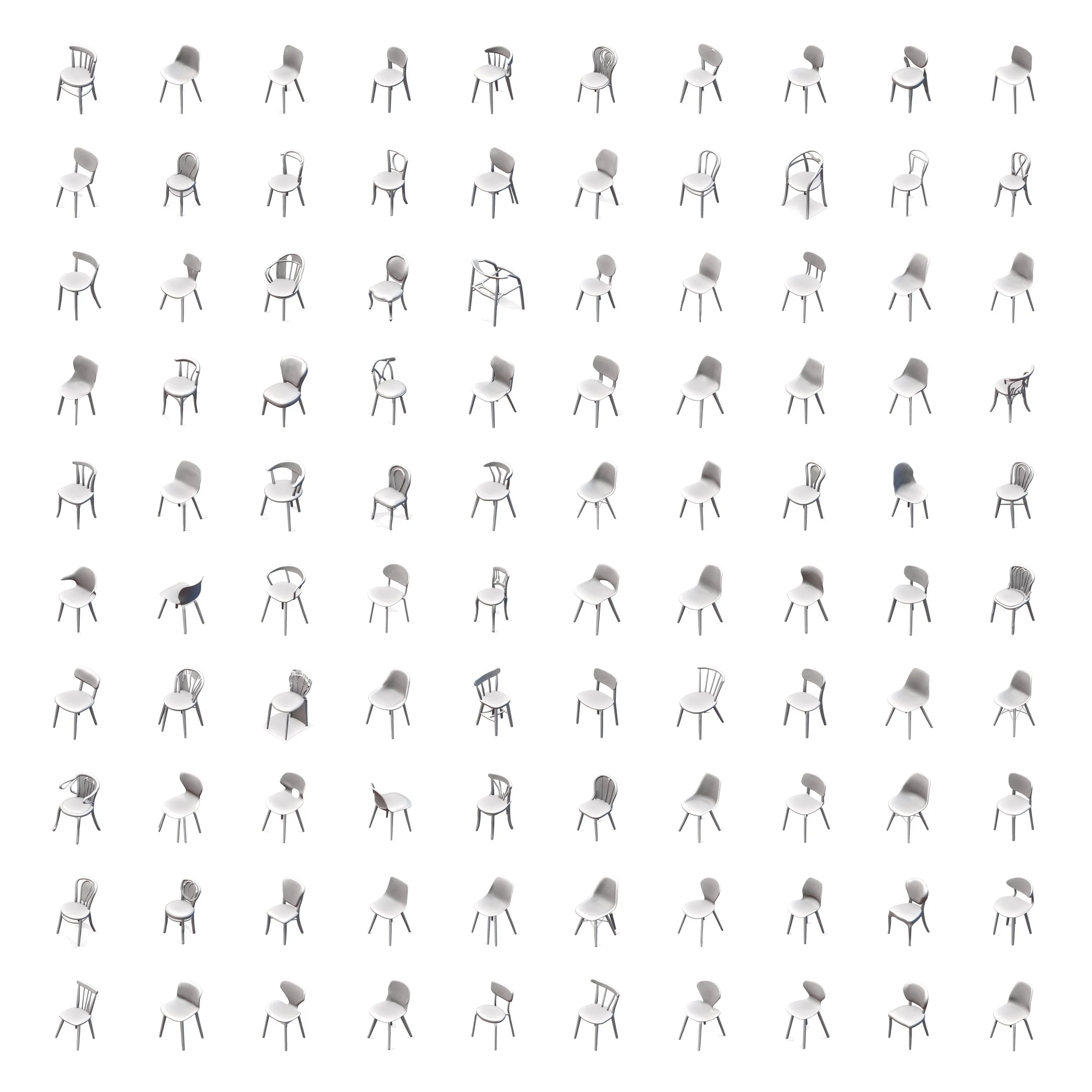
The work
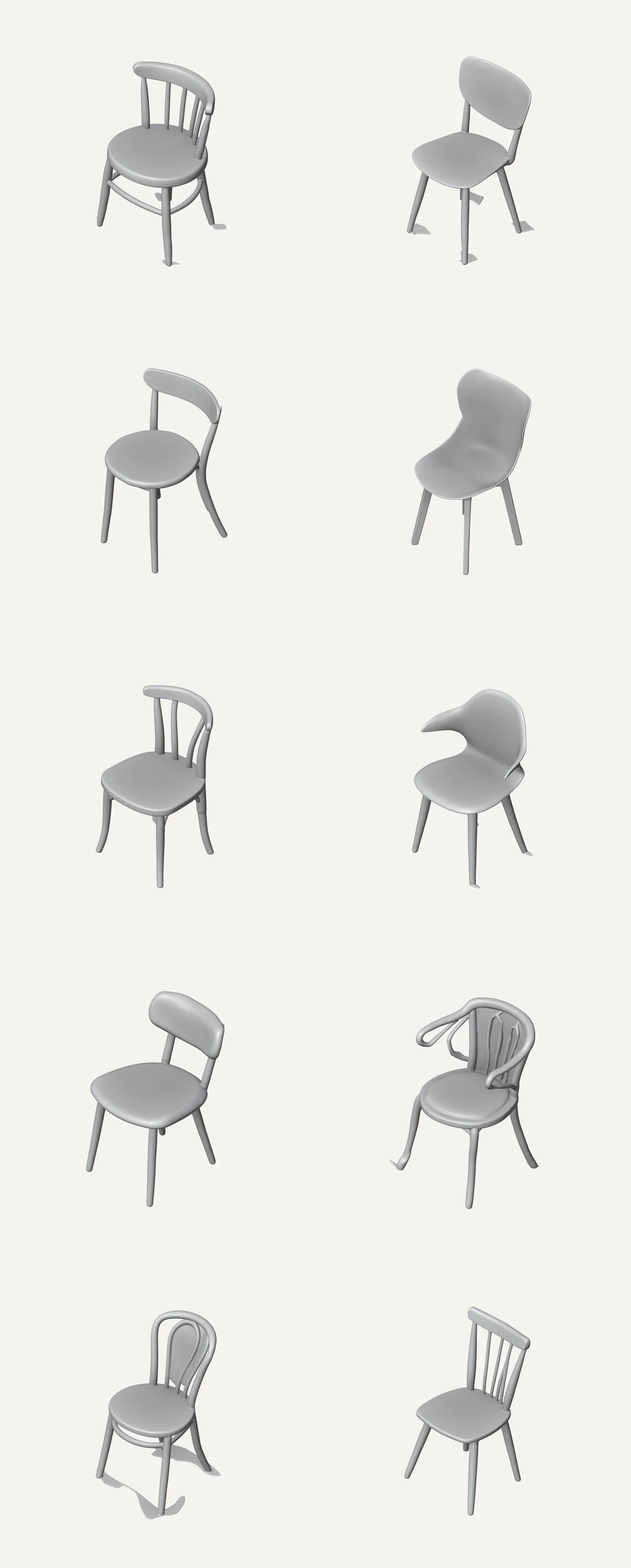
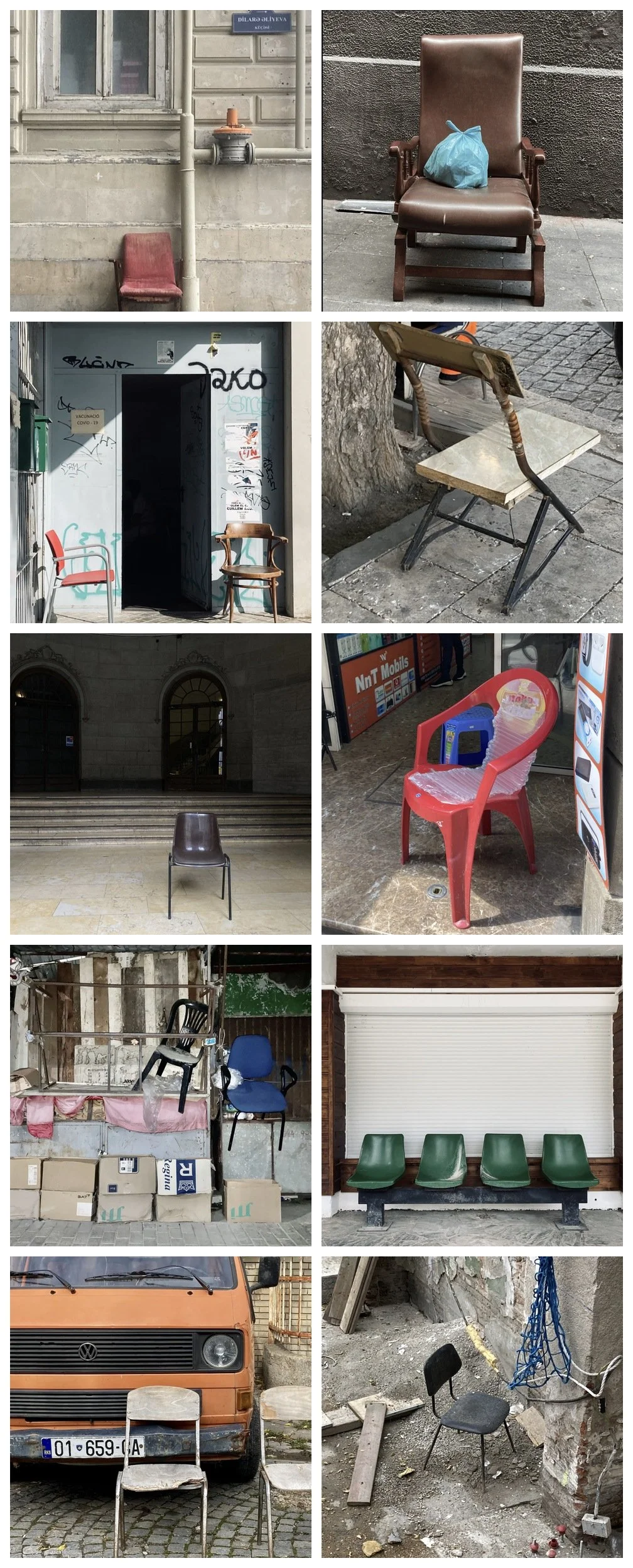
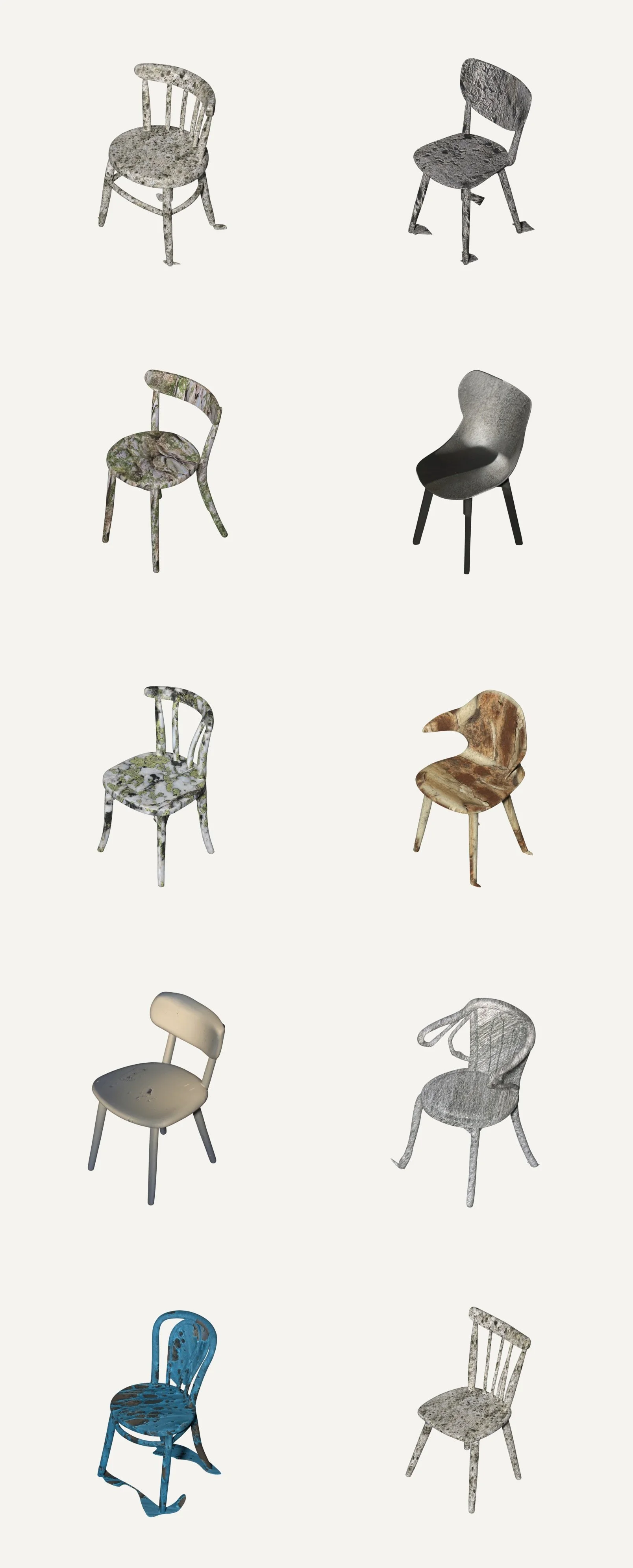
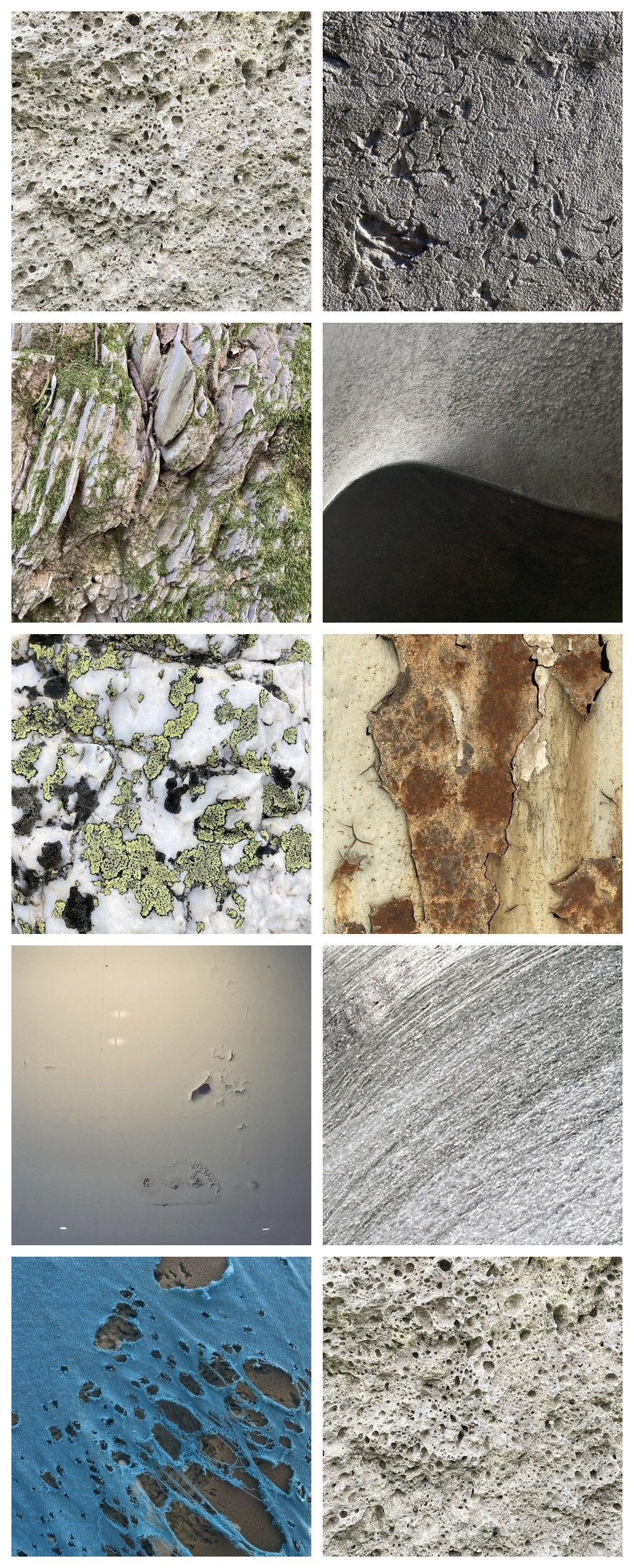
A video-tryptich.
Synthetic. Objects generated again and again from simple prompts: "a chair", "a street lamp", "a bin". I collect what comes out and I don't fix it. A landscape of probable shapes, with all their small algorithmic variations.
Physical. The same number of the same objects, found in the real world. Scanned and photographed in context, on walks with locals who know their streets better than any dataset.
Blended. The material qualities of the real samples, extracted and wrapped onto the generated shapes. A skin of uniqueness on top of the average.
Side by side, the panels show a delta: the distance between the probable and the real.
What is the model's "chair"? Which chairs made that average?
How can the gap between the probable and the real be measured, felt or seen?
Where is time in a generated object?
Does a local skin make the average more specific, or just a more convincing average?
Is blending a way to localise generic generators, or just locality absorbed as decoration?
The blended panel is deliberately ambiguous. It can be read as a path towards contextual, hyperlocal generators, or as evidence of how the specific gets extracted and sold back as texture. Probably both.